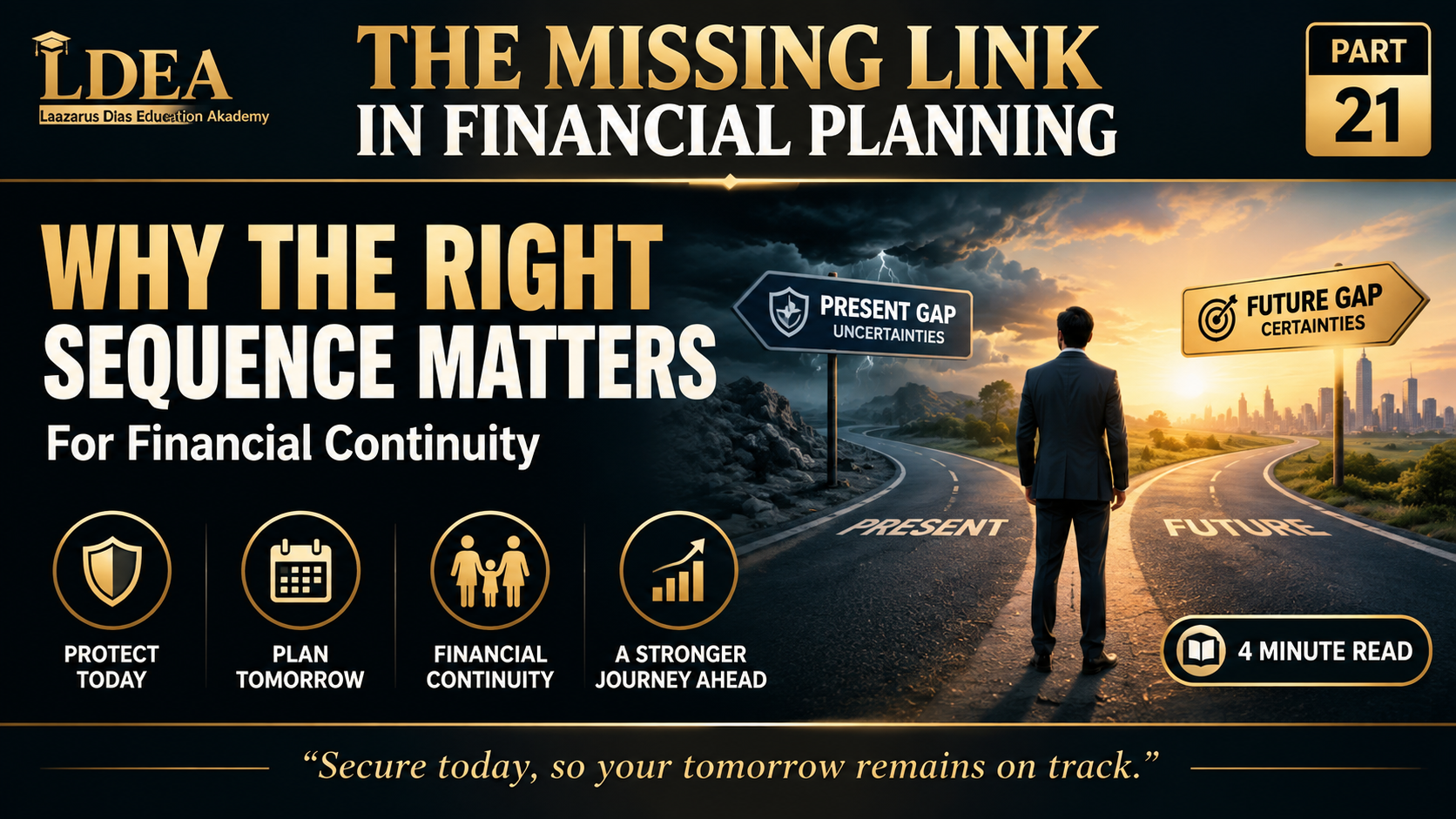
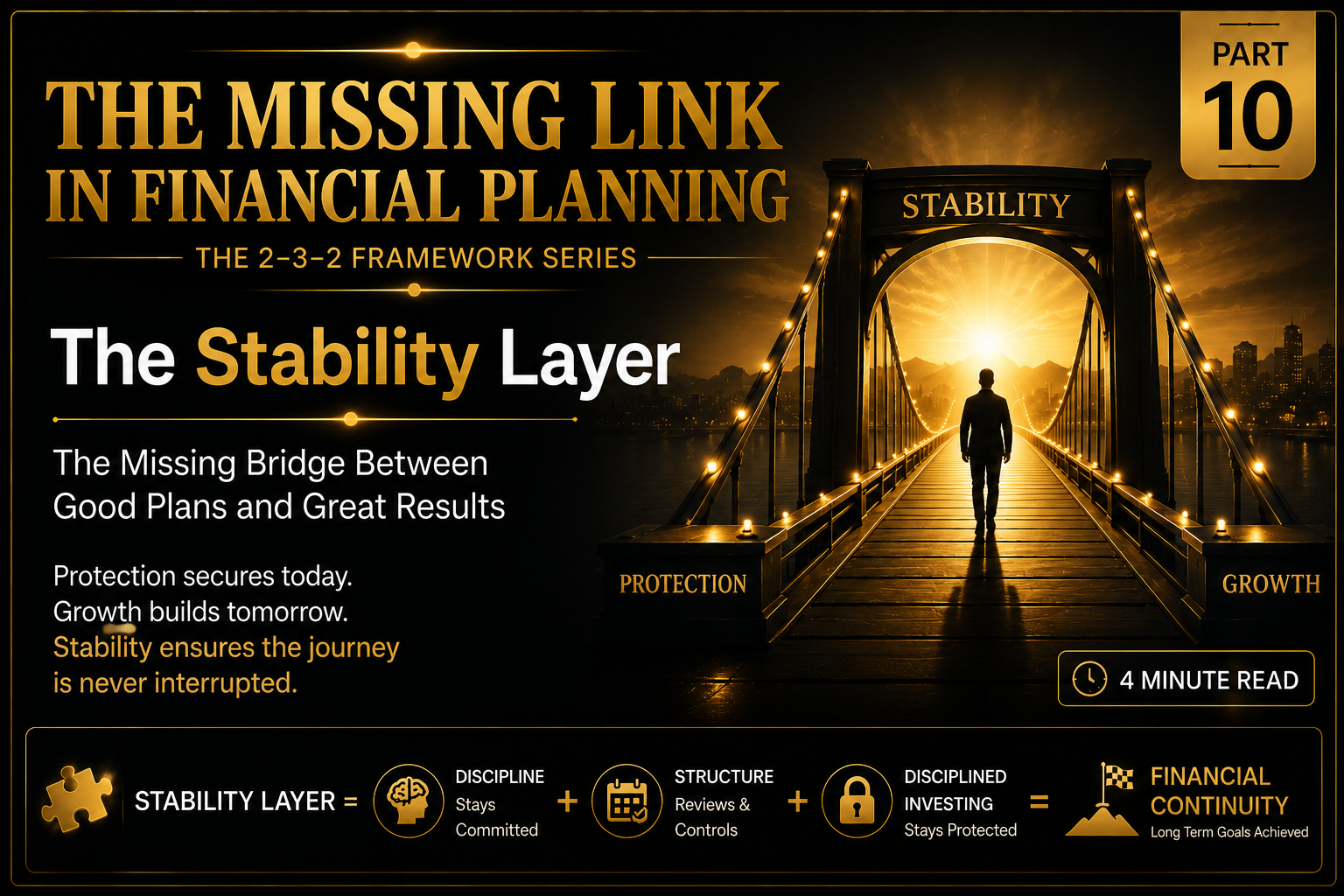
THE MISSING LINK IN FINANCIAL PLANNING – Part 10
July 22, 2026
THE MISSING LINK IN FINANCIAL PLANNING – Part 12
August 5, 2026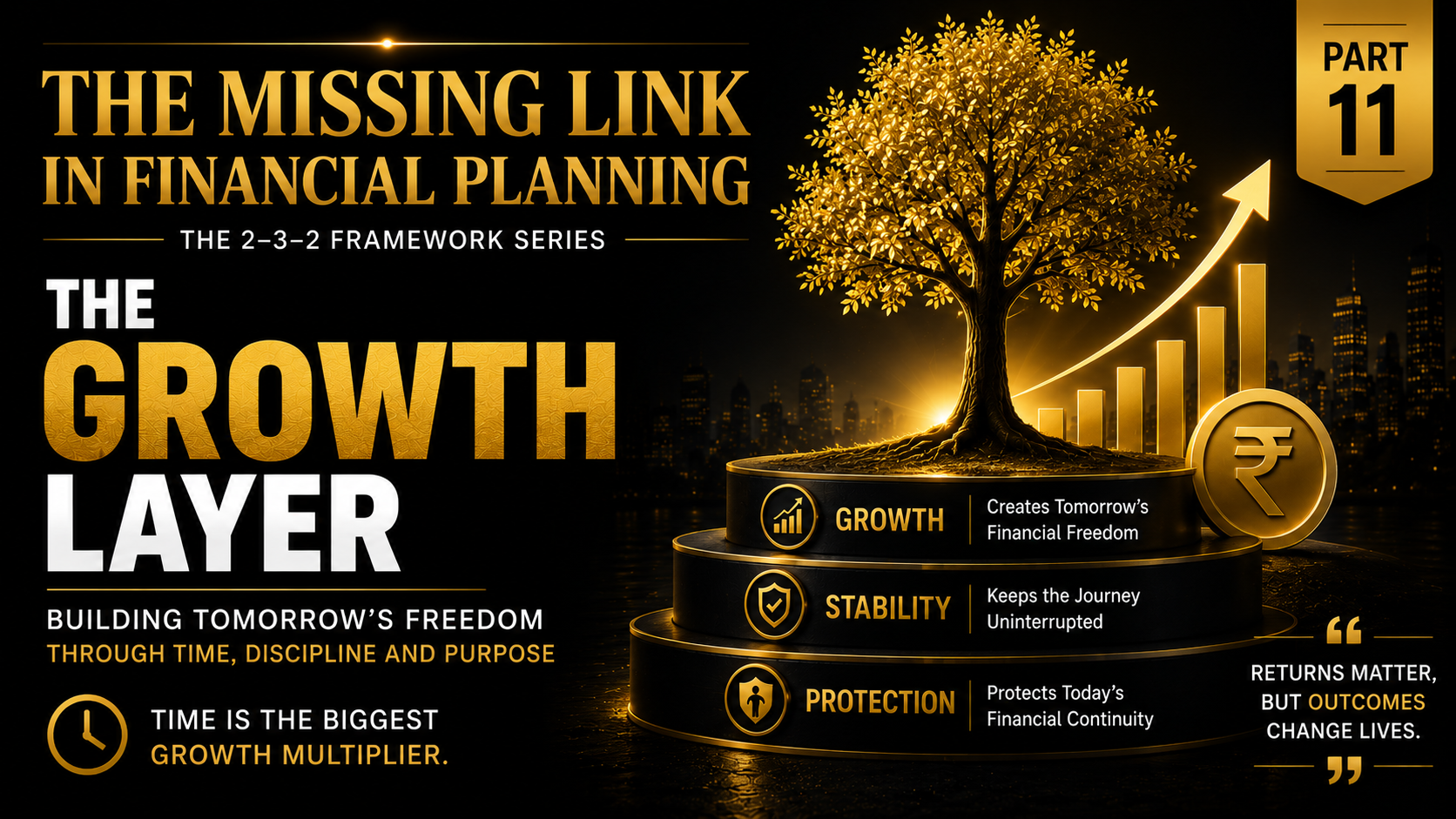
The Growth Layer
Why Financial Planning Should Be More Concerned About Outcomes Than Returns
In the earlier parts of this series, I introduced the importance of discipline and continuity in making compounding work, explained the Stability Layer as the missing dimension in financial planning, distinguished between Investment Volatility Risk and Behavioural Discipline Risk, and introduced the 2–3–2 Framework consisting of 2 Gaps, 3 Layers and 2 Risks. We then explored the Present Gap, the Future Gap, the difference between Need Goals and Want Goals, and the first two layers—Protection and Stability.
In this article, we complete the framework by exploring the third and final layer: The Growth Layer.
What Is the Real Purpose of Growth?
Growth is not about becoming rich.
Ask investors what they want, and the conversation usually revolves around the best investment or the highest return. It is similar to asking a doctor, “What is the best medicine?” There is no single medicine that suits every patient because every problem is different.
The same principle applies to investing.
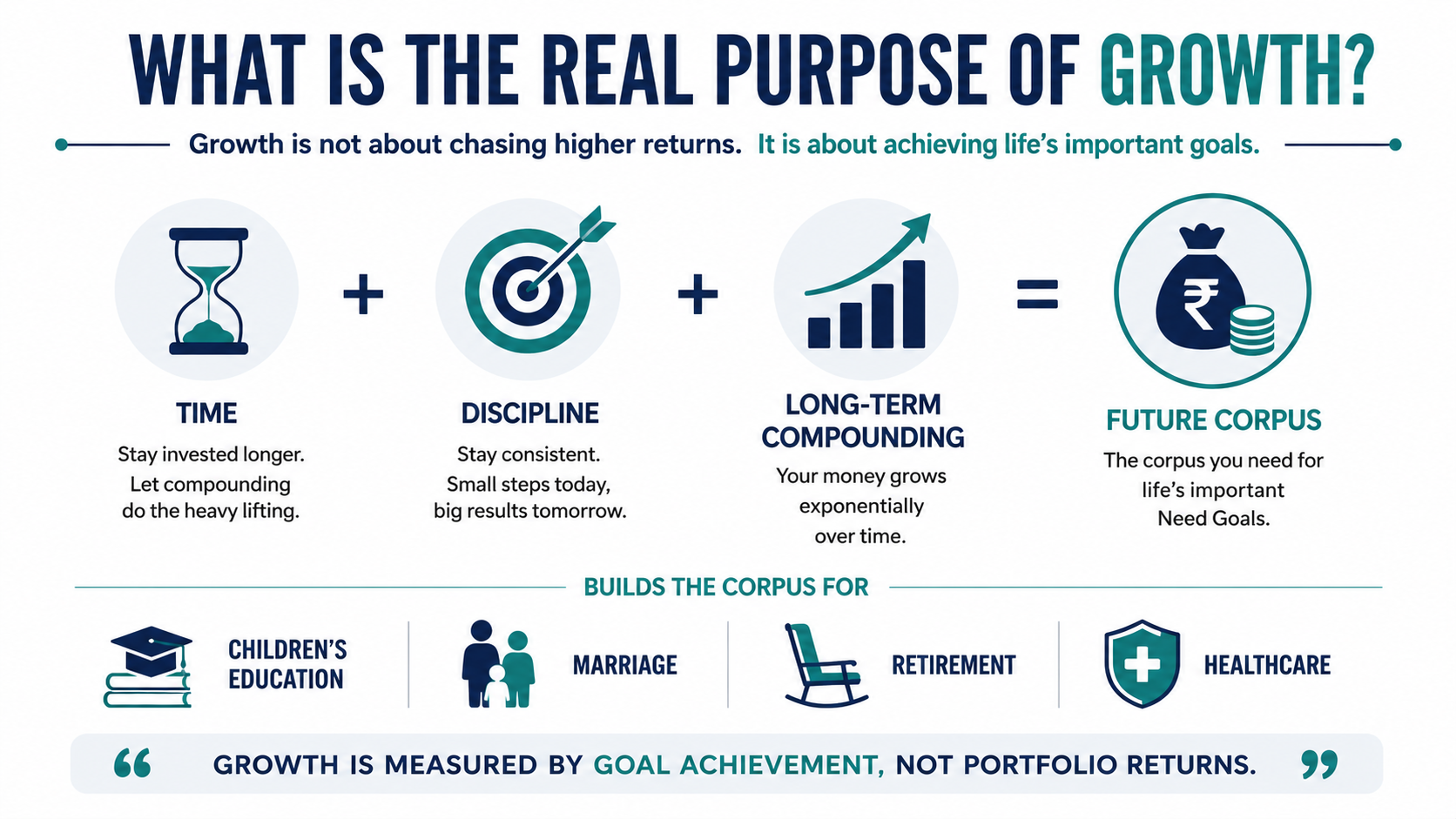
The purpose of the Growth Layer is not to chase the highest possible return. Its purpose is to create the Future Corpus required to fund retirement, children’s education, marriage and other Need Goals.
Growth should therefore be measured by its ability to achieve financial goals—not by the returns it generates.
Time Is the Biggest Growth Multiplier
Two investors earning exactly the same rate of return can achieve dramatically different outcomes simply because one started earlier.
In Part 8, I shared the example of Ravi and Kadam.
Ravi began investing seven years before Kadam. As a result, Ravi invested approximately ₹98 lakhs over 24 years to build a corpus of ₹3 crores. Kadam, despite earning the same return, had to invest nearly ₹1.4 crores over 17 years to reach the same corpus.
The lesson is simple.
Time contributes more to wealth creation than most investors realise.
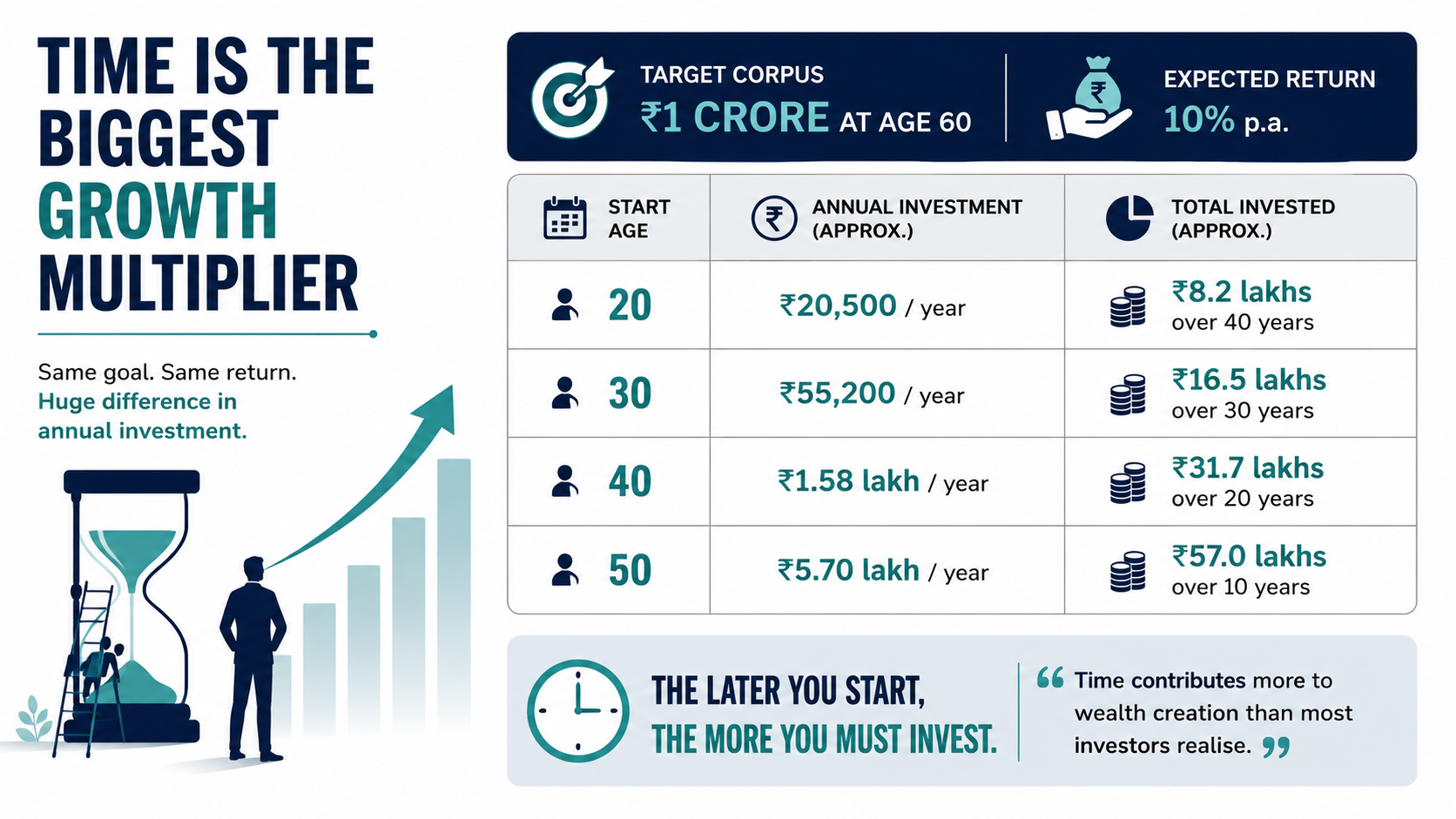
Consider another example. Suppose your objective is to build a corpus of ₹1 crore by age 60, assuming a return of 10% per annum.
- Start at age 20 and you need to invest about ₹20,500 per year.
- Start at age 30 and the annual investment rises to about ₹55,200.
- Start at age 40 and it increases to approximately ₹1.58 lakh.
- Delay until age 50 and the annual commitment jumps to over ₹5.7 lakhs.
The longer you wait, the more money you must contribute to compensate for the time lost.
Time is the golden parameter of growth.
Returns Matter—But Time and Discipline Matter More
Investors often spend enormous effort searching for an extra 1–2% return.
Yet that small increase can never compensate for years lost due to delayed or interrupted investing.
Higher expected returns also come with higher risk. On the other hand, starting early and remaining invested require no market prediction—only discipline.
The two greatest drivers of long-term wealth creation are time and consistency.
Growth Should Be Measured by Goal Achievement
A portfolio earning 15% is a failure if it does not create the required corpus.
A portfolio earning 11% is a success if every Need Goal is fully funded.
The true purpose of the Growth Layer is to create an inflation-adjusted corpus for:
- Children’s education and marriage
- Retirement
- Healthcare and medical needs
As inflation increases the future cost of these goals, the investment corpus must grow fast enough to preserve the family’s future lifestyle.
Growth is therefore about achieving financial outcomes—not outperforming a benchmark.
Captain Prashant’s Story
Captain Prashant, a senior pilot with Air India, first met me early in his career.
Whenever I suggested starting a retirement plan, he would smile and say that retirement was too far away to think about.
After marriage, buying a house became the priority.
After his first child, family expenses increased.
After the second child, saving became even more difficult.
Years passed, and at the age of forty, he finally decided to begin planning for retirement.
Then life took an unexpected turn.
A divorce, maintenance obligations and a large financial settlement forced him to borrow heavily. Repaying the loan became his immediate priority, and retirement planning was delayed yet again.
He eventually began investing seriously at the age of forty-six.
Despite a disciplined effort during the remaining years of his career, he could never accumulate the retirement corpus he had originally needed.
His biggest regret was not choosing the wrong investment.
It was starting too late.
Growth Depends on Protection and Stability
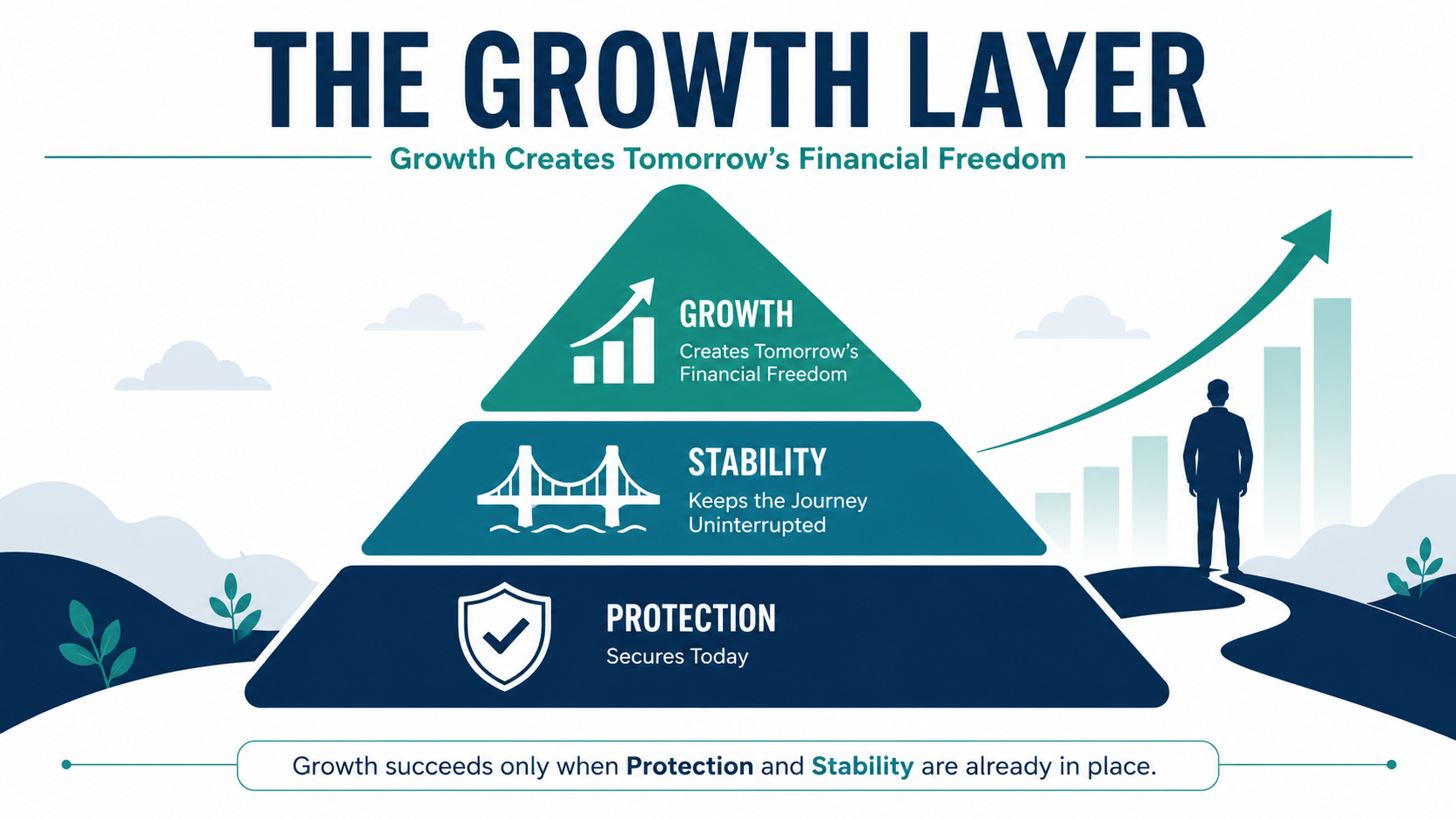
Growth is the final layer because it rests on the foundation beneath it.
Protection safeguards today’s financial continuity.
Stability ensures the investment journey remains uninterrupted.
Only then can Growth create the Future Corpus required for long-term financial freedom.
A sail may provide the power to move a boat, but without a strong hull and the necessary safety equipment, it will never reach its destination safely.
Similarly, returns alone cannot guarantee financial success. They must be supported by Protection and Stability.
The Three-Layer Framework
Protection protects today’s financial continuity.
Stability keeps the journey uninterrupted.
Growth creates tomorrow’s financial freedom.
Together, these three layers transform financial planning from selecting investment products into creating lifelong financial continuity.
In the next article, we move from the three layers to the first of the two risks in the framework—Investment Volatility Risk—and why understanding market volatility is essential for long-term investing.
The link to the next Blog 12 is given below, but if you have not read Previous Blogs then you can go right below to go to Blog 1