
THE MISSING LINK IN FINANCIAL PLANNING – Part 9
July 14, 2026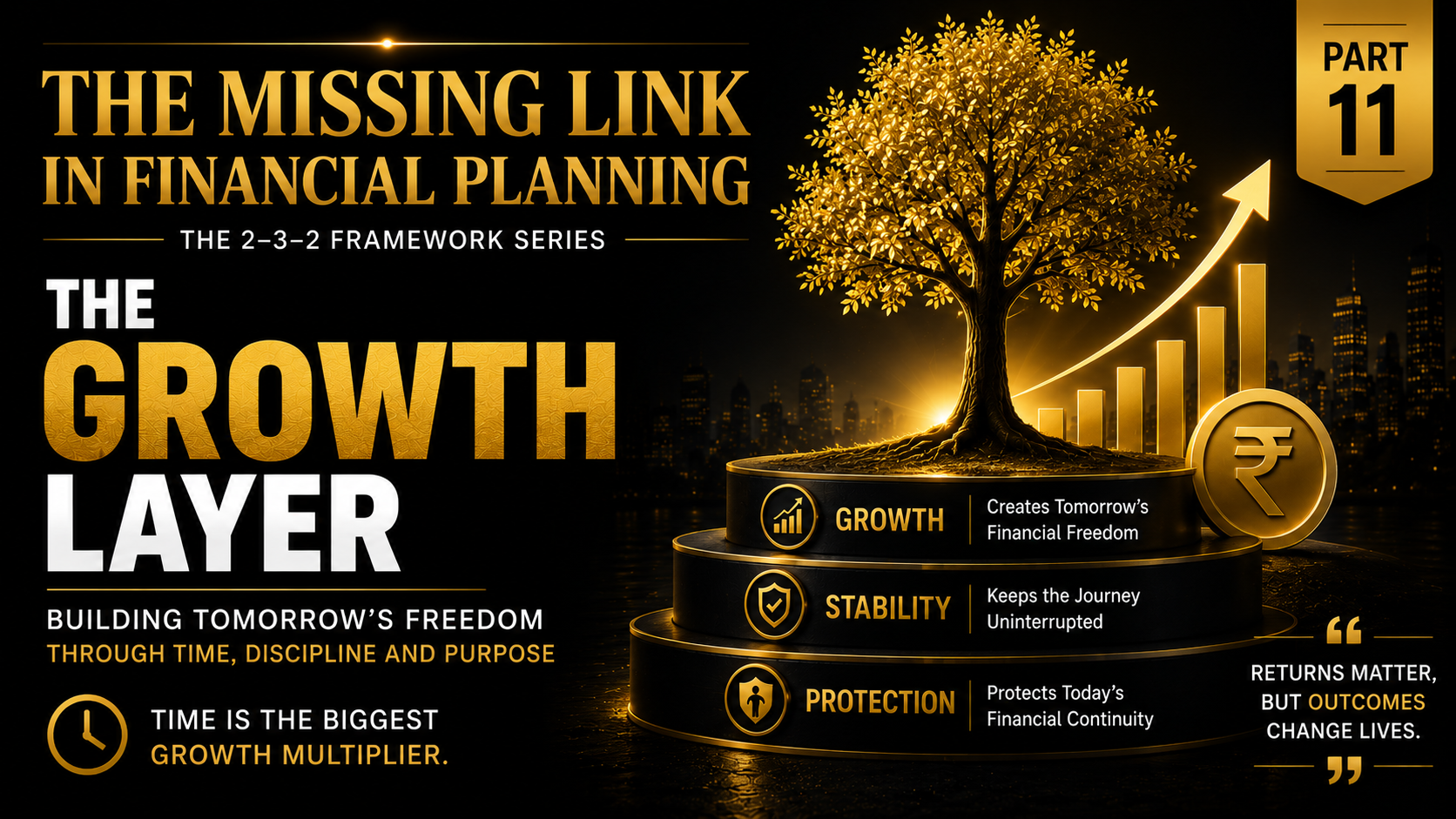
THE MISSING LINK IN FINANCIAL PLANNING – Part 11
July 29, 2026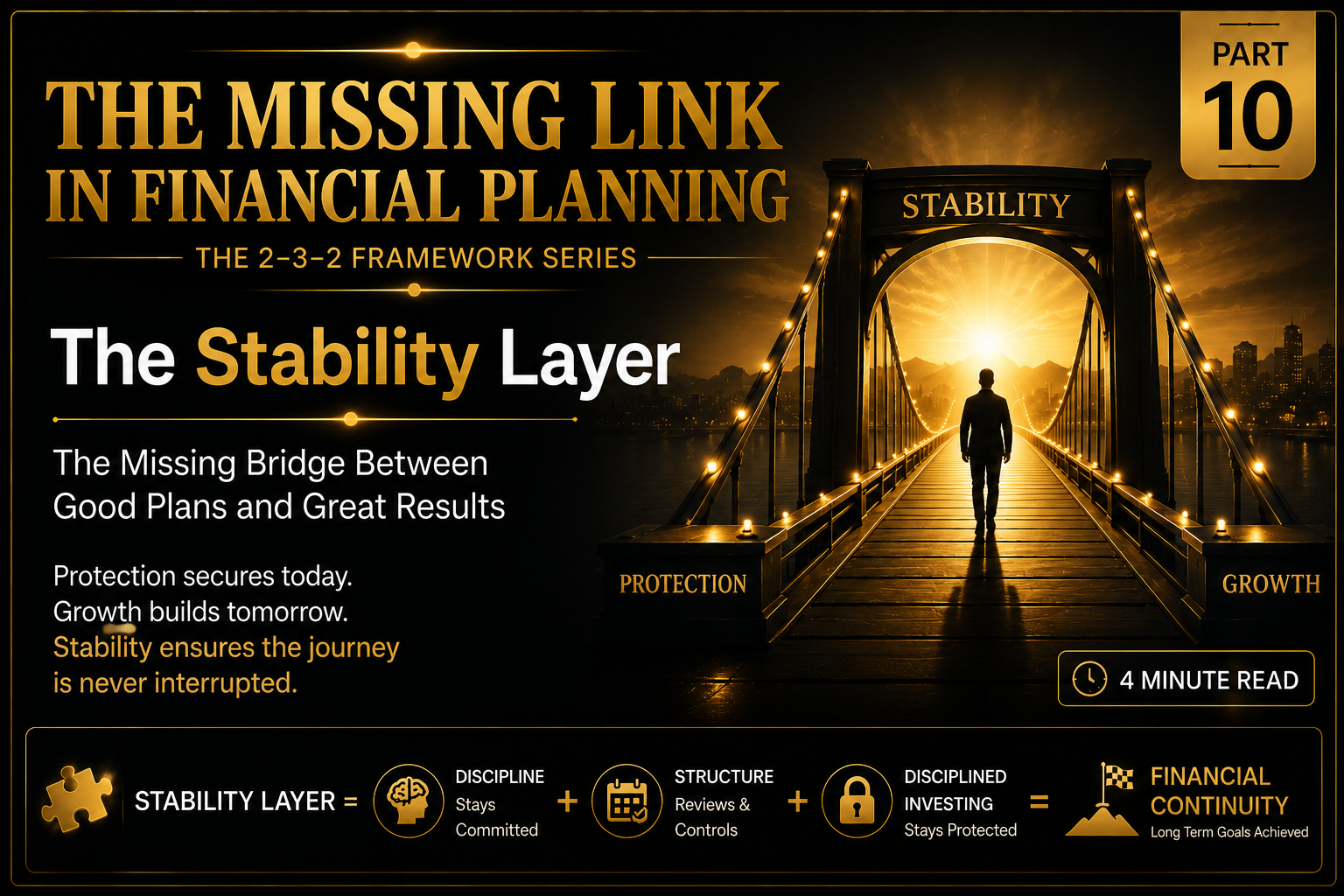
The Stability Layer
Why Financial Planning Should Be More Concerned About Discipline than Returns
In the earlier parts of this series, I introduced the importance of discipline and continuity in making compounding work, explained the Stability Layer as the missing dimension in financial planning, distinguished between Investment Volatility Risk and Behavioural Discipline Risk, and introduced the 2–3–2 Framework consisting of 2 Gaps, 3 Layers and 2 Risks. We then explored the Present Gap, the Future Gap, the difference between Need Goals and Want Goals, and, in the previous article, the first of the three layers—the Protection Layer.
In this article, we move to the second layer: The Stability Layer.
Why Protection and Growth Alone Are Not Enough
Traditional financial planning focuses on two objectives—Protection and Growth. Protection safeguards today’s financial risks, while Growth creates tomorrow’s wealth.
Yet, between these two lies a missing dimension.
Compounding works only when investments remain uninterrupted for long periods. The best investment strategy cannot deliver its intended results if investors repeatedly stop, withdraw or divert their investments.
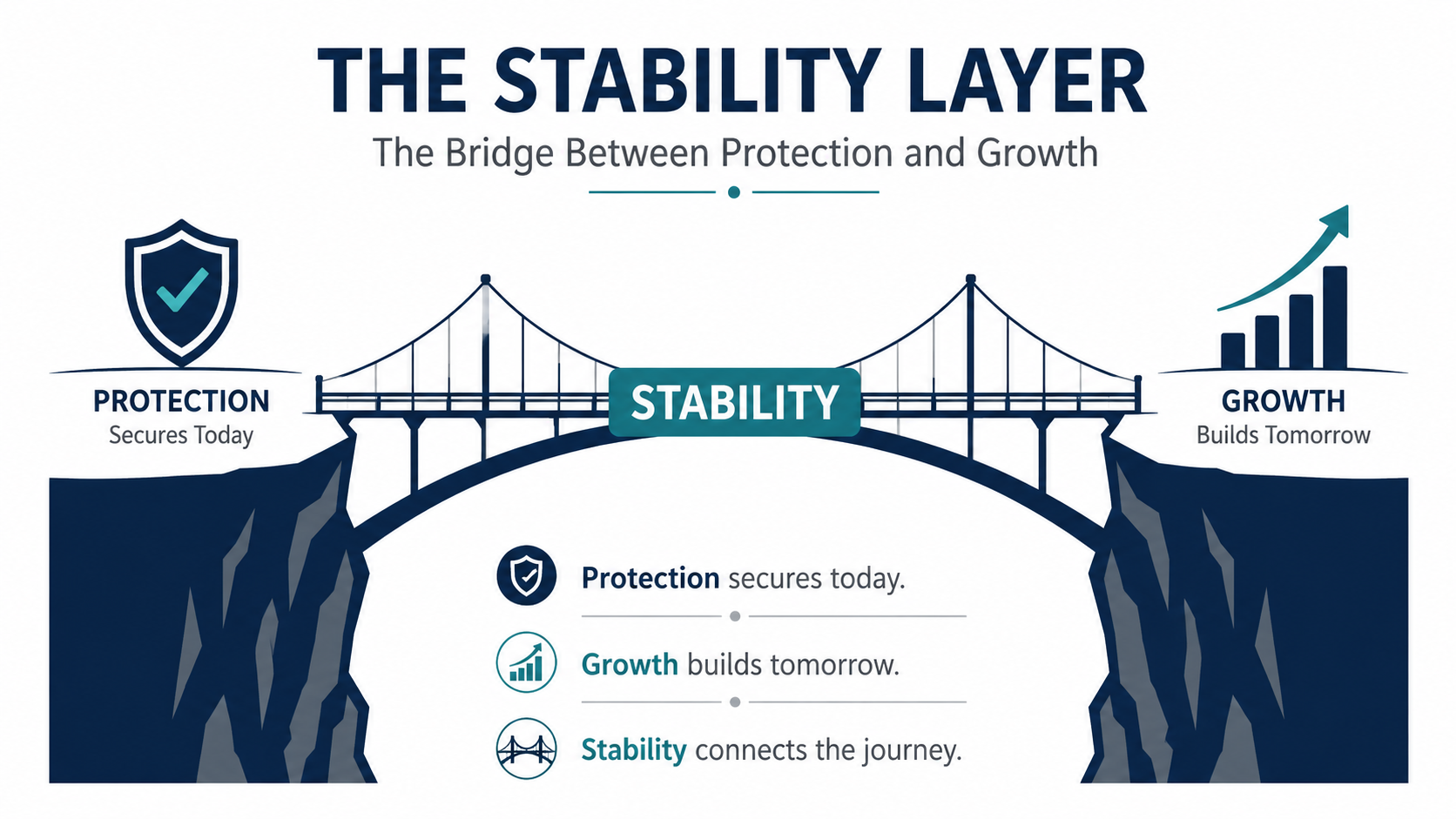
Protection covers the Present Gap.
Growth builds the Future Gap.
Stability connects the two by ensuring the journey continues long enough for compounding to reach its destination.
Stability Means Behavioural Continuity
The Stability Layer is a framework that helps families remain committed to their financial plan despite life’s inevitable interruptions.
The greatest challenge in financial planning is not selecting the right investment. It is ensuring that families stay committed to their goals for twenty or thirty years.
People rarely abandon their plans because they lack financial knowledge. More often, they simply fail to recognise the long-term consequences of short-term decisions. Every withdrawal, delay or diversion may appear insignificant today, but its impact on future wealth can be enormous.
This is why financial planning should not merely recommend investments. It should also create structures that encourage consistency, reinforce discipline and periodically remind families of the consequences of deviating from the plan.
After all, wealth is created less by extraordinary returns and more by extraordinary consistency.
What Breaks Stability?
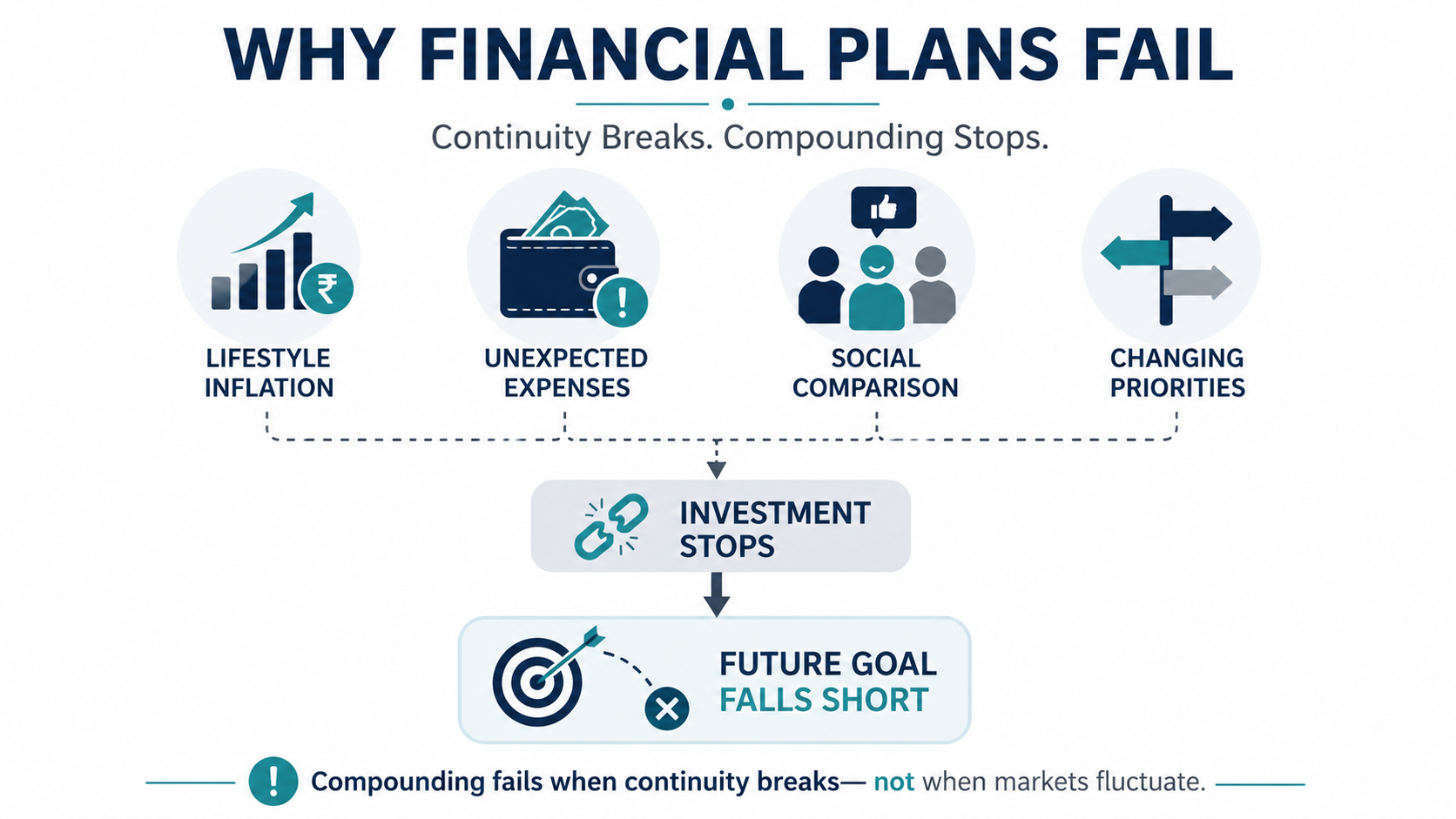
The greatest threats to long-term financial success are rarely market crashes. They are everyday behavioural decisions such as:
- Lifestyle inflation
- Unexpected expenses
- Social comparison
- Changing priorities
These are the real enemies of compounding because they quietly interrupt continuity.
How Do We Build Stability?
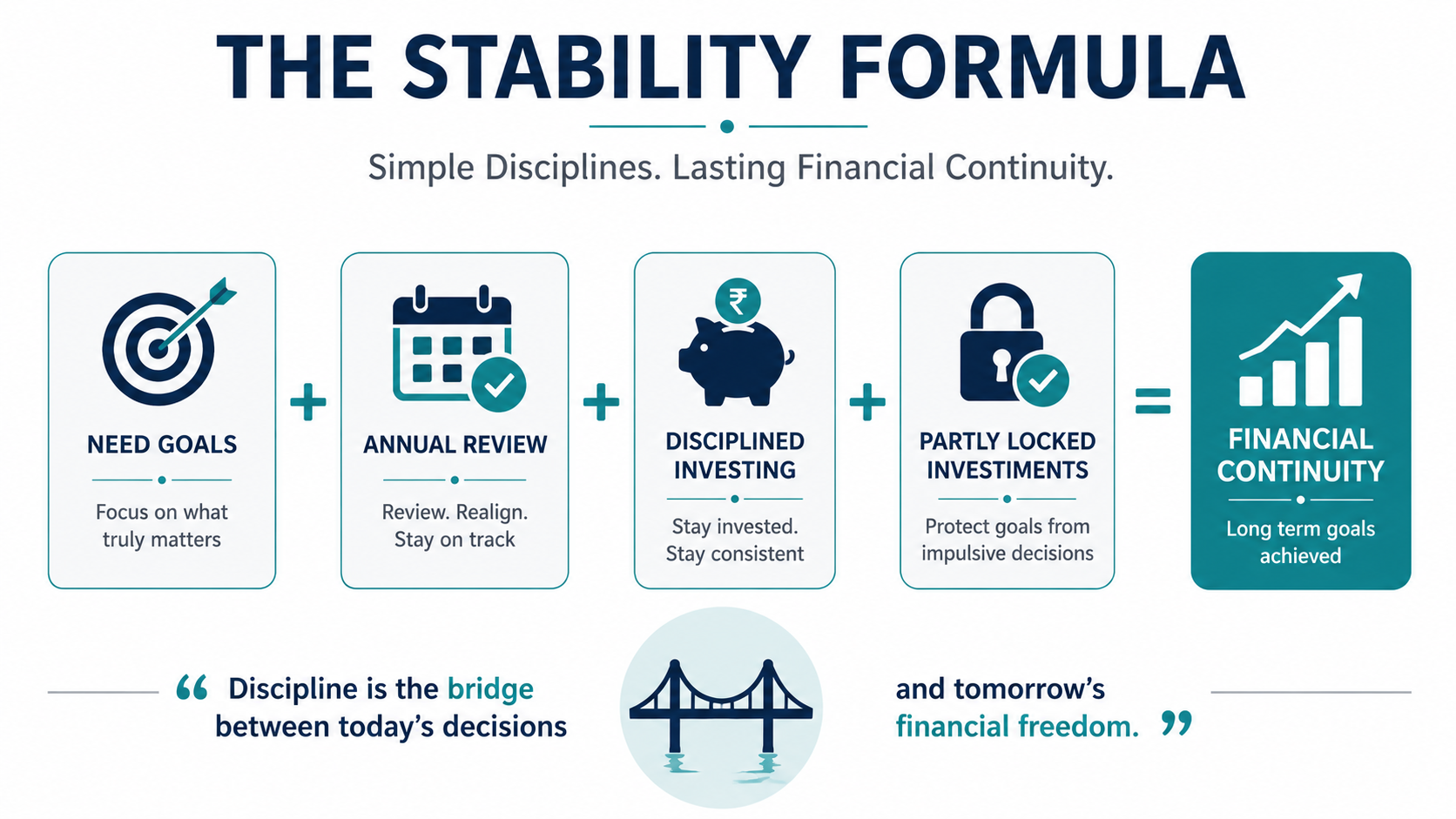
Some investors naturally possess the discipline to stay invested through every phase of life. However, most families benefit from a framework that keeps them focused on their long-term objectives.
The first step is clearly separating Need Goals from Want Goals. Need Goals should never be compromised to satisfy temporary desires.
The second step is conducting an annual financial review. Regular reviews help families identify deviations early and make corrections before they become permanent.
The third step is recognising that complete liquidity is not always beneficial. While traditional financial planning often favours maximum flexibility, I believe a portion of long-term investments should remain appropriately locked. This reduces the temptation to redeem investments for emotional or impulsive spending and protects Need Goals from being sacrificed for Want Goals.
Together, these simple disciplines create a Stability Layer that keeps families on track for decades.
Mr. Siddesh’s Story
One of my clients, Mr. Siddesh, had a cheerful personality and believed life should be enjoyed in the present. Whenever I spoke about investing consistently, he would smile and sing,
“Kal kya hoga kisko pata, abhi zindagi ka le lo maza.”
No matter how hard I tried, I could never convince him that financial discipline today creates financial freedom tomorrow.
Years later, after retirement, he came to me for help in planning his finances.
As we reviewed his situation, I discovered that a substantial part of his retirement corpus had been spent on purchasing a larger house and organising a lavish wedding for his son.
After completing the calculations, I had to tell him something he never expected—his remaining savings would not be sufficient to support his lifestyle. He would have to take up a job after retirement.
Today, he works as the manager of a residential society.
Whenever we meet, he never says a word about that conversation years ago. Yet, I can see in his eyes the silent regret of someone who wishes he had chosen discipline over momentary gratification.
The Stability Layer Creates Financial Continuity
Protection protects today’s financial continuity.
Growth builds tomorrow’s financial freedom.
Stability ensures the journey between the two is never interrupted.
I believe every long-term financial plan should combine disciplined investing, periodic reviews and an appropriate level of locked investments within the debt portion of the portfolio. Together, these create the behavioural safeguards that prevent temporary desires from destroying permanent goals.
The Stability Layer is therefore much more than another component of financial planning. It is the bridge that transforms a well-designed financial plan into a successful financial outcome.
It answers one of the most important questions in financial planning:
How do ordinary families remain invested for twenty or thirty years?
Because in the end, financial success is determined not by the brilliance of the investment strategy, but by the discipline to stay with it until compounding has completed its work.
A financial plan must also create sufficient wealth to bridge the Future Gap. In the next article, we will explore the third and final layer of the framework—the Growth Layer—and why long-term wealth creation requires much more than simply chasing higher returns.
Link given here for my next Blog Part No 11. If you are new to these Blogs below blog 11 you will find link to Blog 1 so you can read from the start