

THE MISSING LINK IN FINANCIAL PLANNING – Part 8
July 8, 2026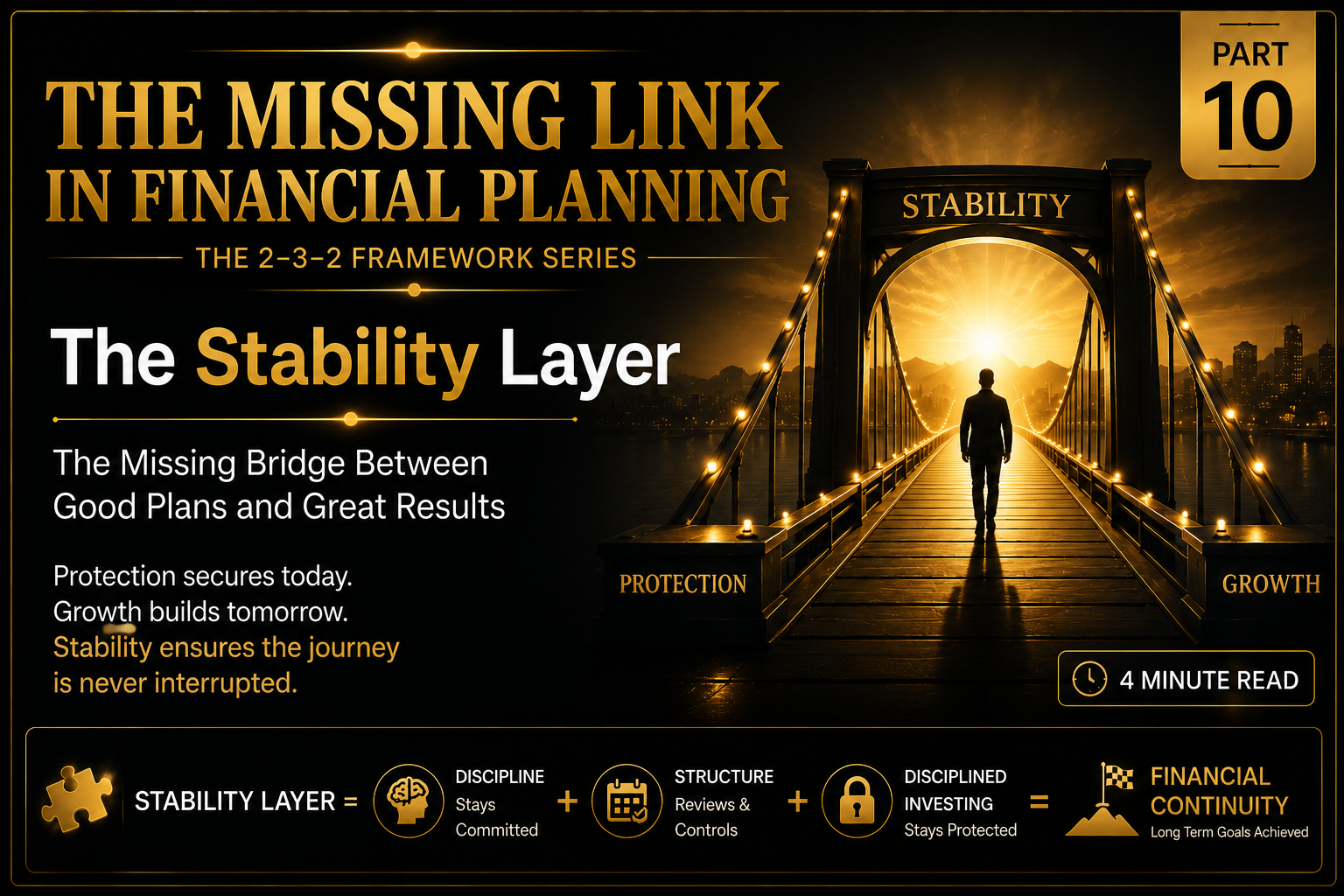
THE MISSING LINK IN FINANCIAL PLANNING – Part 10
July 22, 2026
The Protection Layer
Why Financial Planning Must Begin with Protecting Today’s Financial Continuity
In the earlier parts of this series, I introduced the importance of discipline and continuity in making compounding work, explored the Stability Layer as a missing dimension in financial planning, explained the difference between Investment Volatility Risk and Behavioural Discipline Risk, and introduced the 2–3–2 Framework consisting of 2 Gaps, 3 Layers and 2 Risks.
We then explored the Present Gap, the Future Gap, and the difference between Need Goals and Want Goals.
In this article, we begin the second part of the framework by exploring the first of the three layers—the Protection Layer.
What is the Protection Layer?
The Protection Layer is designed to create the financial resources required to protect a family’s lifestyle when life takes an unexpected turn.
It addresses risks such as:
- Death
- Disability
- Temporary loss of income
- Medical emergencies
In simple words,
If your income stopped tomorrow, would your family be able to continue its current lifestyle without financial compromise?
If the answer is “No,” the Protection Layer is incomplete.
Unlike the Future Gap, which prepares us for tomorrow’s responsibilities, the Protection Layer protects us from today’s uncertainties.
Why Most Families Ignore It
During my four decades of working with more than 2,000 families, I have observed one common pattern.
Most people plan seriously for events they know will happen, such as retirement or their children’s education.
Very few prepare for events that may happen.
Death.
Disability.
Critical illness.
Loss of income.
These are considered low-probability events.
People naturally believe, “It won’t happen to me.”
Unfortunately, financial planning is not about predicting who will face a crisis.
It is about ensuring that if a crisis occurs, the family’s financial continuity remains intact.
A Real-Life Example
Many years ago, my close friend Anand owned a printing press.
Whenever I discussed financial protection with him, he would smile and say, “Don’t push protection products.”
A few years later, Anand’s cousin approached me because his bank required life insurance before sanctioning a ₹20 lakh loan.
The requirement was simple.
A ₹10 lakh life insurance policy each for the husband and wife.
I suggested that he review his family’s overall protection needs.
He politely declined.
“The policy is only for the bank,” he said.
Exactly one year later, just before the second premium became due, he suffered a massive heart attack.
He was admitted to hospital, but despite medical treatment, he passed away the following day.
The ₹10 lakh insurance claim cleared the bank loan.
But it could not replace the family’s income.
The very next day, his widow gave birth to their child.
A week later, Anand called me.
This time, his question was completely different.
He wanted a ₹6 crore life insurance policy.
The same person who had once dismissed protection had suddenly realised its value.
Nothing had changed except one thing.
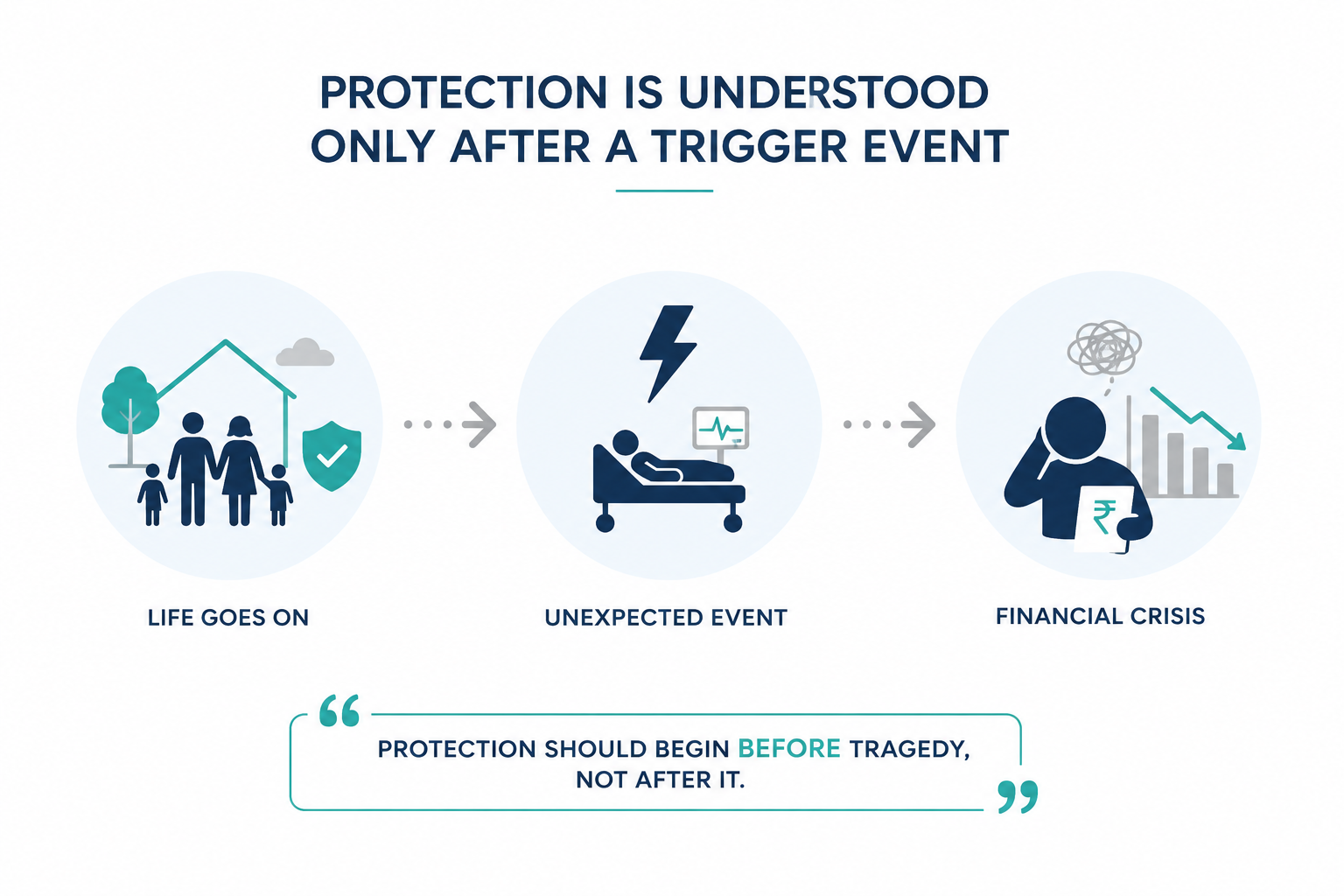
A tragedy had become personal.
The Lesson
Most people understand the importance of protection only after a trigger event affects someone close to them.
Good financial planning should not depend on personal tragedy to create awareness.
It should prepare families before life tests them.
Building the Protection Layer
The Protection Layer is much more than buying an insurance policy.
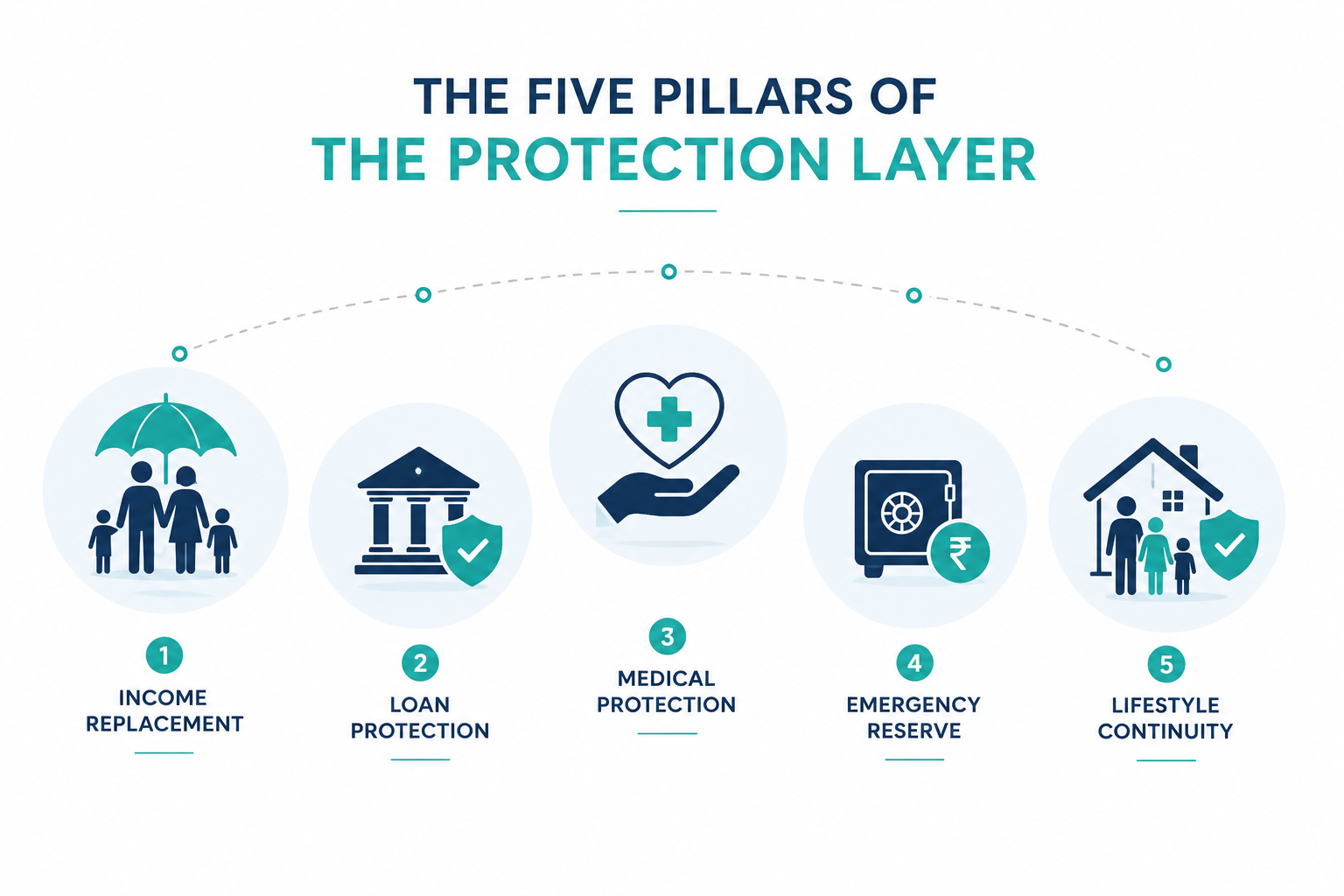
It is about ensuring that the Present Gap is fully funded.
A complete Protection Layer should provide for:
- Income replacement
- Loan protection
- Medical emergencies
- Emergency reserves during temporary income loss
- Lifestyle continuity for the family
Insurance is an important part of this solution.
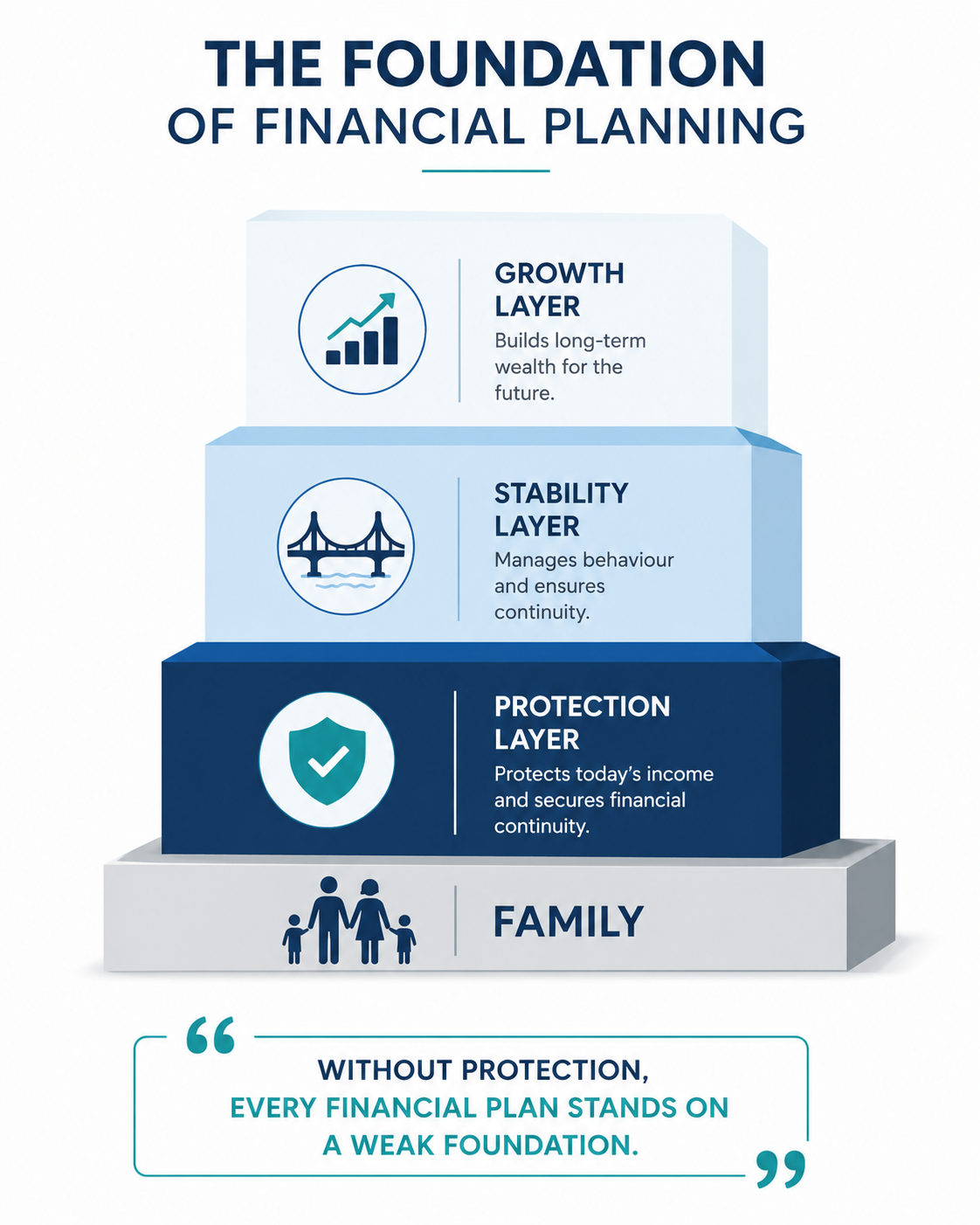
But it is not the entire solution.
The objective is simple:
Reduce the Present Gap to zero.
Why Insurance Is So Powerful
Most financial instruments require years of saving before they create meaningful capital.
Insurance is different.
It creates a large financial corpus immediately in exchange for a relatively small annual premium.
In Anand’s cousin’s case, the family had paid only one annual premium before receiving ₹10 lakh.
No other financial instrument can create immediate capital in this manner.
That is why insurance forms the foundation of the Protection Layer.
Protection Before Wealth
Many investors focus first on wealth creation.
In reality, wealth can only grow securely when it rests on a strong foundation.
A beautifully designed house cannot stand without a solid foundation.
Similarly, a financial plan cannot succeed if the family’s present risks remain unprotected.
The Protection Layer is not about selling insurance.
It is about protecting financial continuity.
Without protection, the Growth Layer remains vulnerable.
Without protection, long-term goals remain exposed.
Without protection, financial planning rests on hope rather than preparation.
Coming Next…
If the Protection Layer secures today’s financial continuity, what keeps investors committed to their long-term plan for decades?
In the next article, we will explore the Stability Layer and discover why managing behaviour is just as important as managing money.
Next Blog
If you have not read my previous articles, you can go to Blog 1 and start reading the full series