
THE MISSING LINK IN FINANCIAL PLANNING – Part 11
July 29, 2026
THE MISSING LINK IN FINANCIAL PLANNING – Part 13
August 12, 2026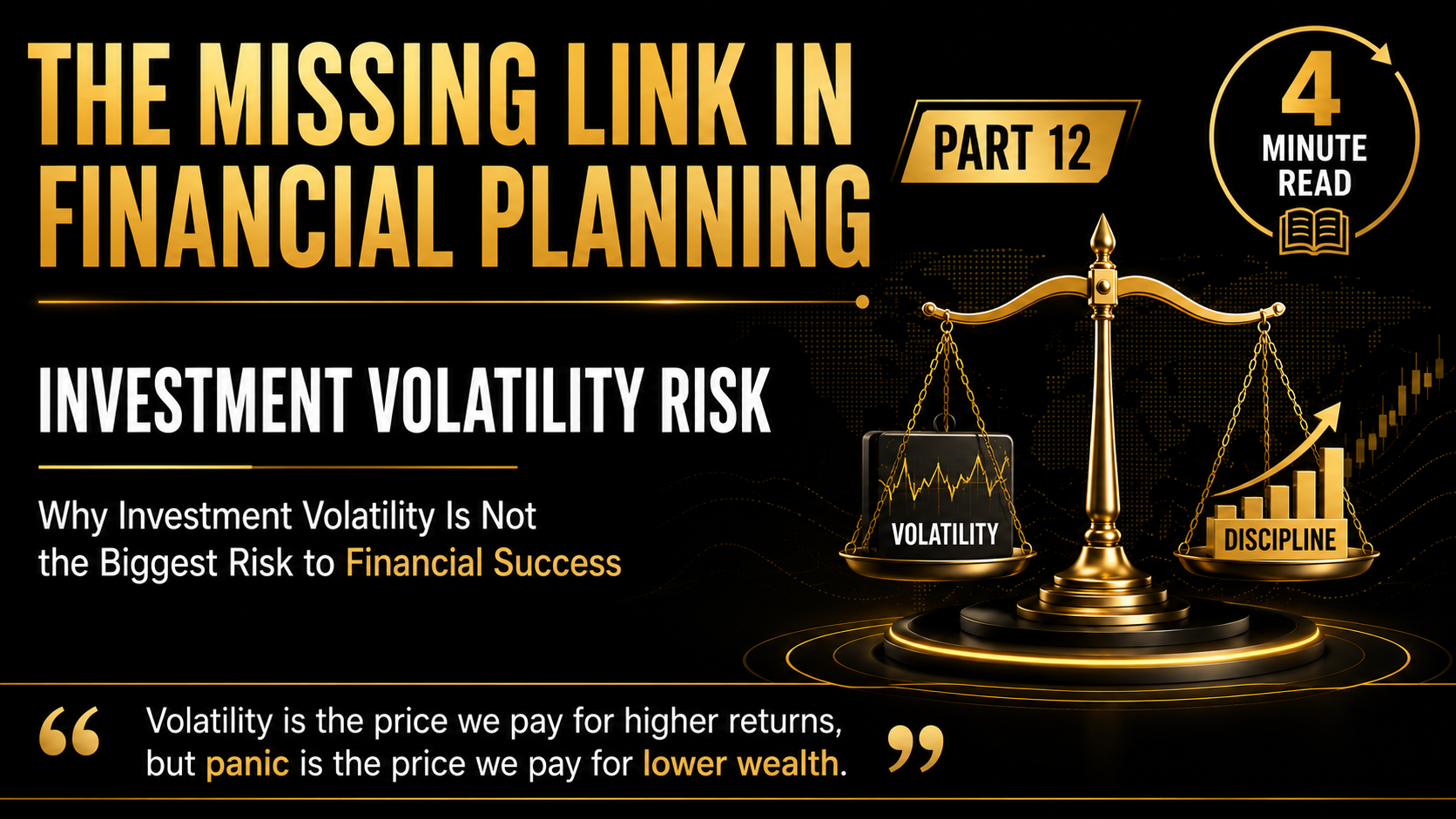
Investment Volatility Risk
Why Investment Volatility Is Not the Biggest Risk to Financial Success
In the earlier parts of this series, I introduced the importance of discipline and continuity in making compounding work, explained the Stability Layer as the missing dimension in financial planning, distinguished between Investment Volatility Risk and Behavioural Discipline Risk, and introduced the 2–3–2 Framework consisting of 2 Gaps, 3 Layers and 2 Risks. We then explored the Present Gap, the Future Gap, the difference between Need Goals and Want Goals, and the three layers—Protection, Stability and Growth.
In this article, we begin the third part of the framework by understanding the first of the two risks—Investment Volatility Risk.
What is Investment Volatility Risk?
Investment Volatility Risk is an investor’s ability to withstand temporary market fluctuations without abandoning a long-term financial plan.
Market volatility creates fear and uncertainty. Some investors panic because they do not fully understand how equity markets create long-term wealth. Others have experienced losses in the past and fear history will repeat itself.
The reality is that equity is volatile in the short term but has historically rewarded disciplined investors over the long term. Unfortunately, emotions often override logic. Investors tend to buy when markets are rising and sell when markets are falling—the exact opposite of what long-term wealth creation demands.
A sound understanding of market behaviour enables investors to remain calm during corrections, continue investing and even accumulate quality investments at lower prices.
Volatility Is Normal—Not a Crisis
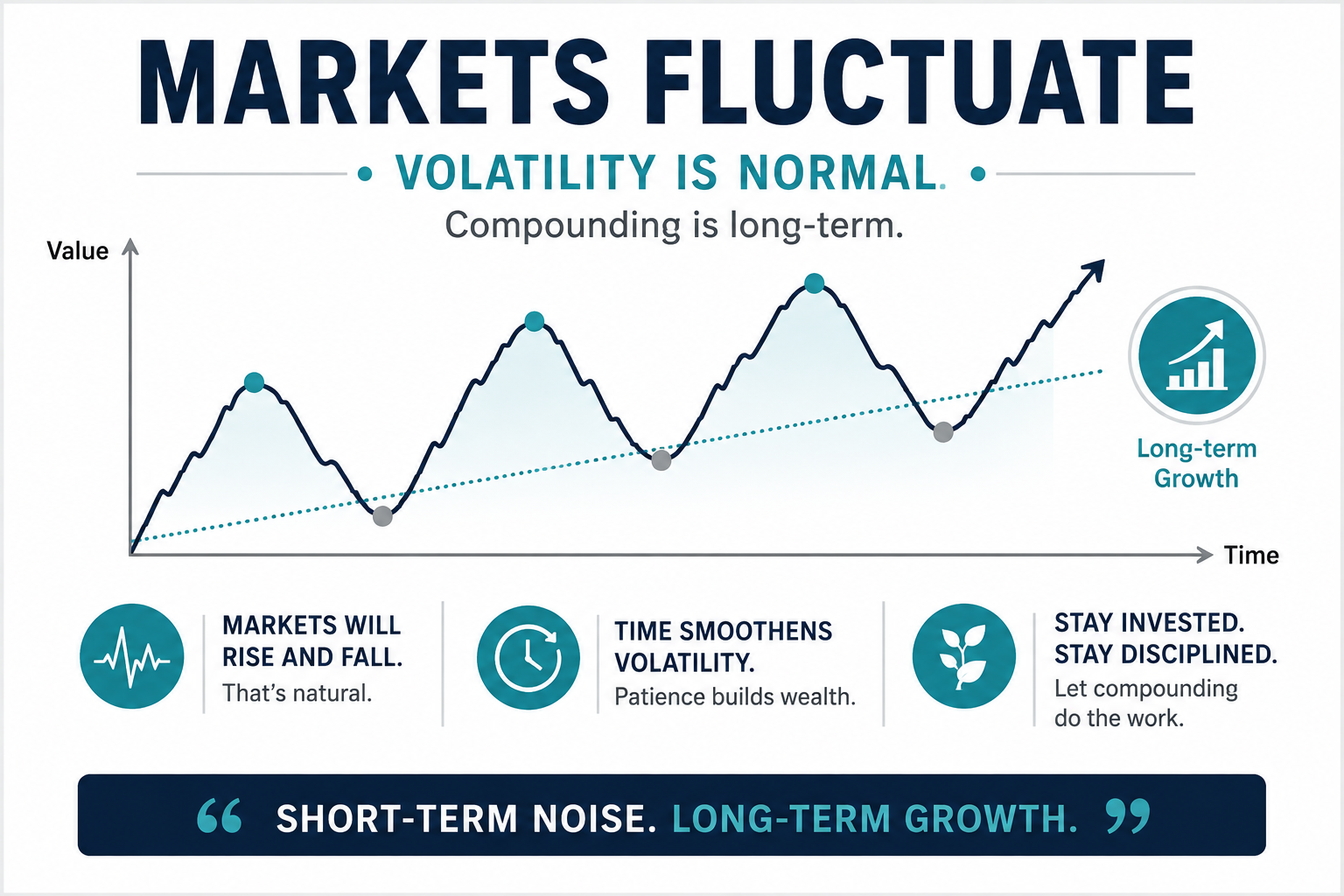
Markets are designed to fluctuate.
Volatility is not a flaw in the equity market; it is the price investors pay for earning higher long-term returns.
Risk and return are directly related. Investments capable of generating higher returns naturally experience greater short-term fluctuations.
Successful investors understand that volatility is temporary, while compounding works over decades.
Traditional Financial Planning Began with Risk and Return
In 1952, Harry Markowitz, later awarded the Nobel Prize in Economics, introduced Modern Portfolio Theory, fundamentally changing the way investments were managed.
His research demonstrated that investors could reduce overall portfolio risk through diversification without necessarily sacrificing returns. This led to the concept of Asset Allocation, which remains one of the cornerstones of modern financial planning.
For decades, financial planning has focused on balancing risk and return through an appropriate mix of equity, debt and other asset classes.
This framework has transformed the investment industry.
However, it primarily addresses one type of risk—the risk arising from market volatility.
My experience over four decades suggests there is another equally important risk that deserves attention: the risk that investors themselves abandon their financial plans.
That distinction becomes clearer when we separate Investment Volatility Risk from Behavioural Discipline Risk.
Price Is Not Value
A falling market does not necessarily mean an investment has lost its long-term value.
When markets decline, the number of units or shares you own remains unchanged. Only their market price fluctuates.
This is precisely why Systematic Investment Plans (SIPs) are so effective. Falling markets allow investors to accumulate more units at lower prices, reducing the average cost of investment over time.
For disciplined investors, market corrections are opportunities—not disasters.
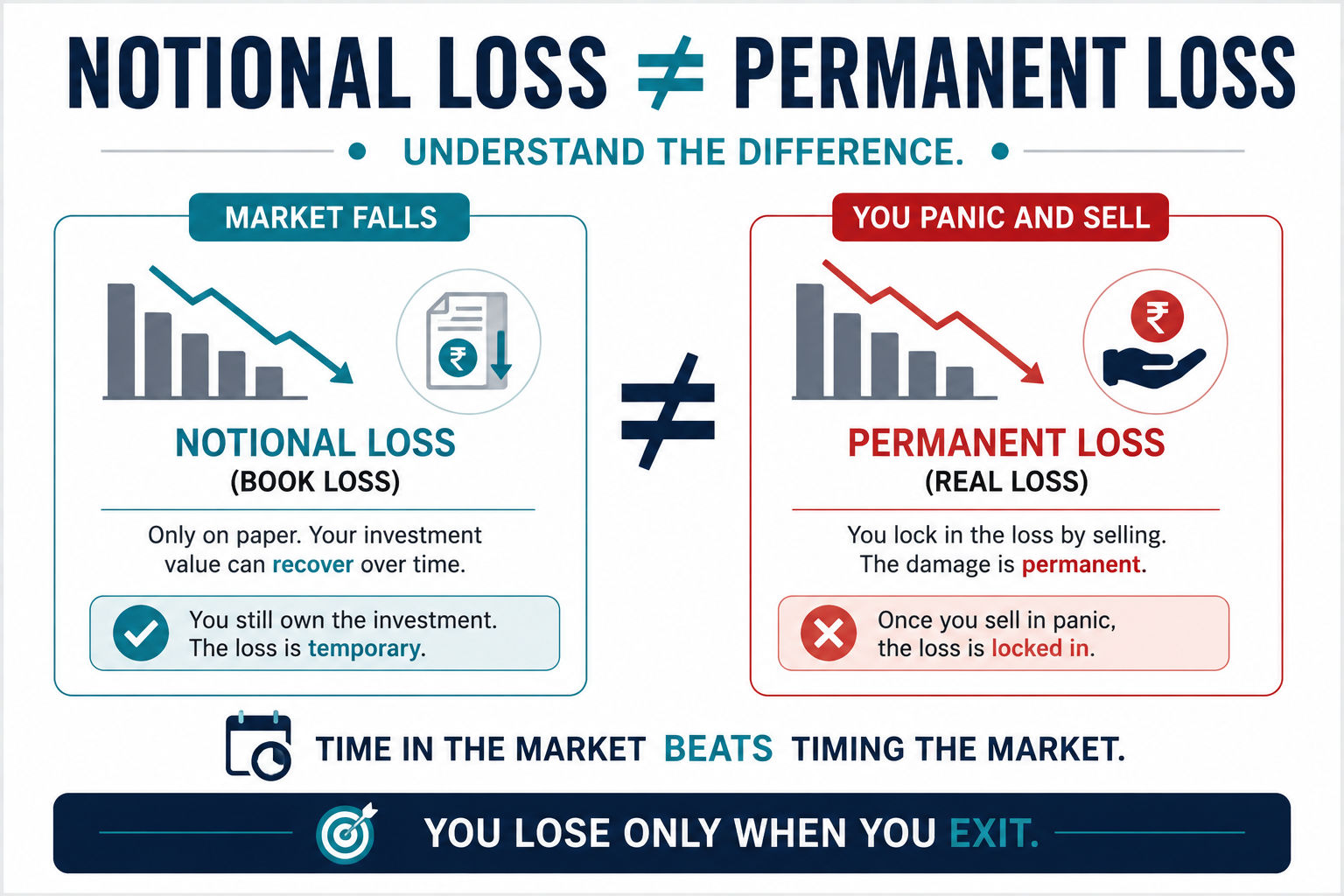
Temporary Loss vs Permanent Loss
One of the most important lessons in investing is understanding the difference between a temporary loss and a permanent loss.
As long as an investment is not sold, a decline in value remains a notional loss.
It becomes a permanent loss only when the investor panics and exits at the wrong time.
Markets recover.
Many investors do not.
Measuring Investment Volatility Risk
Traditional financial planning addresses Investment Volatility Risk through a Risk Profiler, which broadly classifies investors as Aggressive, Moderate or Conservative.
This helps advisors recommend an appropriate asset allocation based on an investor’s ability to withstand market fluctuations.
Aggressive investors are comfortable with higher volatility.
Moderate investors can tolerate fluctuations only up to a certain level.
Conservative investors prefer stability and have a much lower tolerance for market declines.
Modern financial planning has done an excellent job of helping advisors match investments to these different risk profiles.
The Prashant Mistry Story
When my client, Mr. Prashant Mistry, retired, his Risk Profiler indicated a Moderate risk profile.
Instead of simply reducing his equity exposure because of his age, I divided his retirement corpus into three time-based buckets.
The first bucket, invested in liquid and debt funds, was designed to meet his living expenses for the first three years.
The second bucket, invested in balanced funds, would support the next four years.
The third bucket, invested largely in diversified equity funds, was meant for expenses beyond seven years.
Since this money would not be required immediately, it had sufficient time to benefit from long-term market growth while comfortably absorbing short-term volatility.
I have adopted a similar approach in planning my own retirement.
The lesson is simple:
Time horizon should determine investment allocation—not age alone.
Looking Beyond Market Risk
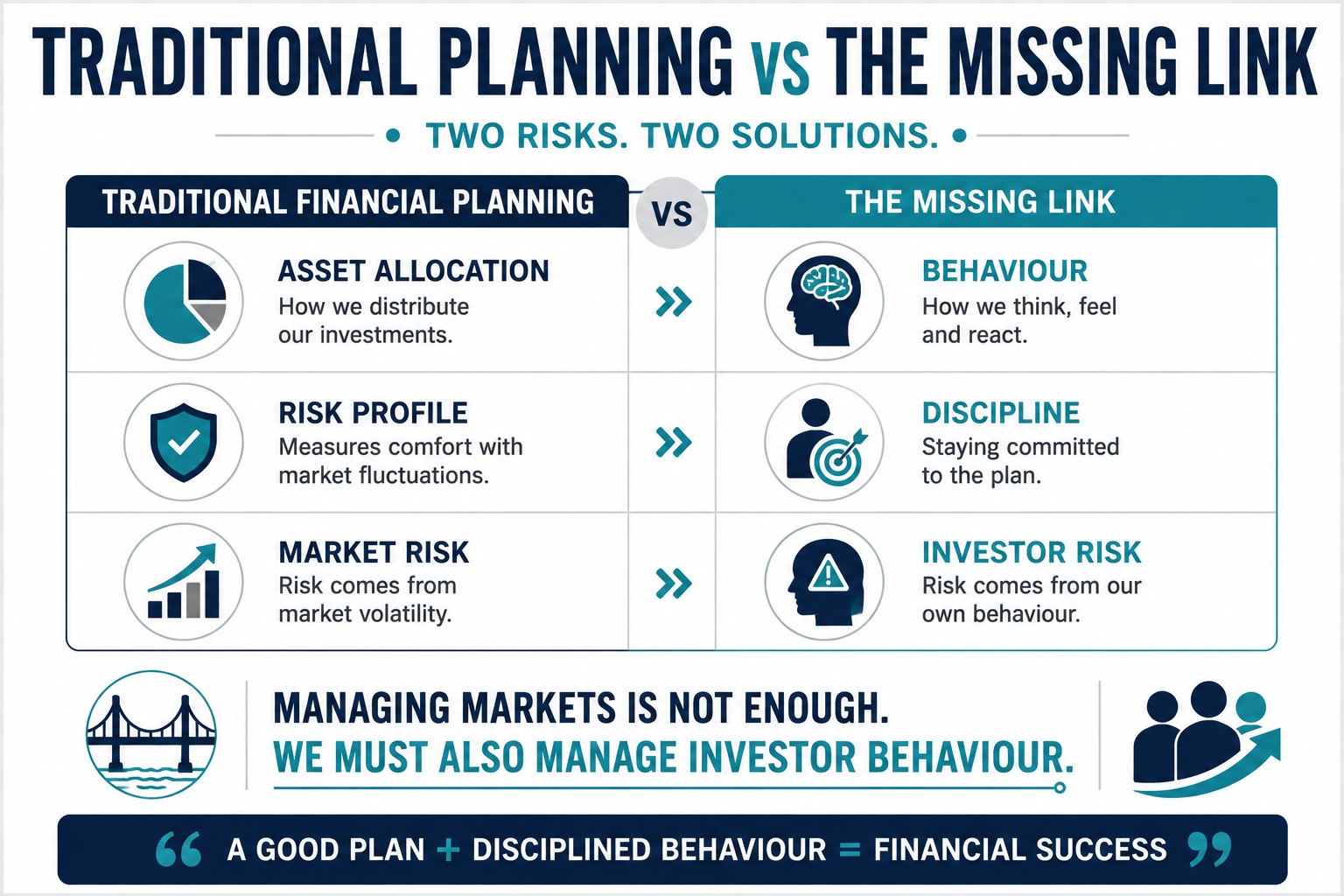
The market creates Investment Volatility Risk.
The investor creates Behavioural Discipline Risk.
Traditional financial planning has developed effective tools to manage market risk through asset allocation and risk profiling.
But managing investor behaviour requires an entirely different framework.
That is where the Missing Link begins.
If market volatility affects every investor, why do some remain calm while others panic?
In the next article, we will explore the second and far more powerful risk in financial planning—Behavioural Discipline Risk.
To go to the NEXT Blog click here. To go to Blog No 1 Scrol below this link
If you have not read all my previous blogs, then I am giving the link to my 1st Blog so you can read all the articles from the previous ones