

The Missing Link in Financial Planning – Part 21
October 7, 2026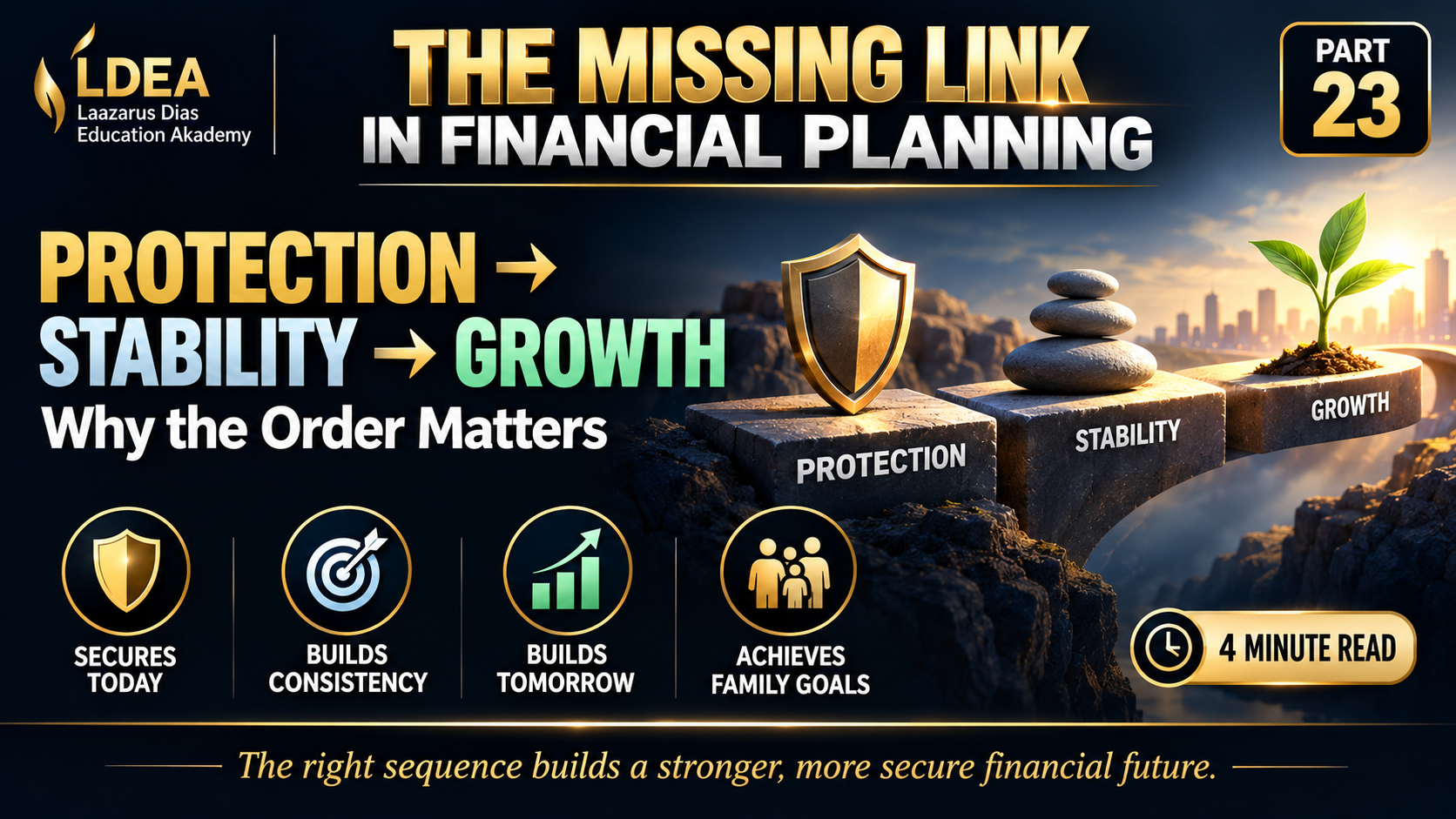
THE MISSING LINK IN FINANCIAL PLANNING — PART 23
October 21, 2026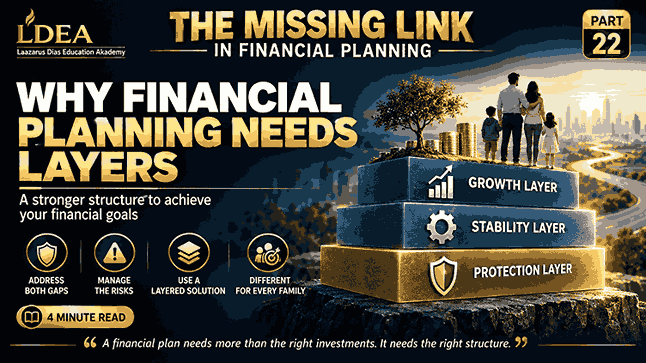
Why Financial Planning Needs Layers
The Problem
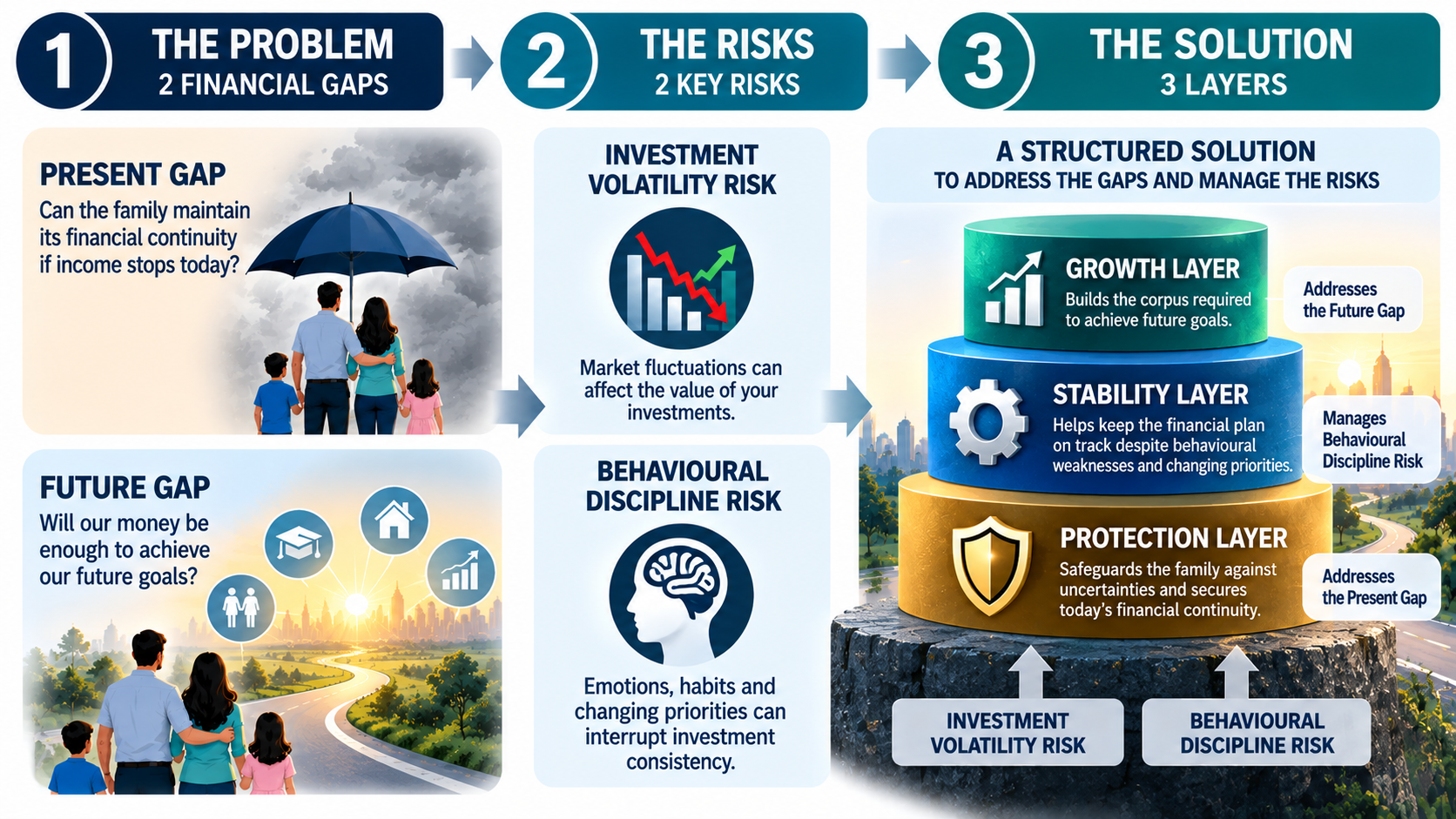
Financial planning begins by identifying the problem that needs to be solved. This is defined by two financial gaps: the Present Gap and the Future Gap.
The ultimate objective is to create a solution that addresses both gaps and enables the family to achieve its financial goals.
The Present Gap must be addressed immediately because it relates to uncertainties that can arise at any time. The Future Gap, although it has known goals and timelines, presents a different challenge. Two risks can prevent the plan from delivering the intended outcome: Investment Volatility Risk, arising from changing markets, and Behavioural Discipline Risk, arising when emotions, habits or changing priorities interrupt investment consistency.
Identifying the gaps is therefore not enough. We need a structure that addresses both gaps while protecting the financial plan from these risks.
This is where the three layers come in. They provide the foundation on which the financial plan is built, helping the family stay on course despite market fluctuations and behavioural challenges.
The Three Layers
- Protection Layer
- Stability Layer
- Growth Layer
Why Every Family Needs a Different Layer Allocation
Traditionally, financial planning focuses on the Protection and Growth layers. Protection addresses uncertainties, while the Growth Layer uses asset allocation to manage investment risk. The allocation between debt and equity is typically guided by an investment risk profile.
But this approach does not adequately address a crucial question: Will the investor remain consistent enough for the plan to succeed?
Two families with identical financial goals and similar incomes may require very different financial structures because their behaviour is different.
This is why the weightage of the three layers cannot be the same for every family.

A Simple Family Example
Consider two families, both earning ₹1.5 lakh a month. Both want to fund their children’s education, plan for retirement and build long-term wealth. Their financial goals are similar, but their behaviour is very different.
The first family follows a disciplined budget, invests regularly and avoids disturbing long-term investments whenever the market falls. It may need a relatively smaller Stability Layer, allowing more of its available allocation to support long-term growth, subject to its goals and risk capacity.
The second family frequently interrupts investments, withdraws money for unplanned purchases and becomes anxious during market declines. Even if its financial plan looks perfect on paper, its goals may remain unfulfilled if this behaviour continues. This family may need a larger Stability Layer, with suitable commitment-oriented investments that make premature withdrawals less likely.

Same income. Similar goals. Different behaviour. Therefore, different financial structures.
The purpose is not to label one family as good and the other as bad. It is to recognise that a financial plan must be designed for the way people actually behave—not merely for the way they are expected to behave.
1. The Protection Layer
The Protection Layer safeguards the family against uncertainties and secures today’s financial continuity.
It addresses the Present Gap by preparing for events such as premature death, disability or other circumstances that could interrupt income. Since these events can occur at any time, protection cannot be postponed until the family has accumulated wealth.
The objective is to protect today’s financial continuity before it is disrupted.
2. The Stability Layer
The Stability Layer is the missing link in traditional financial planning. It addresses Behavioural Discipline Risk by helping investors remain consistent despite emotional decisions, changing priorities and the temptation to divert money from planned goals.
Its weightage depends on the investor’s behavioural discipline.
A highly disciplined investor may need a relatively smaller Stability Layer, allowing a greater proportion of the available allocation to support long-term growth. A highly undisciplined investor may require a much larger Stability Layer, using suitable commitment-oriented or less readily accessible investments to reduce the likelihood of premature withdrawals.
The objective is not simply to lock away money. It is to create a structure that helps the investor stay committed long enough to achieve the family’s future goals.
For a highly undisciplined investor, consistency may matter more than pursuing higher returns without the support needed to sustain the plan.
3. The Growth Layer
The Growth Layer builds the corpus required to achieve future financial goals.
Within this layer, investment risk profiling continues to play an important role. An aggressive, moderate or conservative profile helps guide the allocation between equity, debt and other suitable instruments.
Asset allocation and diversification help manage investment volatility, while the Stability Layer addresses the risk of the investor abandoning the plan.
The two layers therefore serve different but complementary purposes: Growth seeks to build the required corpus, while Stability helps the investor remain committed to the journey.
The Right Structure Makes the Difference
The three layers must work together, but their relative weightage should reflect the family’s financial gaps, time horizons and both risk profiles.
The Protection Layer safeguards financial continuity today. The Stability Layer helps preserve consistency over time. The Growth Layer builds the corpus needed for tomorrow’s goals.
There is no single investment instrument that is right for every investor. The appropriate combination depends on the family’s circumstances, investment risk profile and behavioural discipline.
A financial plan needs more than the right investments. It needs the right structure to keep the family on course.
The Stability Layer is the missing link that helps bridge the gap between having a financial plan and actually following it.
But if all three layers are important, why must they be built in a particular order?
In the next article, we will explore why the sequence of Protection → Stability → Growth matters—and how getting that sequence right can strengthen the entire financial journey.
The link to the next article is below. To read all blogs from the start, go below this link to get the link for Blog 1
If you’re reading this Blog series for the first time, please click the link below to go to the first article, then read each subsequent blog, with links provided below each one.