THE MISSING LINK IN FINANCIAL PLANNING – Part 18
September 16, 2026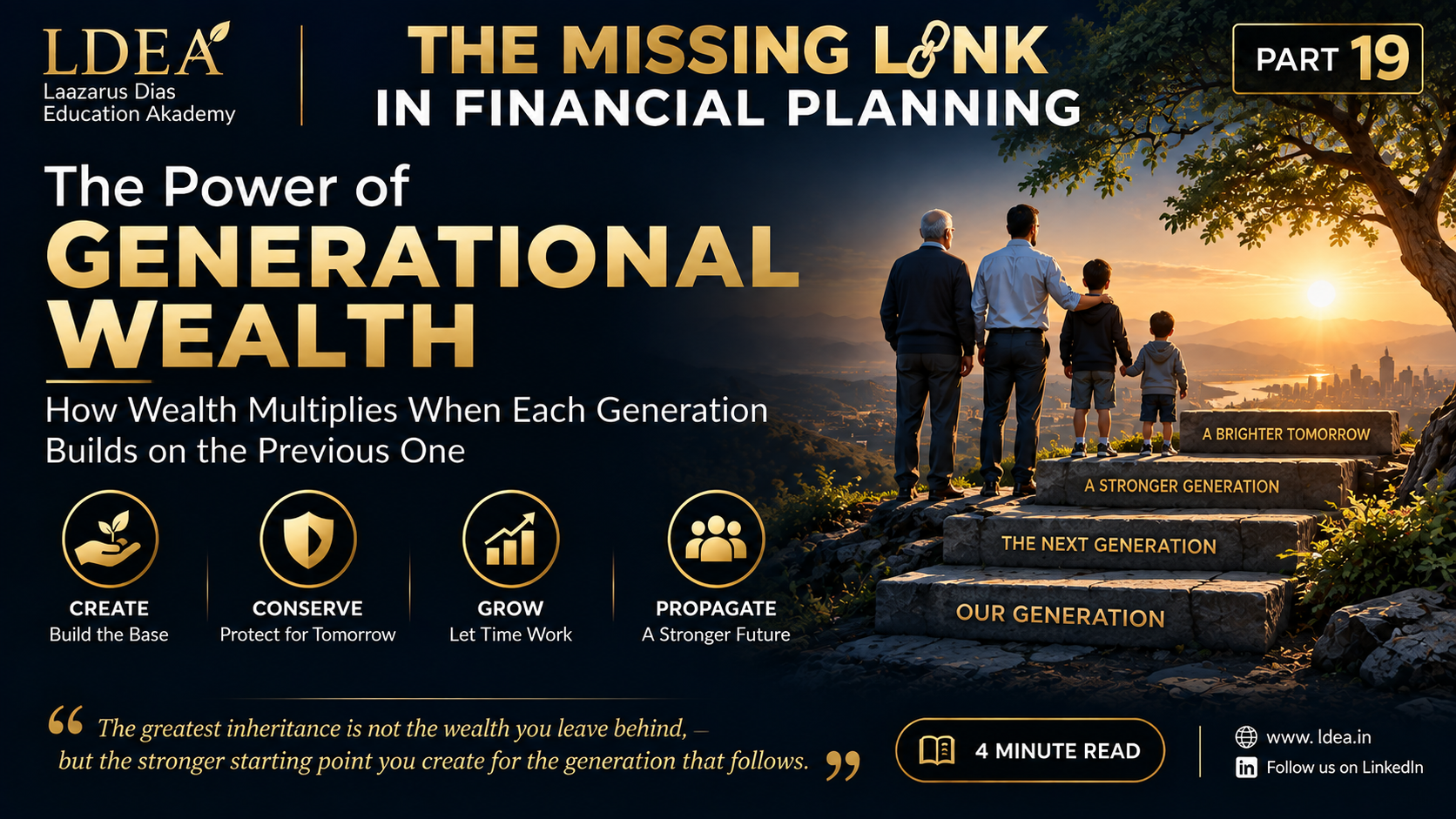
The Power of Generational Wealth
How Wealth Multiplies When Each Generation Builds on the Previous One
Throughout this series, we have explored why financial plans can fail despite good investments and sound advice.
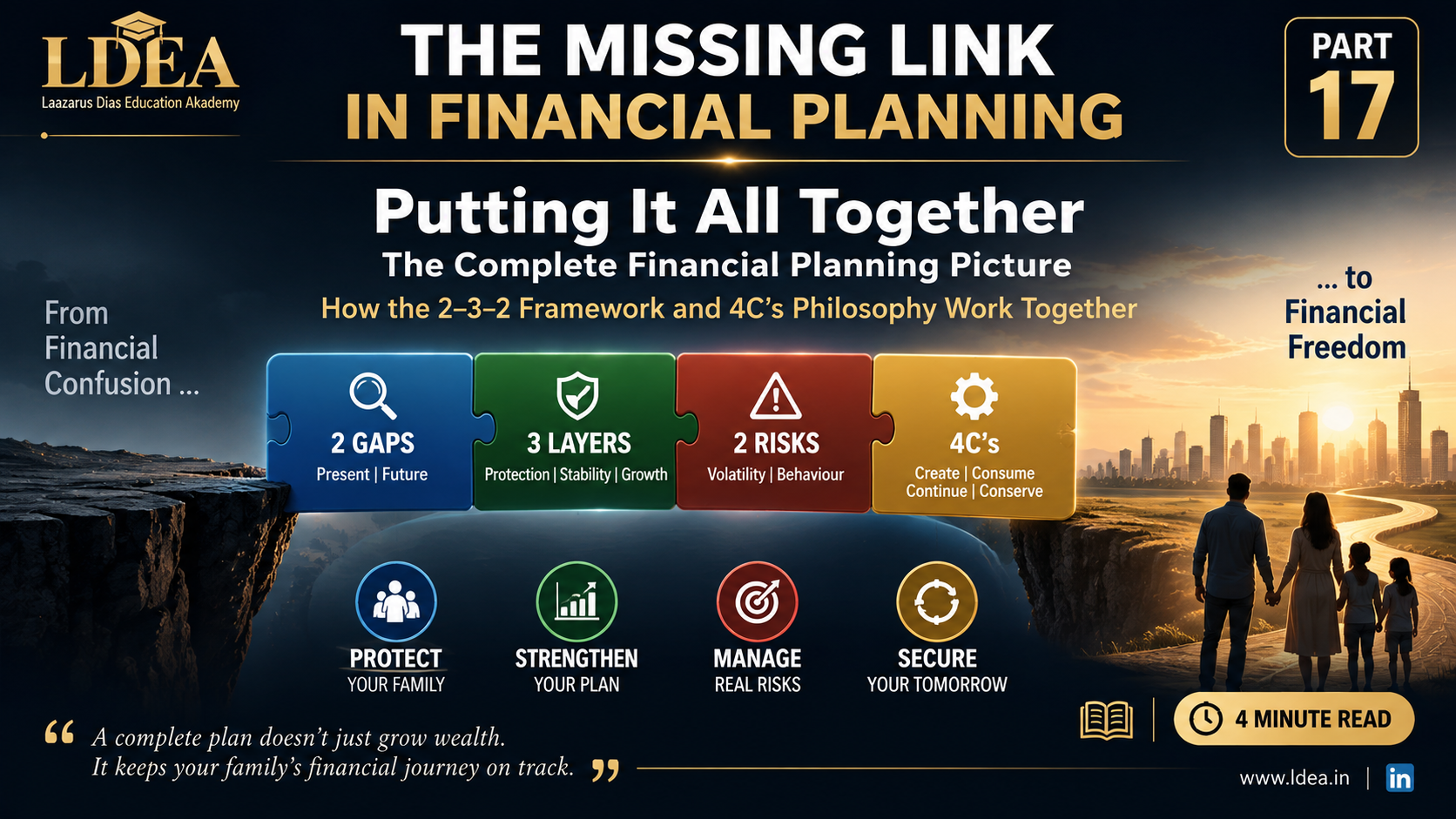
We introduced the 2–3–2 Framework—2 Gaps, 3 Layers and 2 Risks. We explored Need Goals, Want Goals, Protection, Stability and Growth, and the two risks that can derail a financial journey.
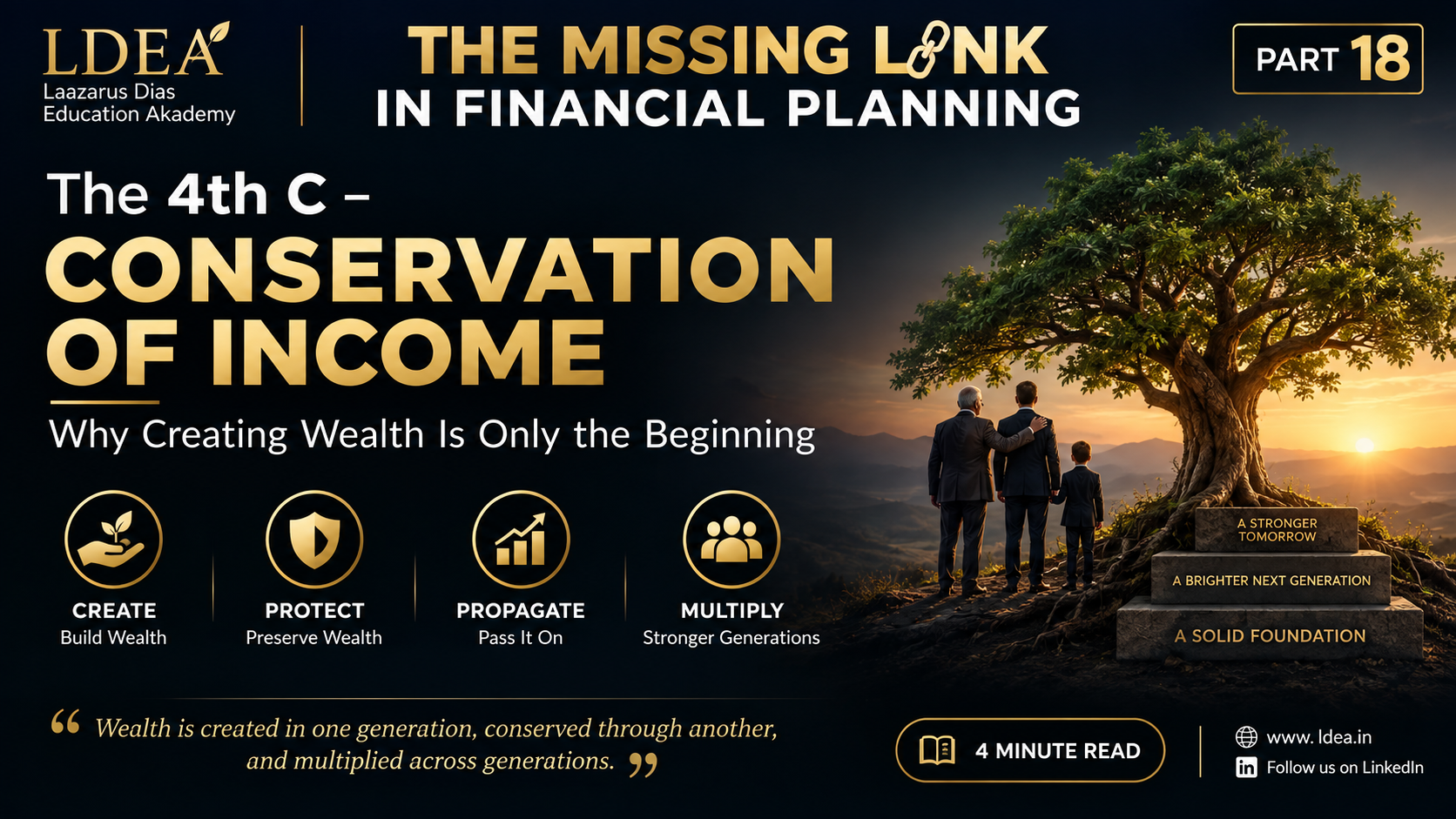
We then introduced the 4C’s Philosophy, understood why the sequence matters, and explored the 4th C—Conservation of Income.
In the last article, we saw why creating wealth is only the beginning.
Now, let us explore what happens when wealth is conserved, grown and carried across generations.
Wealth vs Income
A high income does not automatically create lasting wealth.
Wealth is created by what happens after income is earned.
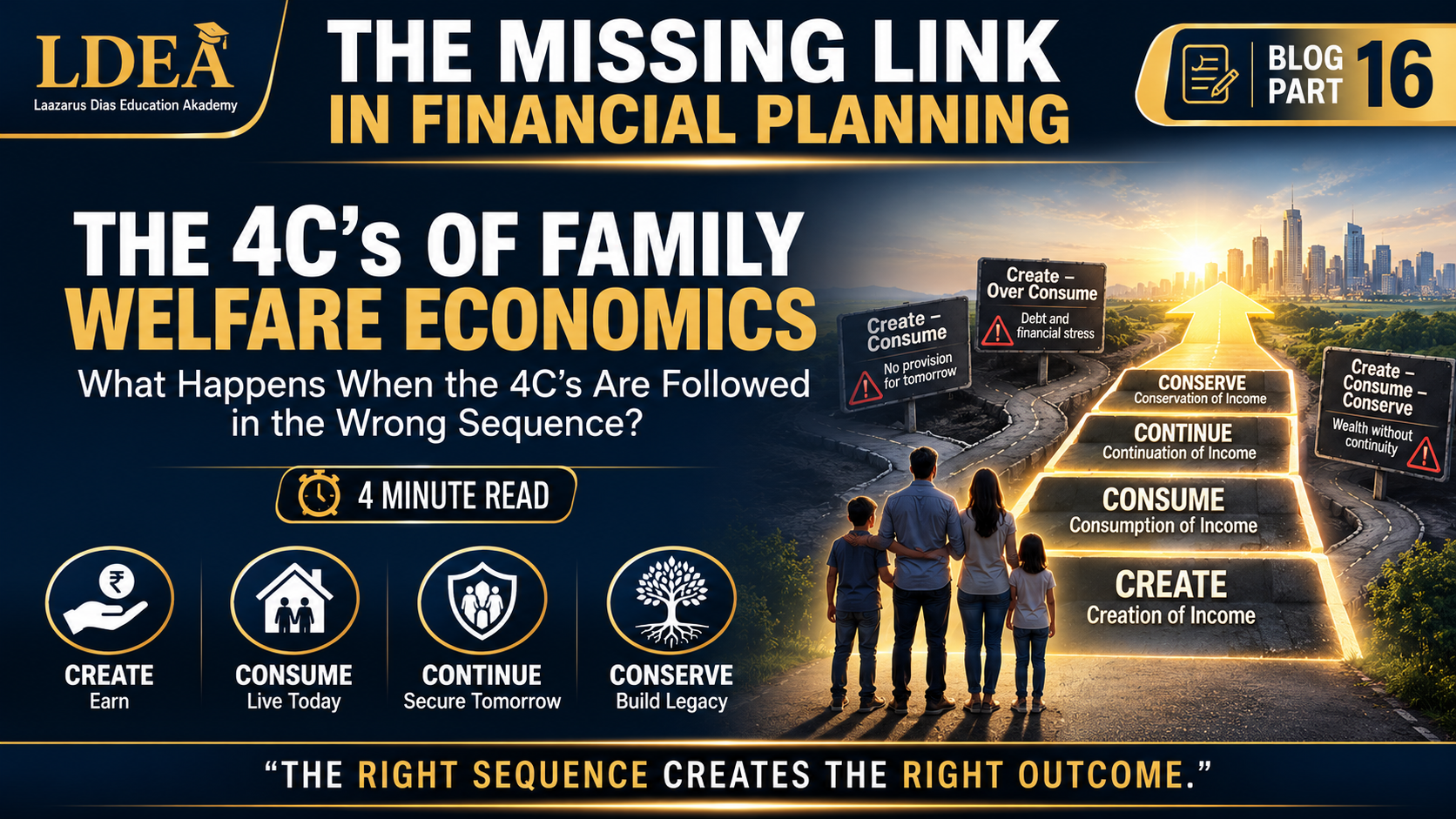
The 4C’s provide the sequence:
Create → Consume → Continue → Conserve
Creation of Income provides the resources. Consumption determines the lifestyle. Continuation funds the family’s Need Goals through appropriate liquid investments. Only then can wealth-building assets be protected and allowed to grow.
This is why managing lifestyle within a sustainable proportion of income is so important.
If Need Goals are not adequately funded, families may eventually have to liquidate wealth-building assets to meet them.
Income creates the opportunity. Conservation creates the wealth.
The Generational Advantage
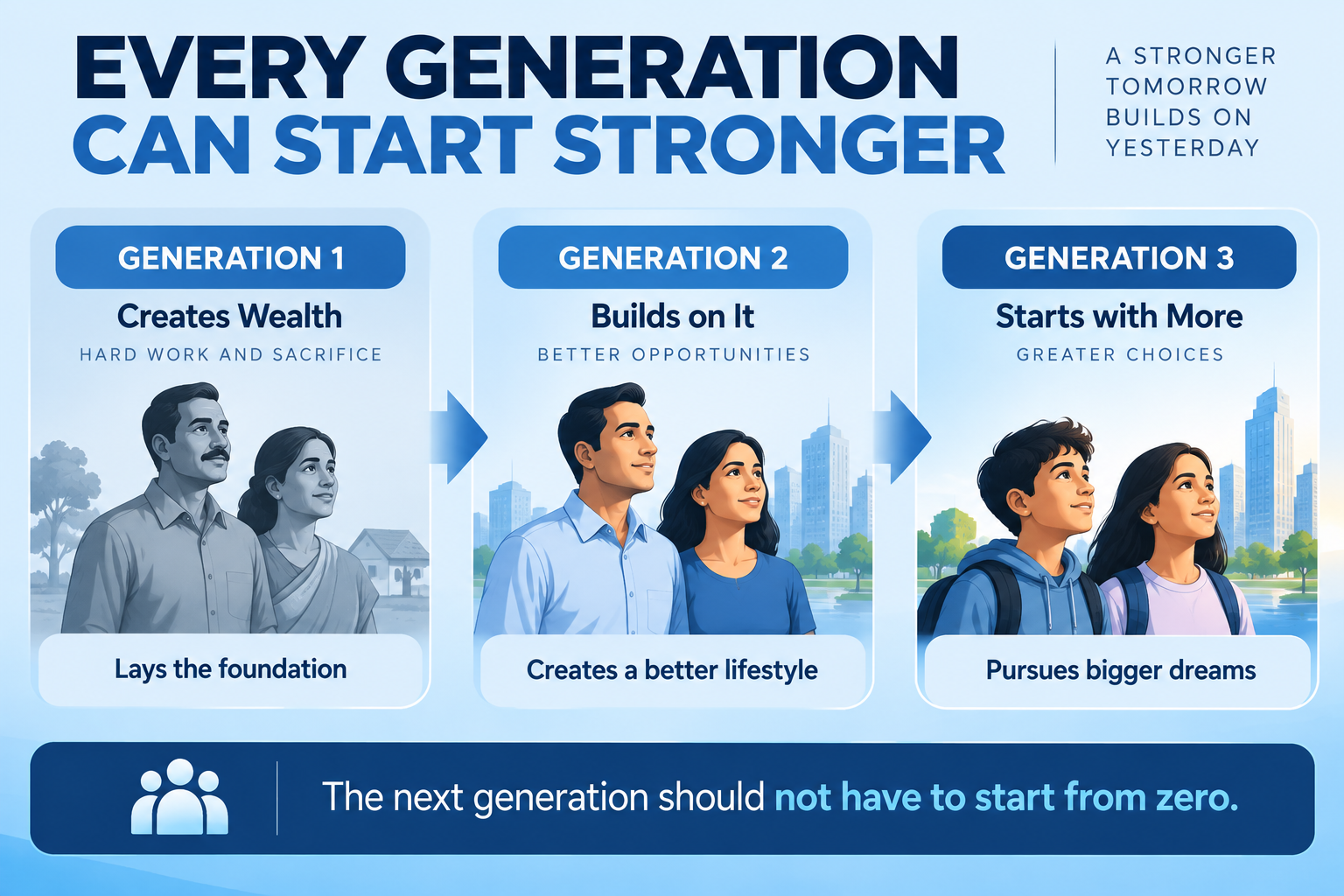
My parents lived largely from salary to salary, often worrying about whether the month’s income would be enough for the family’s basic needs.
My generation had a different starting point. Education gave us the opportunity to build a better lifestyle, and we worked hard to achieve it.
My children were born into that lifestyle. Their aspirations are different again—they think more about experiences and opportunities.
This is the journey of many middle-class families.
Each generation can potentially start from a stronger financial foundation than the previous one.
That is the generational advantage.
The real opportunity is to ensure that the next generation does not have to start from zero.
Compounding Across Generations
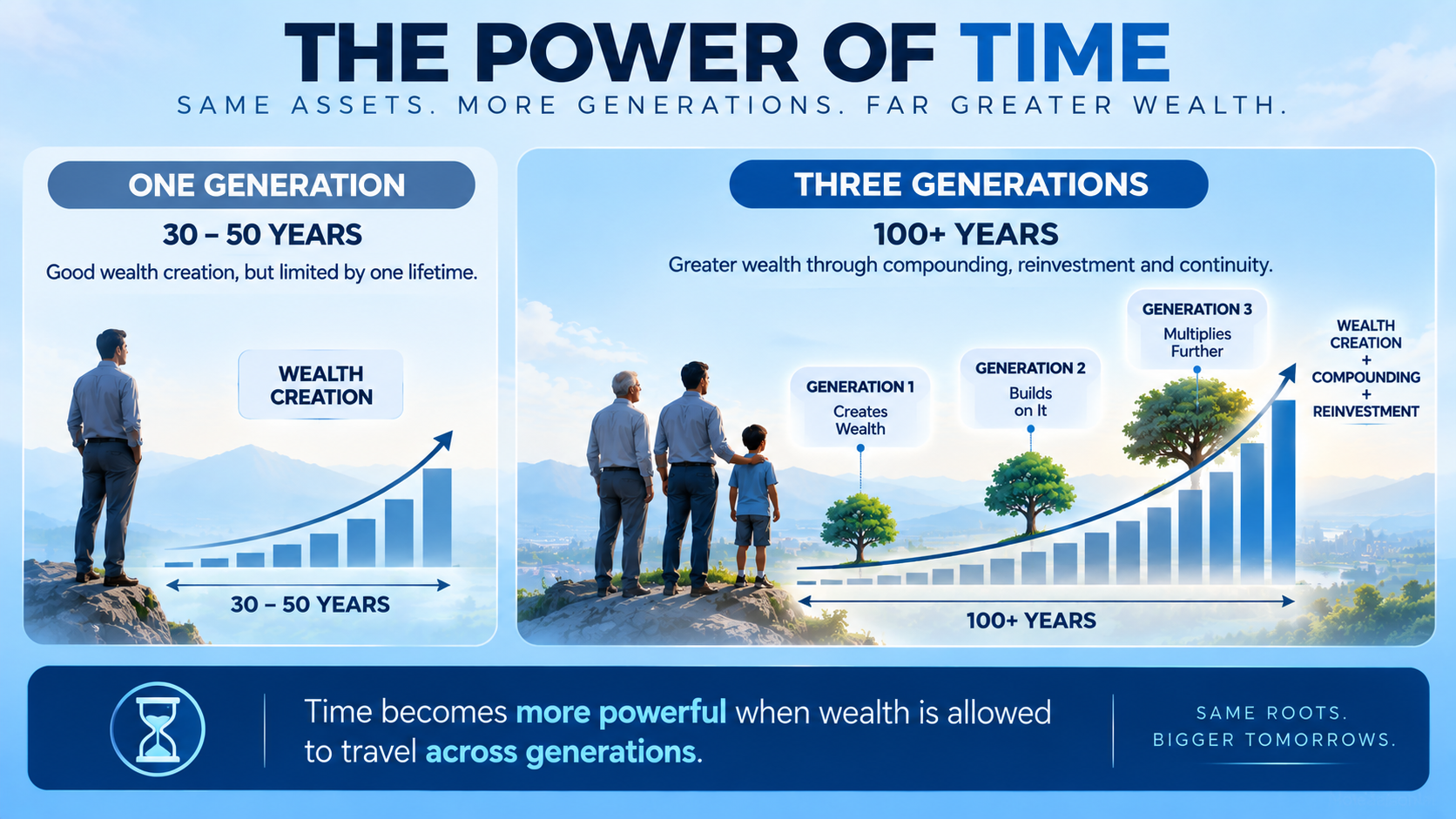
Equity and other productive assets require time to create wealth.
One generation has a limited investment horizon. But imagine productive assets being held not for 30 or 40 years, but across 100 or 150 years.
That is when time becomes extraordinarily powerful.
The Sensex provides a simple illustration. From around 129 in 1980 to around 74,000 in 2026, the index has multiplied enormously over 46 years.
The lesson is not about predicting returns.
It is about recognising the power of time, productive assets and staying invested.
When one generation does not unnecessarily liquidate productive wealth, the next generation inherits both the asset and the remaining time for compounding.
Consume or Build?
Every generation that inherits wealth faces a choice.
Consume it. Or build upon it.
There are countless examples of one generation creating substantial wealth, only for the next to convert it into an extravagant lifestyle. The following generation is then forced to start again.
But there is another possibility.
The next generation can preserve the inherited productive assets, create its own income, fund its own Need Goals and add to the wealth base.
That is how generational wealth begins.
The Family Wealth Cycle
The cycle becomes:
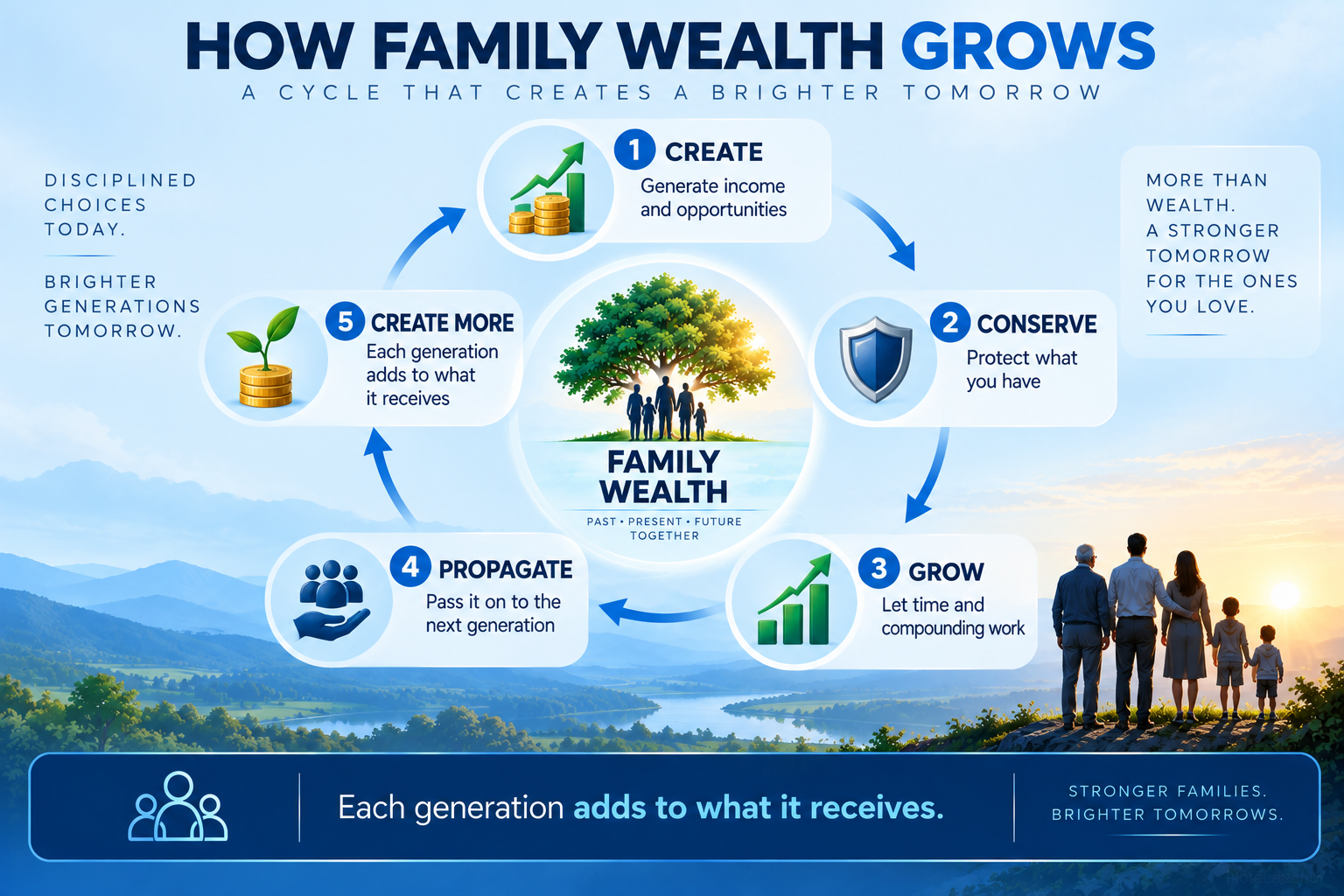
Create → Conserve → Grow → Propagate → Create More
A generation that inherits wealth should ideally create sufficient income to maintain its lifestyle and fund its Need Goals without being forced to liquidate the inherited wealth.
It can then add its own contribution to that wealth and pass on a larger financial foundation to the next generation.
The process repeats.
One generation’s wealth becomes the next generation’s starting point.
The Parsi Example
In Blog 18, I shared the story of the elderly Parsi couple and the suitcase filled with share certificates.
Those certificates told a remarkable story.
Some had belonged to their great-grandfather, some to their grandparents, some to their parents, and some had been purchased by the couple themselves.
The oldest certificates were almost 150 years old.
Each generation had inherited the shares, preserved them, added to them and passed them forward.
The remarkable wealth of the family was therefore not created by one generation.
It was the result of wealth accumulated and preserved across generations.
That experience changed the way I looked at legacy.
The Real Meaning of Legacy
Legacy is not simply about leaving money behind.
It is about becoming a custodian of what you inherit, adding to it during your lifetime, and handing the next generation a stronger foundation than the one you received.
The inherited wealth can also provide a financial cushion—a safety net that gives the next generation the confidence to take calculated risks and create additional wealth.
That, to me, is the real power of generational wealth.
“The greatest inheritance is not the wealth you leave behind, but the stronger starting point you create for the generation that follows.”
Creation of Wealth. Conservation of Wealth. Propagation of Wealth.
In the next article, we will explore the next critical question: How do we transfer wealth to the next generation in a way that preserves both the wealth and its purpose?
If you’re reading this Blog series for the first time, please click the link below to go to the first article, then read each subsequent blog, with links provided below each one.