
MISSING LINK IN FINANCIAL PLANNING – Part 17
September 9, 2026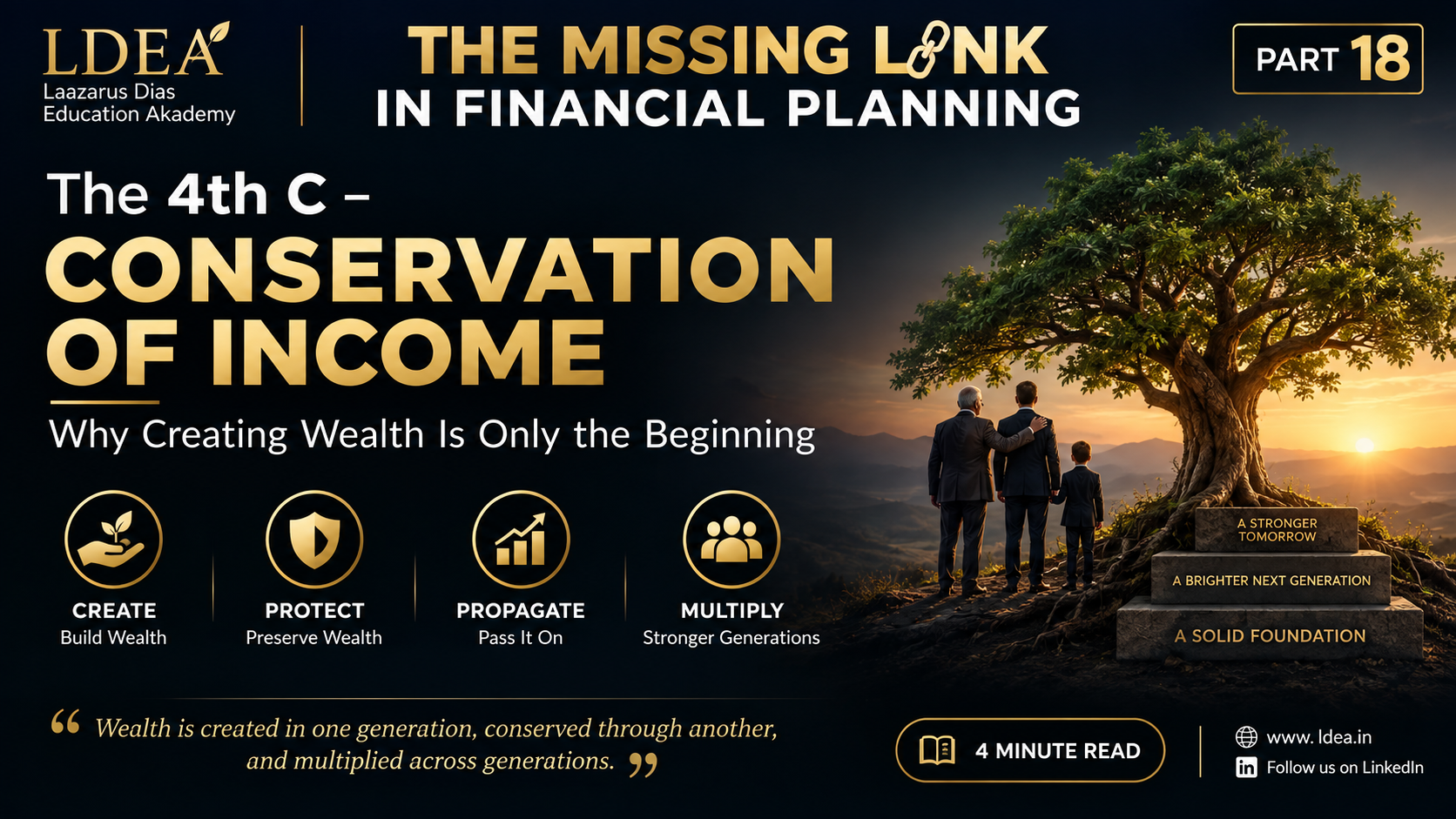
The 4th C – Conservation of Income
Why Creating Wealth Is Only the Beginning
Throughout this series, we have explored why financial plans can fail despite good investments and sound advice.
We introduced the 2–3–2 Framework—2 Gaps, 3 Layers and 2 Risks. We explored the Present Gap and Future Gap, Need Goals and Want Goals, and the three layers of Protection, Stability and Growth. We then examined Investment Volatility Risk and Behavioural Discipline Risk.
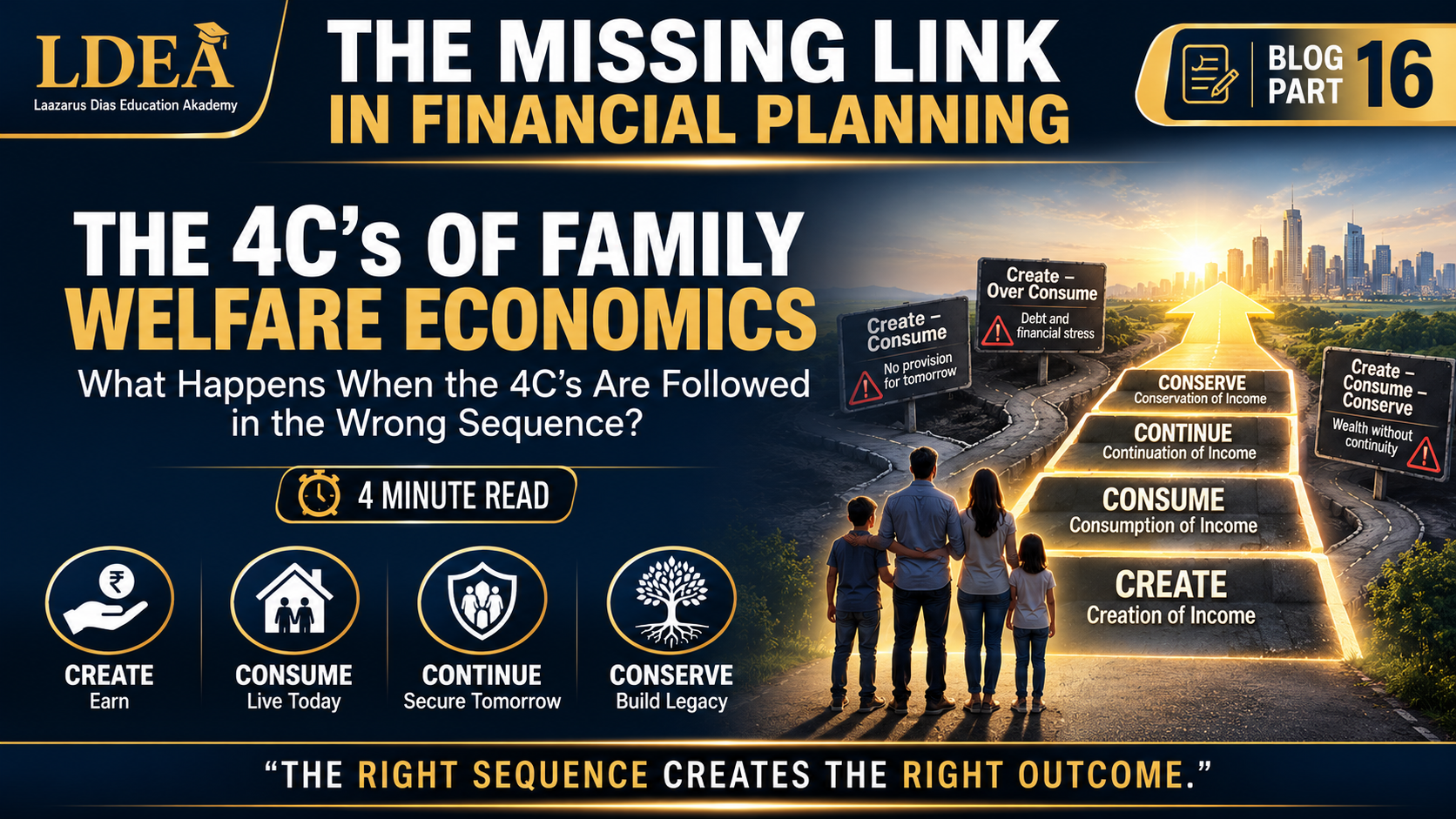
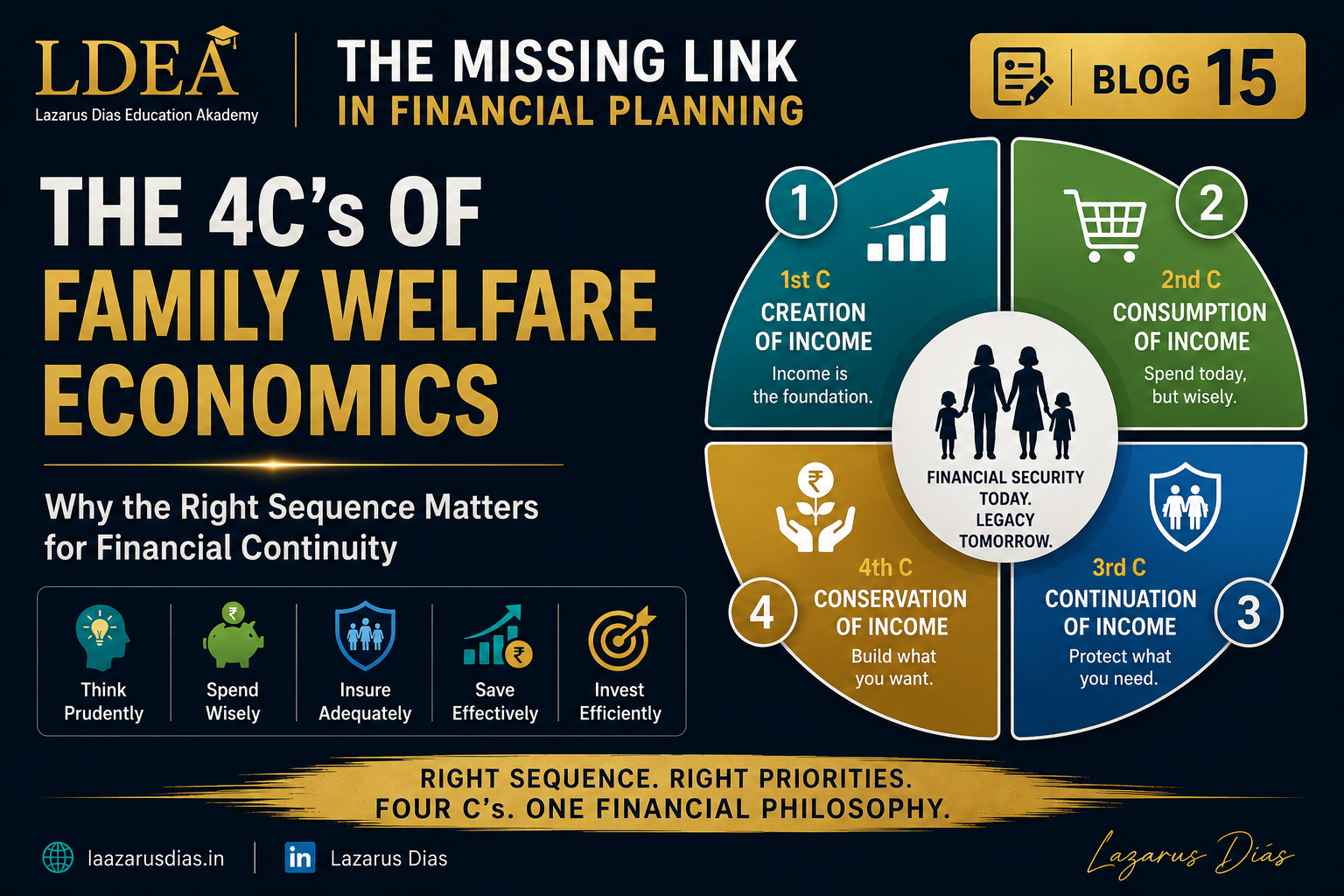
We introduced the 4C’s Philosophy, understood why the sequence matters, and saw what happens when families follow the 4C’s in the wrong order.
In the last article, we brought the entire framework together.
Now, we go deeper into the 4th C — Conservation of Income.
Conservation of Income
Conservation of Income is about Creation of Wealth, Protection of Wealth and Propagation of Wealth.
Creating wealth is only the beginning.
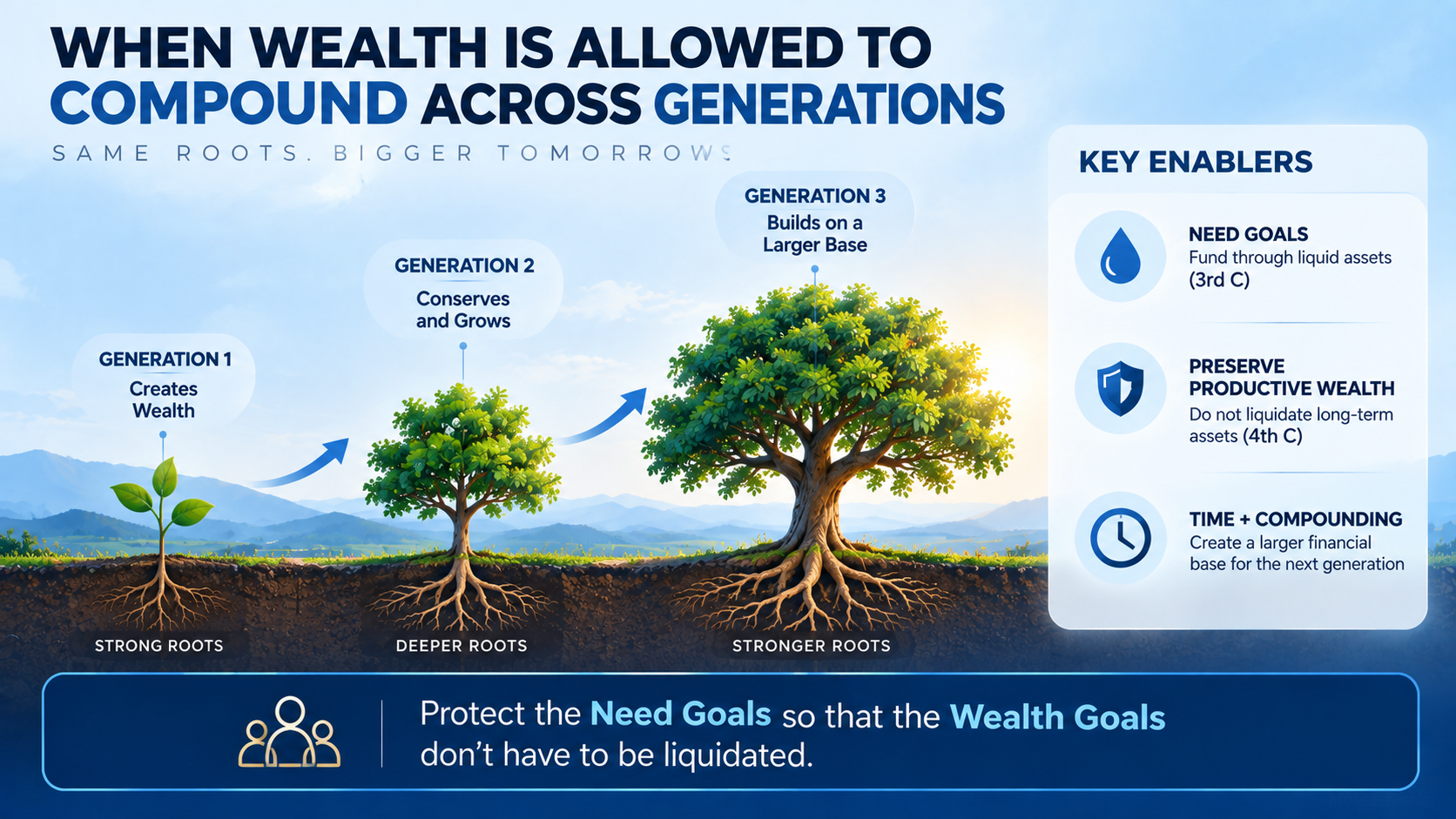
The wealth created should be protected, allowed to grow, and eventually passed to the next generation as a productive financial base—so that the next generation can build upon it rather than start again from zero.
This is consistent with Adam Smith’s thinking on capital accumulation in The Wealth of Nations (1776): accumulated capital can become the foundation for further wealth creation.
Applied across generations, the principle becomes powerful: Wealth should not merely be inherited. It should be inherited as a productive base.

Wealth Through the Generations
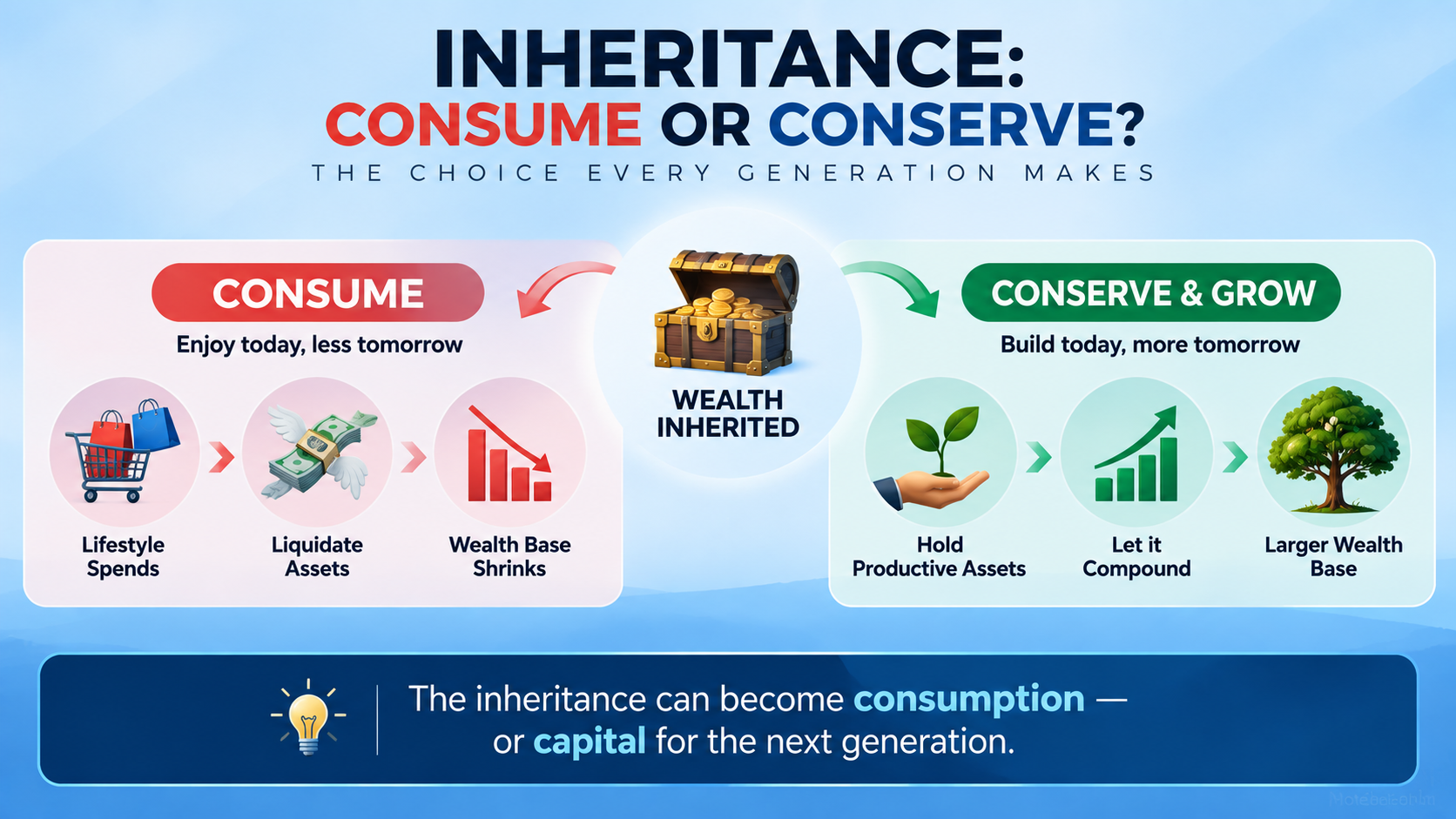
Every generation has a choice.
It can consume the wealth created by the previous generation, or it can build upon it and pass on a larger productive base to the next.
Research provides evidence for both outcomes.
A 2022 study linking three generations found significant persistence of wealth from grandparents to grandchildren across financial and non-financial assets.
At the same time, research has shown that inherited wealth can also be consumed rather than preserved as capital.
A study published in the Review of Economic Studies, examining inheritance behaviour in Sweden, found substantial differences among heirs: some preserved inherited wealth and generated returns from it, while others depleted the principal.
Research on India has also found that intergenerational transfers can contribute to the transmission of wealth differences from one generation to the next.
The message is clear:
Inheritance does not automatically become family wealth. What the next generation does with it matters.
The Power of Time
This is where time becomes a powerful force.
Equity, property and businesses can create extraordinary value when productive assets are allowed to compound over decades.
But there is a critical link.
If wealth has to be liquidated to meet a family’s Need Goals, the compounding journey can be interrupted.
That is why the 3rd C — Continuation of Income is so important.
Need Goals must be funded through appropriately structured liquid assets, with timelines aligned to the family’s goals.
When this is done properly, the family does not have to sell long-term wealth under pressure.
The result?
Wealth created by one generation can remain invested, grow during the next generation and become an even stronger foundation for the generation after that.
The Parsi Family Story
In 1997, I was referred to an elderly Parsi couple living in an elegant sea-facing apartment in Worli.
After understanding their income, expenses, assets and investments, I noticed the couple exchanging glances. Finally, they agreed to show me something.
The wife walked into the bedroom and returned with a suitcase.
When she opened it, I was astonished.
It was filled with neatly arranged share certificates.
One bundle had belonged to their great-grandfather. Another had come from their grandparents. Another from their parents. And then there were the shares they themselves had purchased.
They had not created all that wealth themselves.
They had conserved it.
Generation after generation, the productive assets had remained within the family and continued to grow.
I realised that the real value had not been created in a single generation. Time, ownership and conservation had created it across generations.
That experience left a lasting impression on me.
Wealth is created in one generation, conserved through another, and multiplied across generations.
Creation of Wealth. Conservation of Wealth. Propagation of Wealth.
In the next article, we will explore the power of Generational Wealth—and how wealth can multiply when each generation builds upon the financial foundation created by the one before it.
If you’re reading this Blog series for the first time, please click the link below to go to the first article, then read each subsequent blog, with links provided below each one.