THE MISSING LINK IN FINANCIAL PLANNING – Part 16
September 2, 2026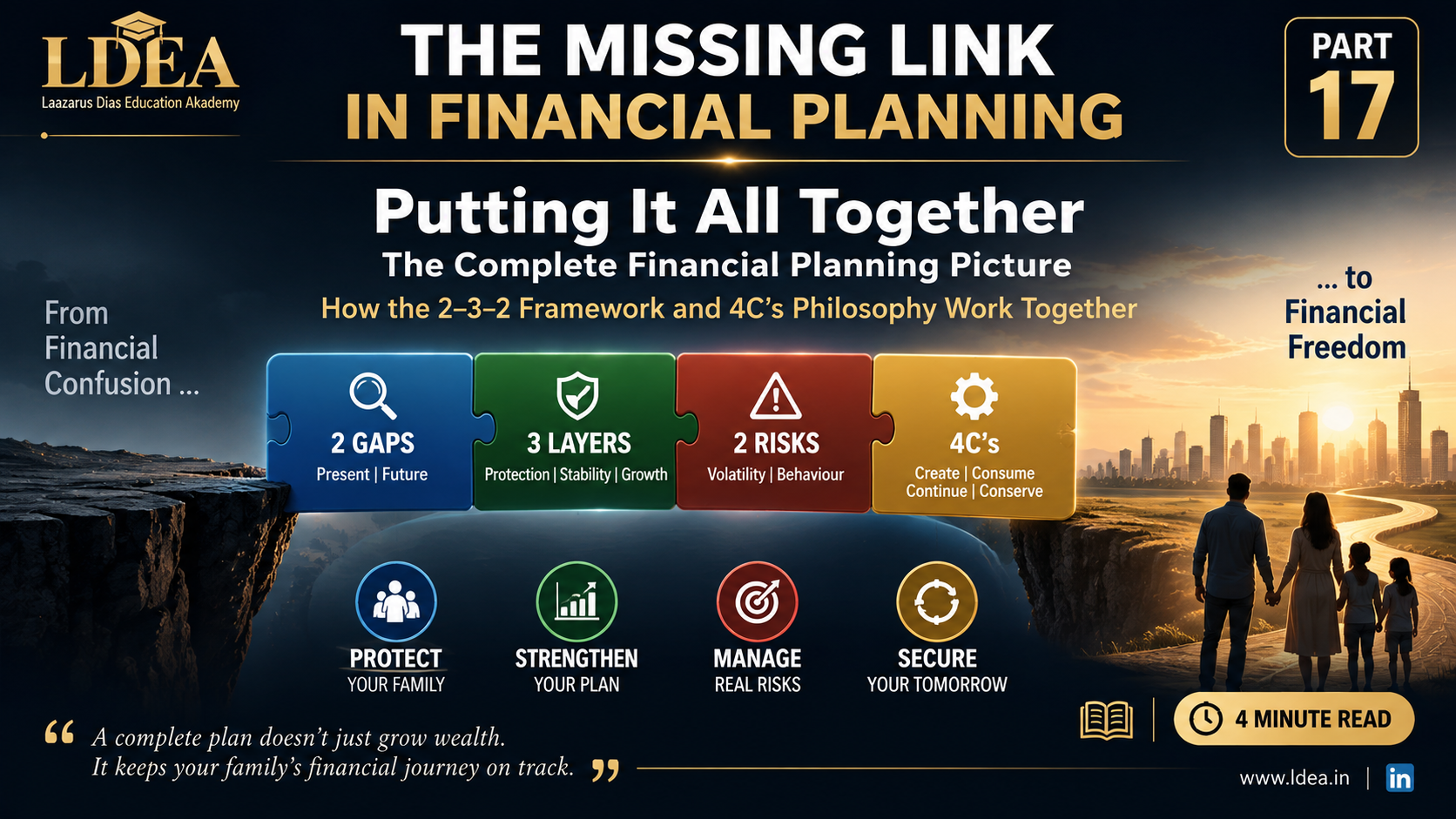
Putting It All Together: The Complete Financial Planning Picture
How the 2–3–2 Framework and 4C’s Philosophy Work Together
Throughout this series, we have explored why financial plans often fail despite good investments and sound advice.
We introduced the 2–3–2 Framework—2 Gaps, 3 Layers and 2 Risks. We explored the Present Gap and Future Gap, Need Goals and Want Goals, and the three layers of Protection, Stability and Growth. We then examined Investment Volatility Risk and Behavioural Discipline Risk.
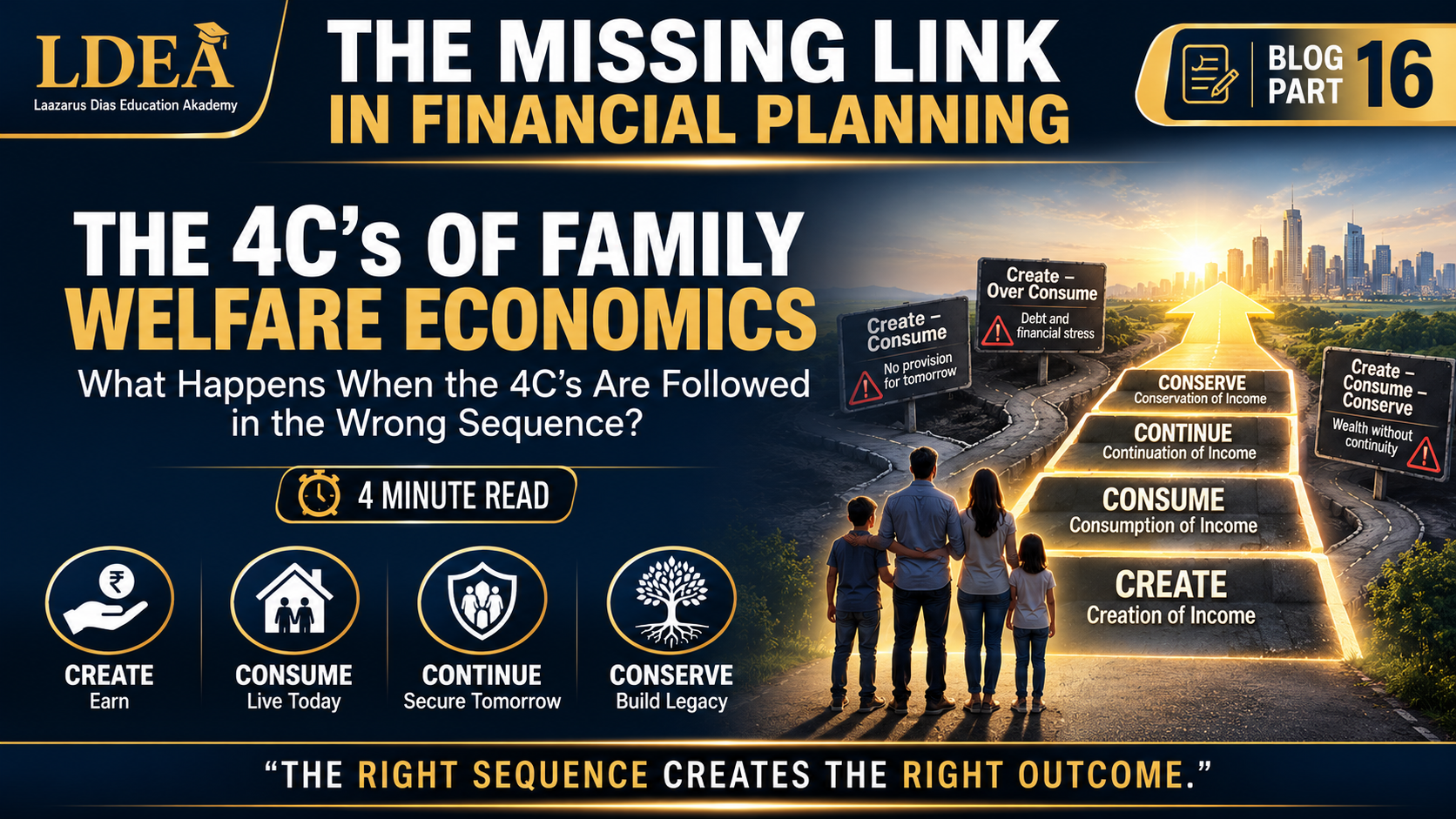
In the previous three articles, I introduced the 4C’s Philosophy, explained why the sequence matters and showed what happens when families follow the 4C’s in the wrong sequence.
It is now time to put everything together.
The Missing Element: Continuity
Traditional financial planning has done an excellent job of addressing investments, returns, diversification and risk profiling.
But financial planning is not ultimately about investments.
It is about achieving financial goals.
And achieving a goal requires one critical ingredient—continuity.
A mathematically perfect financial plan can fail if the investor stops investing, diverts money to other priorities or abandons the plan when circumstances change.
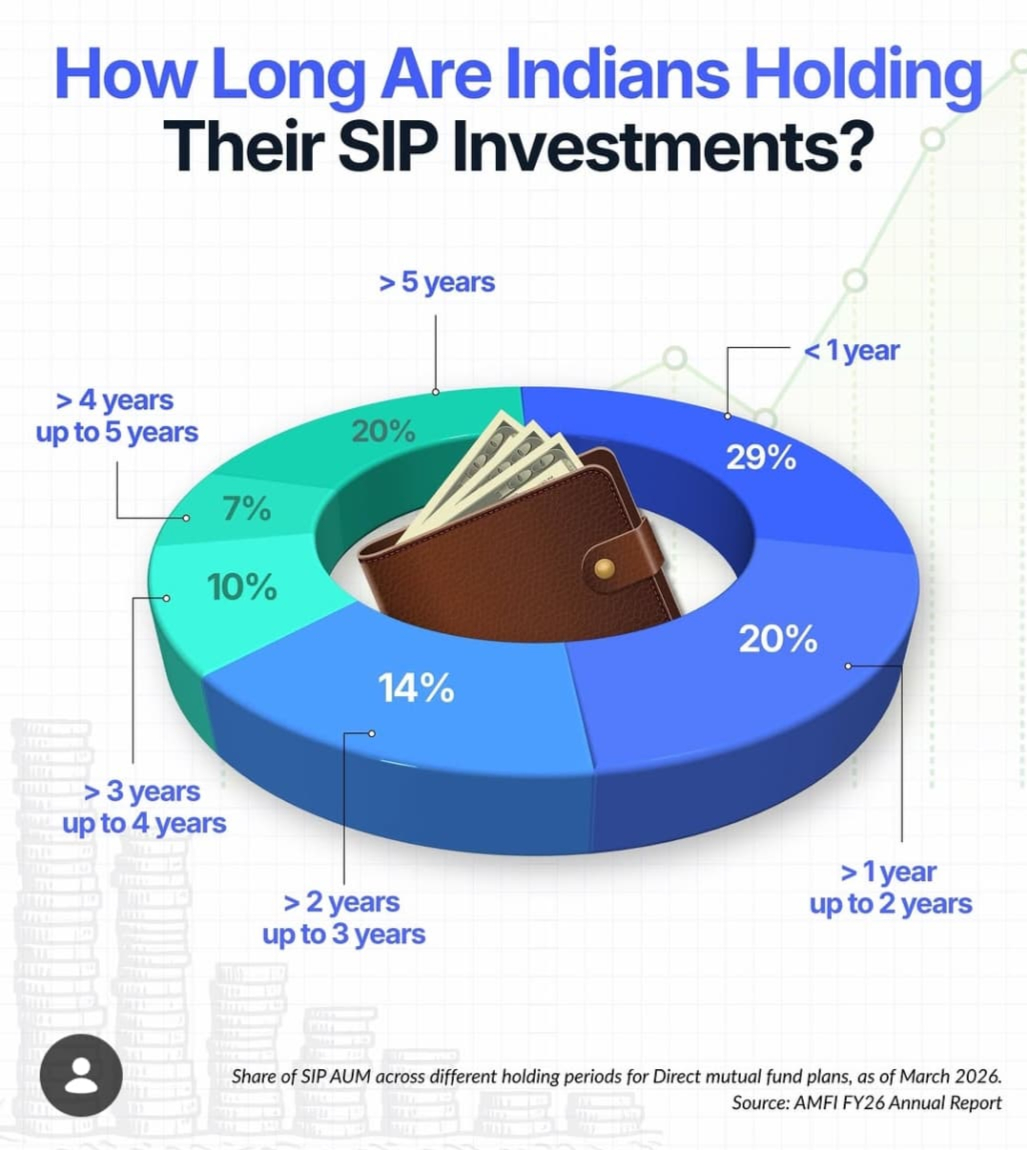
This is where psychology and behaviour become important.
Returns drive the growth of a financial plan.
Discipline keeps the plan alive long enough for those returns to work.
That is why continuity has to become an integral part of financial planning.
How the 2–3–2 Framework Works
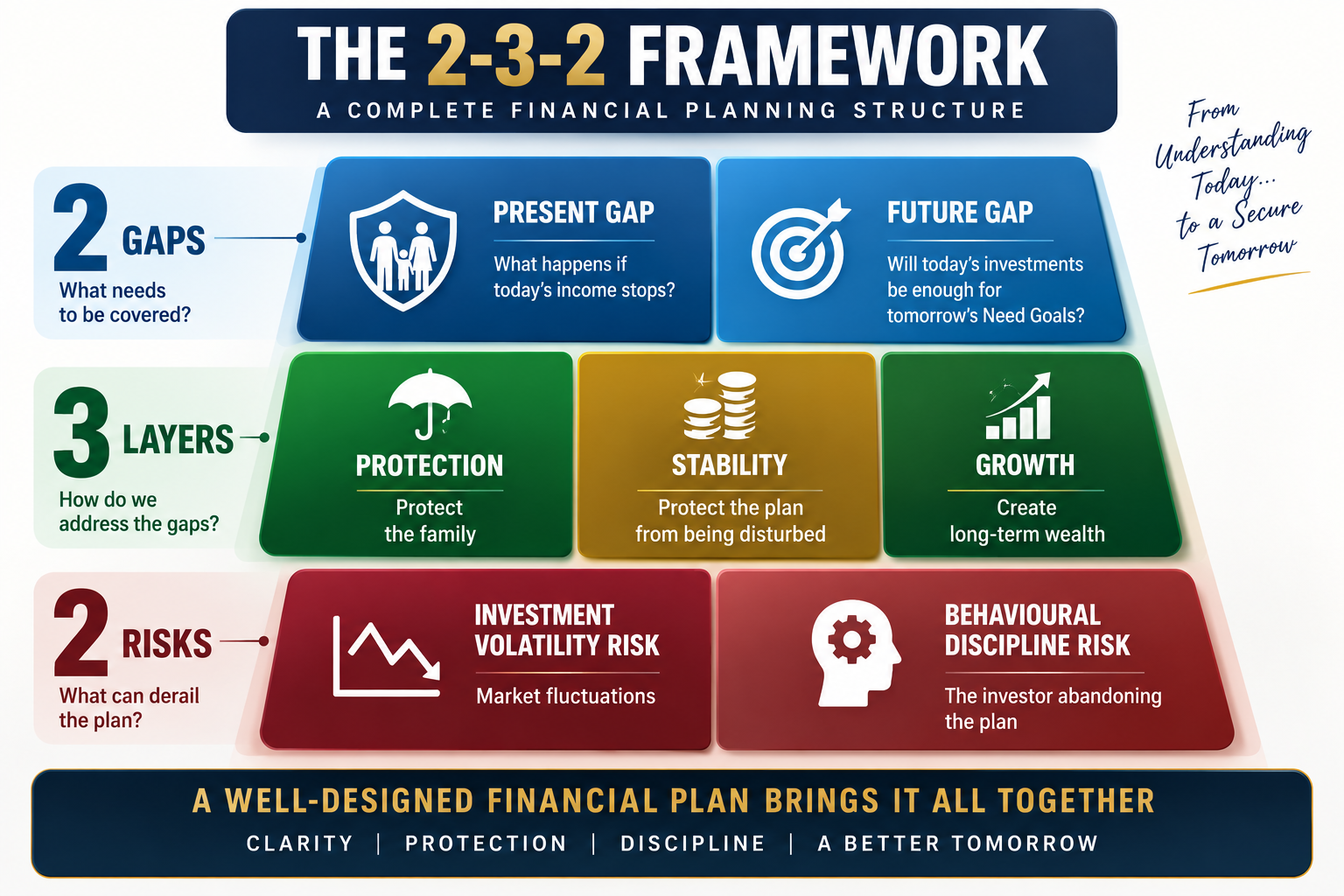
1. The 2 Gaps
Present Gap
The first question is:
What happens to the family’s standard of living if today’s income suddenly stops?
We identify the family’s financial requirements, the provision already available and the shortfall that needs to be addressed in the event of death or disability.
This is the Present Gap. The Protection Layer addresses this gap. Protection helps beat time.
Future Gap
The second question is:
Will today’s investments be sufficient to fund tomorrow’s Need Goals?
The Future Gap focuses primarily on goals that protect the family’s standard of living and important commitments such as children’s education, marriage and their start in life.
These goals have fixed timelines.
We identify the existing provision, calculate what will be required and determine the resulting Future Gap.
The Stability and Growth Layers, in appropriate proportions, then work together to address it.
2. The 3 Layers
Protection – Protect the Family
Protection addresses the Present Gap.
Its purpose is simple:
If income stops, the family’s financial plan should not stop.
Stability – Protect the Plan
Stability is the missing link in traditional financial planning.
A financial plan can be mathematically sound and still fail because the investor does not remain disciplined.
The Stability Layer introduces mechanisms such as appropriately structured or committed investments that help protect the plan from behavioural indiscipline.
The extent of this layer can vary according to the individual’s discipline continuum.
Growth – Create Wealth
Growth is the engine of long-term wealth creation.
Equity and other growth-oriented investments provide the potential to generate the returns required to fund long-term goals.
But growth can work only when the investor stays invested long enough.
That brings us back to continuity.
3. The 2 Risks
Investment Volatility Risk
Markets fluctuate.
Traditional financial planning addresses this through risk profiling, diversification and appropriate asset allocation, helping investors remain invested through market cycles.
Behavioural Discipline Risk
The second risk comes from the investor—not the market.
Stopping investments, redeeming at the wrong time, diverting money to Want Goals or abandoning the plan can permanently damage the financial outcome.
This is where traditional planning needs to go further.
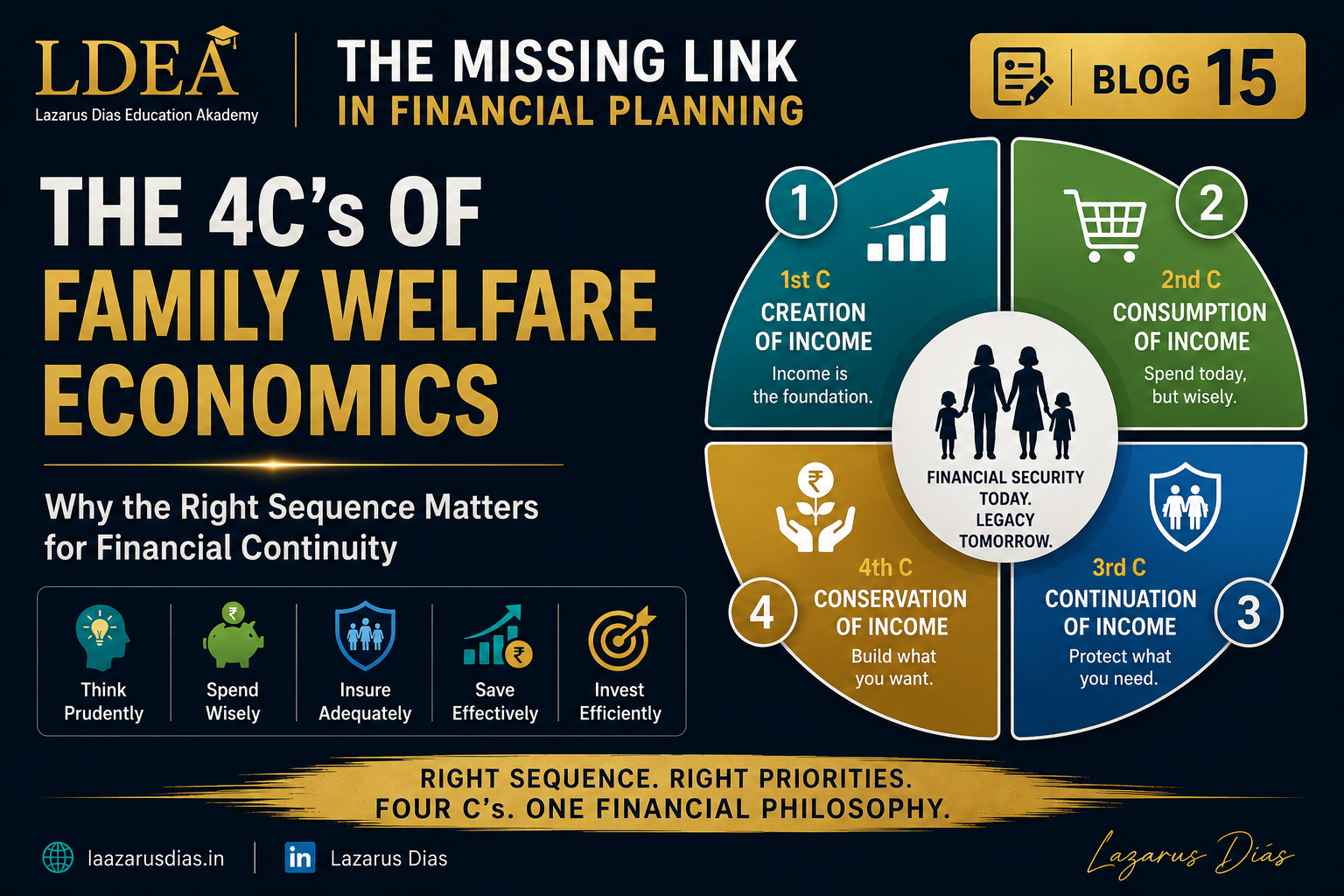
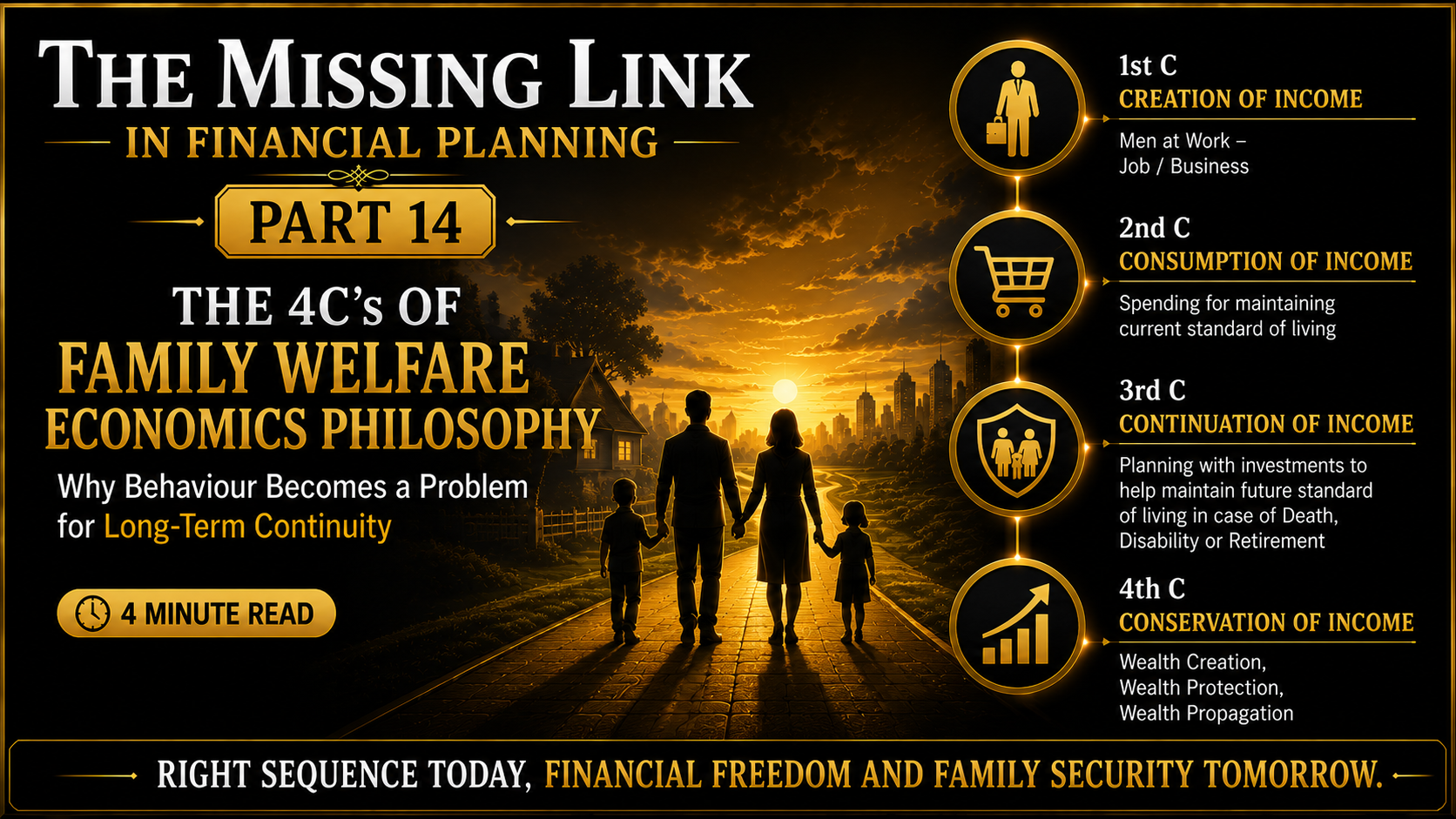
The 4C’s Philosophy
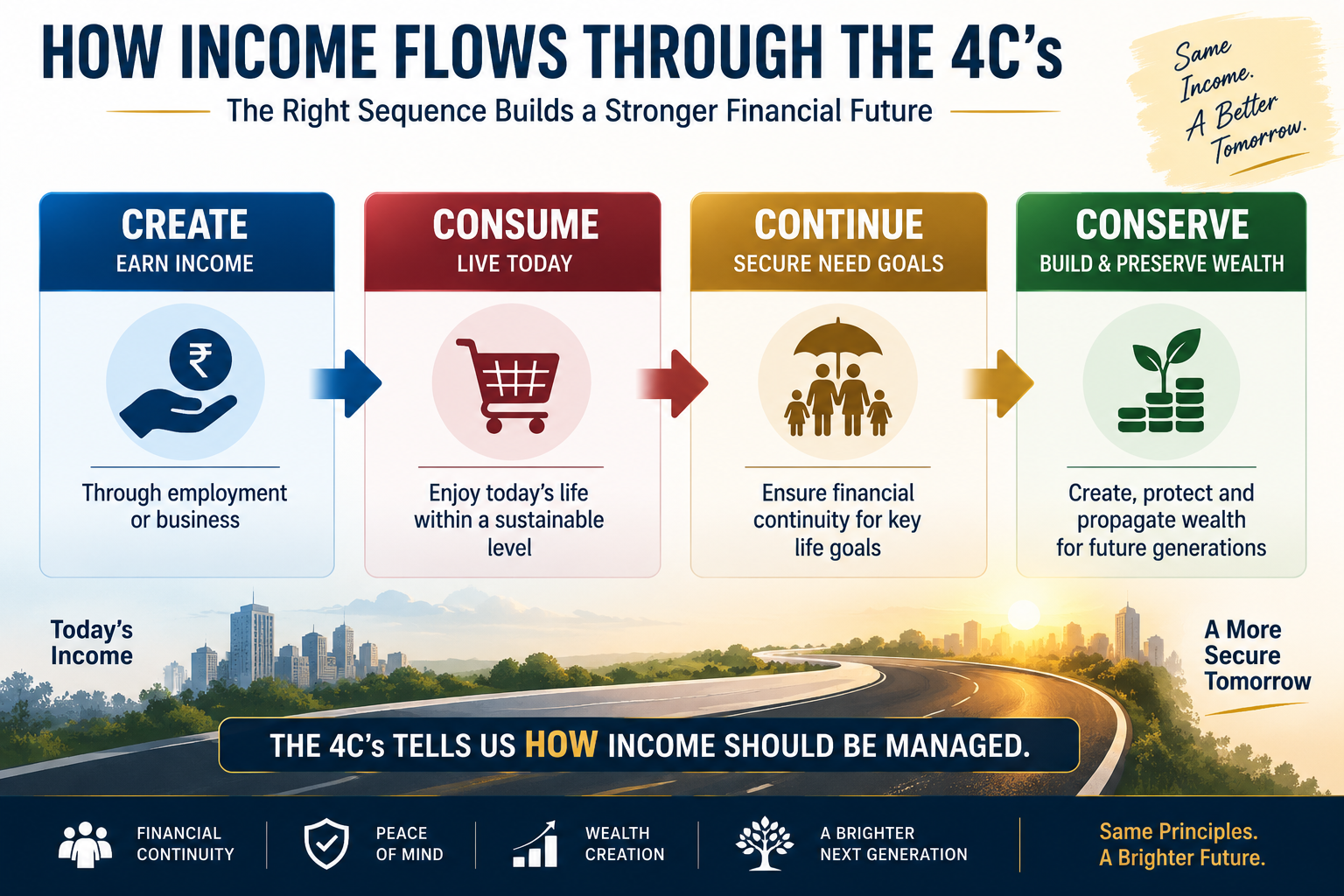
The 2–3–2 Framework tells us what needs to be managed.
The 4C’s Philosophy tells us how income should be managed.
Create
Earn income through employment or business.
Consume
Maintain today’s standard of living at a sustainable level.
Continue
Secure Need Goals and ensure financial continuity.
Conserve
Create, protect and eventually propagate wealth.
The sequence is critical:
Create → Consume → Continue → Conserve
Need Goals come before Want Goals.
Financial continuity comes before wealth creation.
Security comes before abundance.
The Complete Picture
We can now bring the entire philosophy together:
2 Gaps – 3 Layers – 2 Risks – 4C’s Philosophy
And the ultimate objective is:
Financial Continuity → Financial Freedom → Wealth → Legacy
This is the larger picture of financial planning.
It is not merely about selecting investments that can generate good returns.
It is about understanding the family’s present reality, protecting its future, managing behaviour, maintaining continuity and then allowing wealth to compound over time.
The Missing Link
The real question is
“How do I create a financial system that continues to work for my family—even when life does not go according to plan?”
The Journey Continues
The 2–3–2 Framework tells us what must be managed—the Present Gap, the Future Gap, the Protection, Stability and Growth Layers, and the two risks that can derail the journey.
The 4C’s Philosophy tells us how income should flow—from Creation and Consumption to Continuation and, ultimately, Conservation.
But there is one final question.
What happens after wealth has been created?
Does every generation start again from zero? Or can wealth created by one generation become the foundation for the next?
That brings us to the 4th C — Conservation of Income.
Because the creation of wealth is only the beginning. Conservation allows wealth to compound. And propagation allows that wealth to travel across generations.
In the next article, we will explore the 4th C: Conservation of Income — Creation of Wealth. Conservation of Wealth. Propagation of Wealth.
iF YOU HAVE LANDED ON THIS bLOG JUST NOW THEN I WOULD REQUEST YOU TO READ ALL BLOGS FROM bLOG 1ONWARDS TO GET A FULL VIEW OF THE PHILOSOPHY