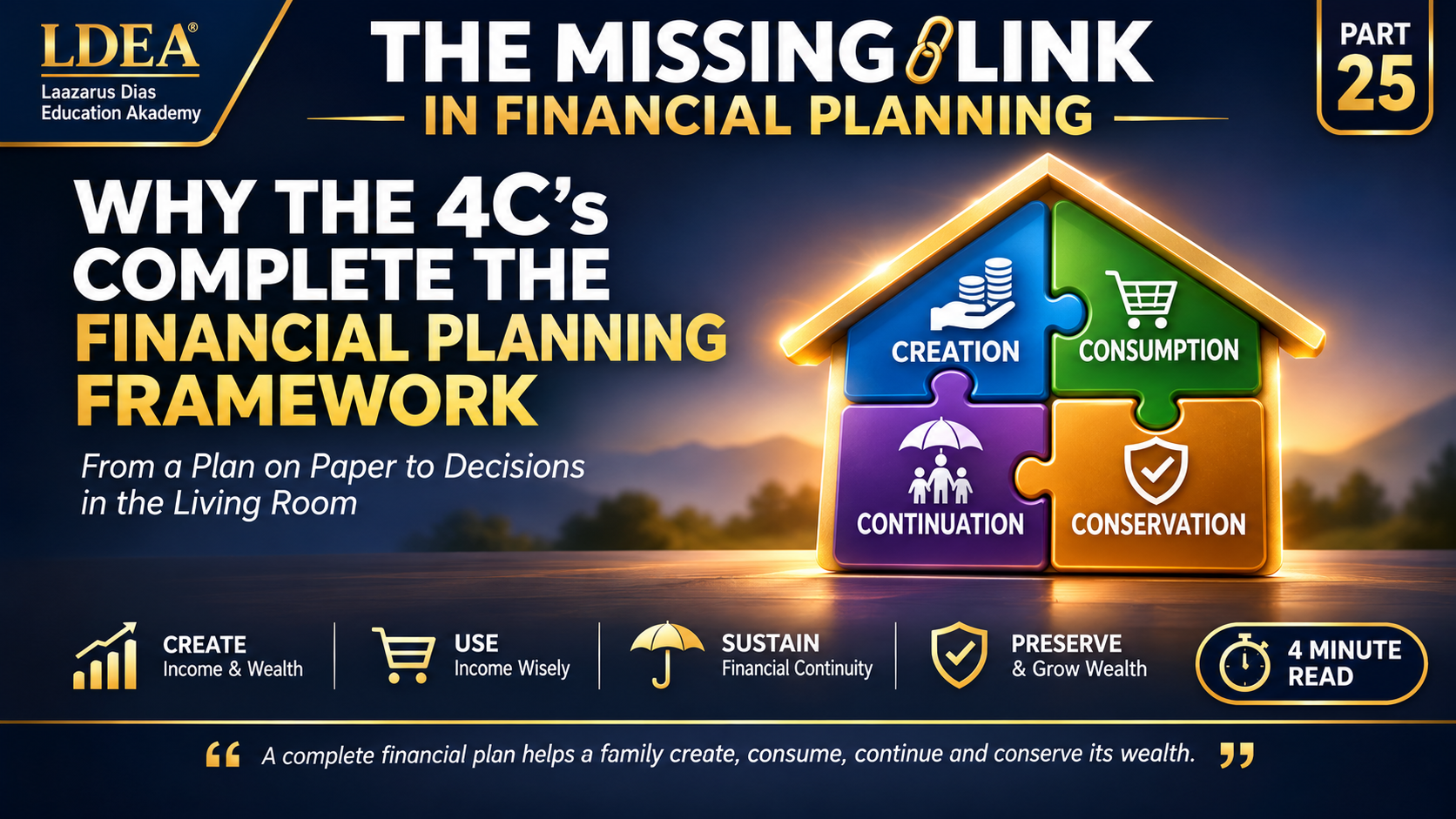
THE MISSING LINK IN FINANCIAL PLANNING – PART 25
November 4, 2026
MISSING LINK IN FINANCIAL PLANNING – PART 27
November 18, 2026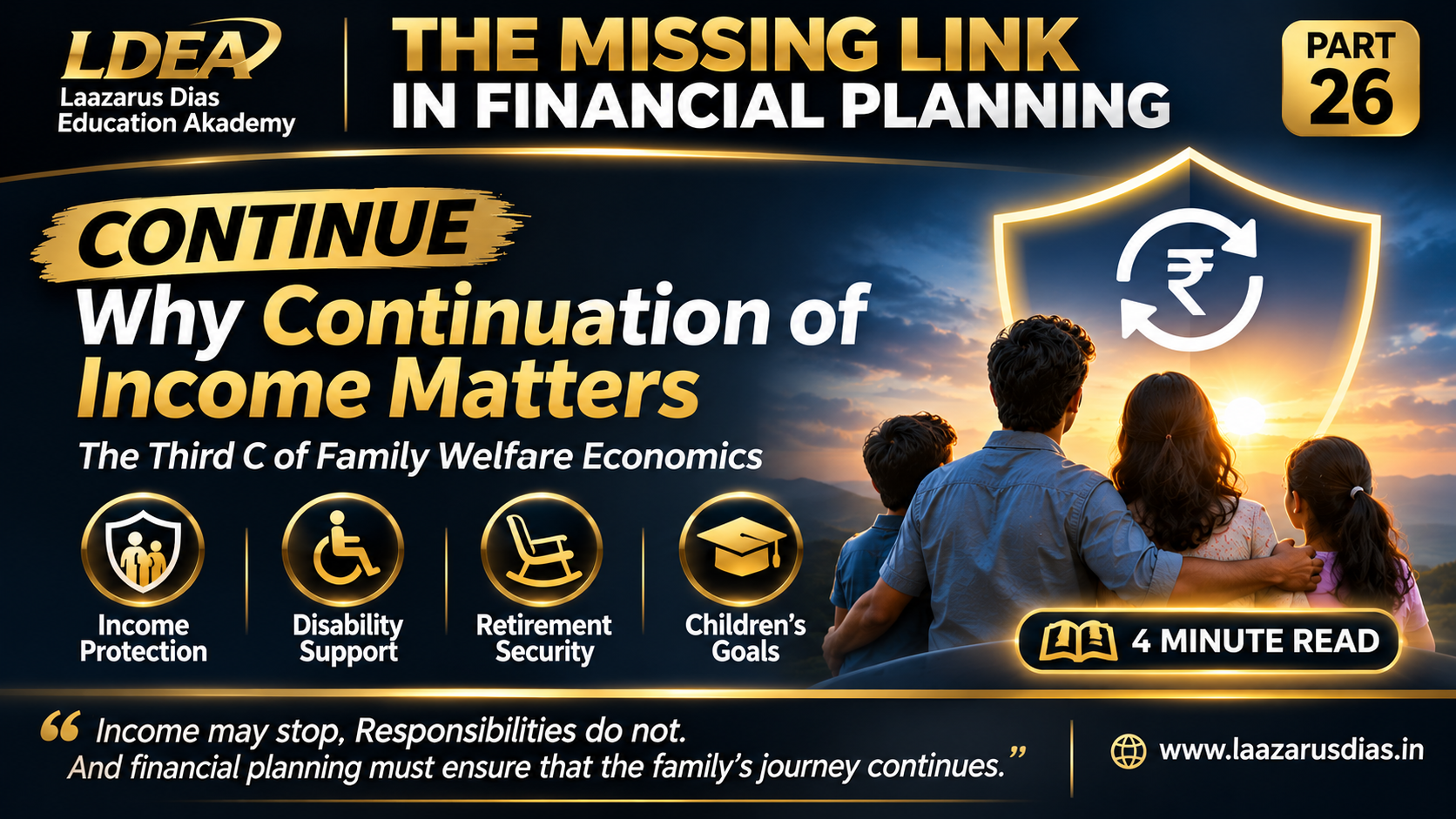
CONTINUE: Why Continuation of Income Matters
Imagine a family where the husband is the primary earning member. His income supports the household expenses, children’s education, home loan repayments, insurance premiums and the family’s lifestyle.
Everything appears to be working well. The family is comfortable, its financial commitments are being met, and its future goals are being planned.
But what happens if he is suddenly unable to earn?
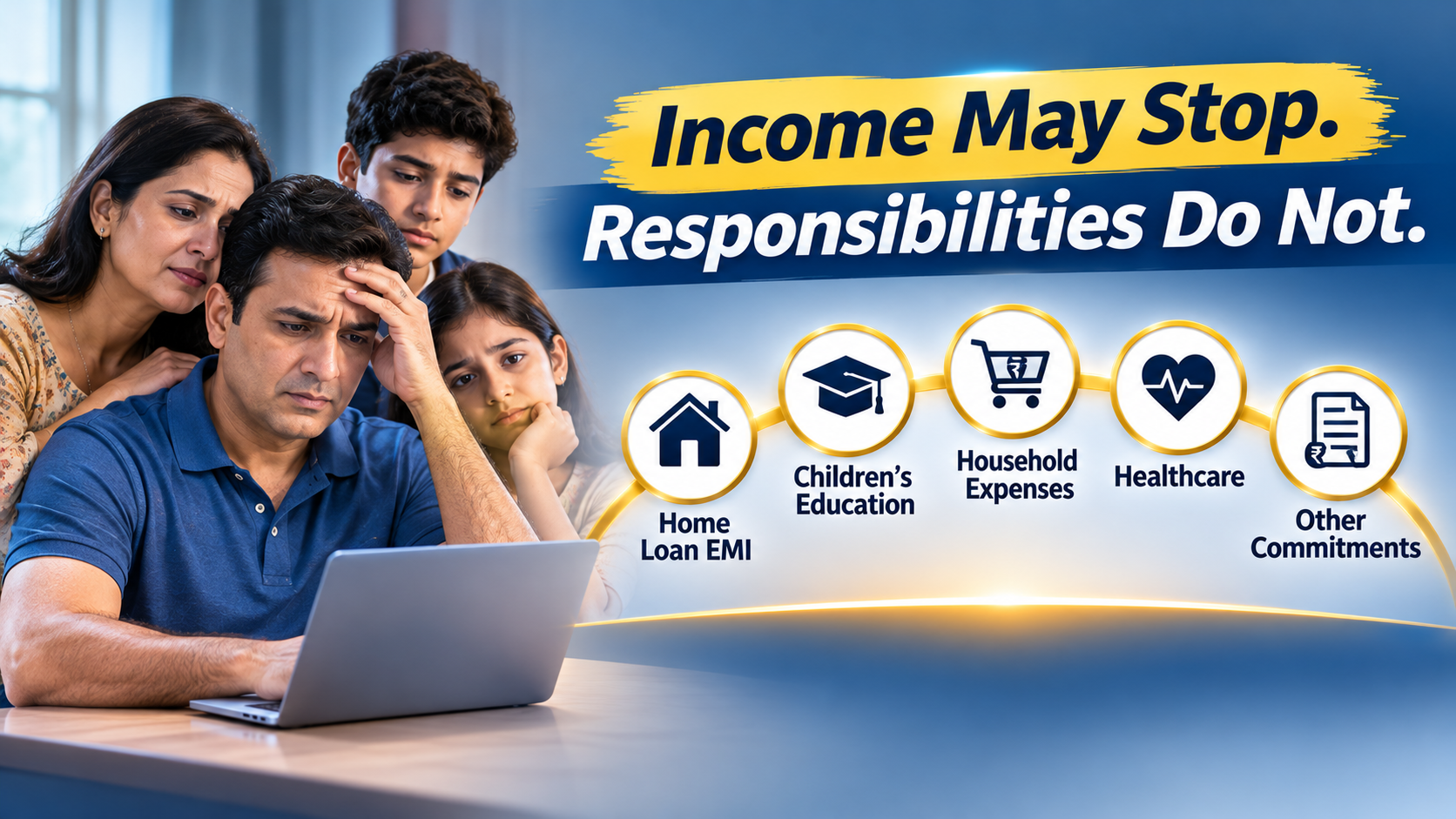
His family’s expenses do not stop. School fees still have to be paid. Home loan instalments continue. Groceries, electricity bills, healthcare and other household commitments remain.
The income may have stopped, but the family’s financial responsibilities have not.
This is the challenge that the third C — CONTINUE — seeks to address.
Income Creation Is Only the Beginning
In our previous articles, we explored the first two C’s of Family Welfare Economics.
CREATE refers to generating income through employment or business. This is the resource that supports the family’s financial journey.
CONSUME is about using that income wisely, balancing today’s lifestyle with tomorrow’s financial responsibilities.
But there is another important question:
What happens when the income we depend on is no longer available?
A family’s financial plan cannot depend entirely on the assumption that its primary earning member will continue to generate income without interruption.
Premature death, disability, retirement, temporary unemployment or business disruption can affect the family’s ability to earn. Yet its financial commitments continue.
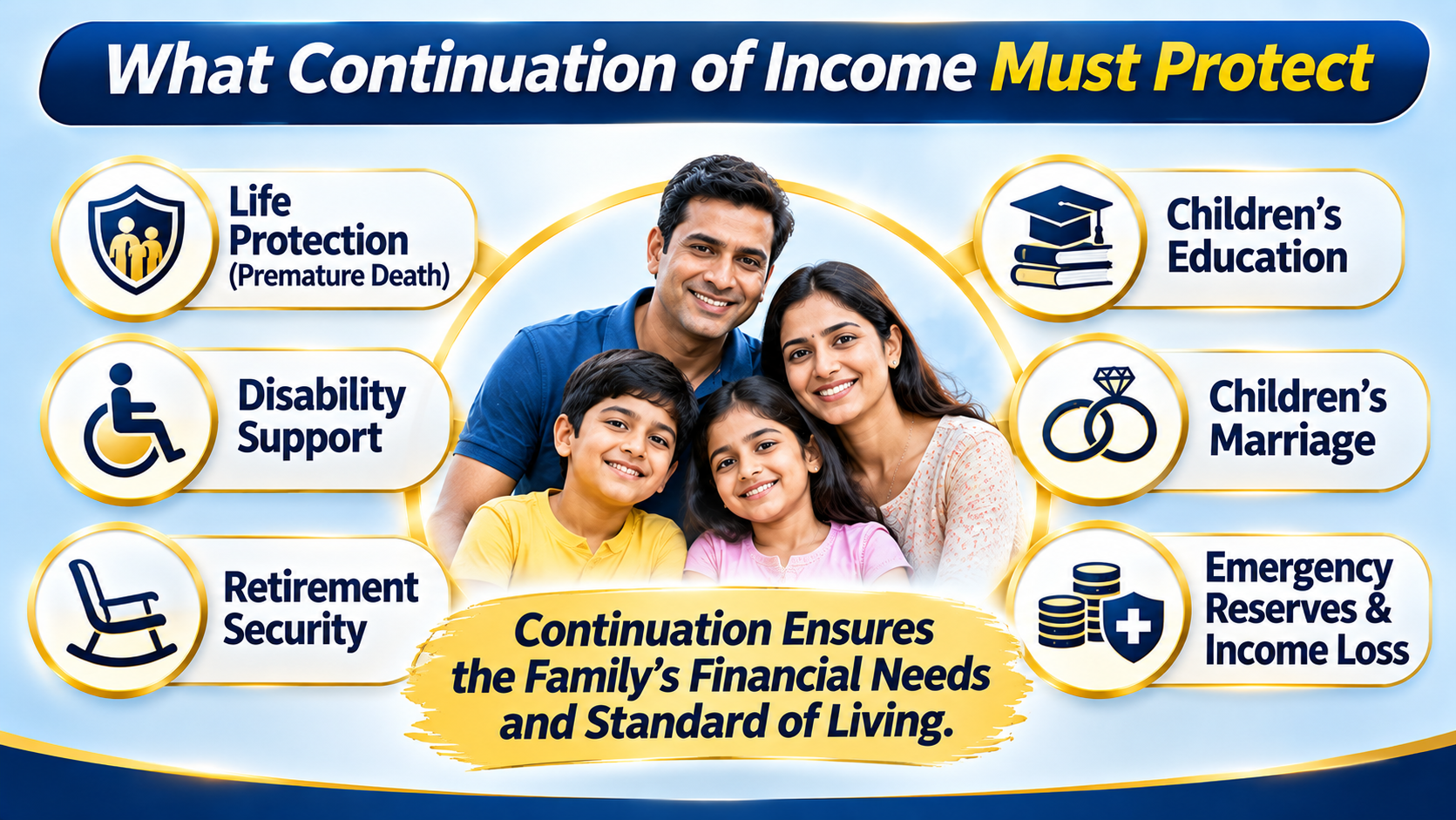
What Does Continuation of Income Mean?
Continuation of Income is about ensuring that the family’s financial life can continue even when the primary earning member is no longer able to generate income.
But I believe we need to look beyond simply replacing the lost income.
The real objective is to ensure that the family does not have to abandon or reduce its existing standard of living because its income has stopped.
The children should not have to compromise on their education. The spouse should not be forced to make drastic lifestyle adjustments. Important financial commitments should not become a burden simply because circumstances have changed.
In my philosophy, we must plan to sustain the family’s standard of living throughout the lifetime of the surviving spouse, ideally up to age 85.
Family’s Need and Protection Goals
This requires us to identify the family’s Protection and Need Goals and provide adequate financial resources to meet them.
These may include:
- Protection against premature death.
- Financial support in the event of disability.
- Retirement requirements.
- Children’s education.
- Children’s marriage.
- Emergency reserves.
- Temporary loss of employment or business income.
The objective is not simply to accumulate wealth. It is to ensure that the family has access to the financial resources it needs, when it needs them.
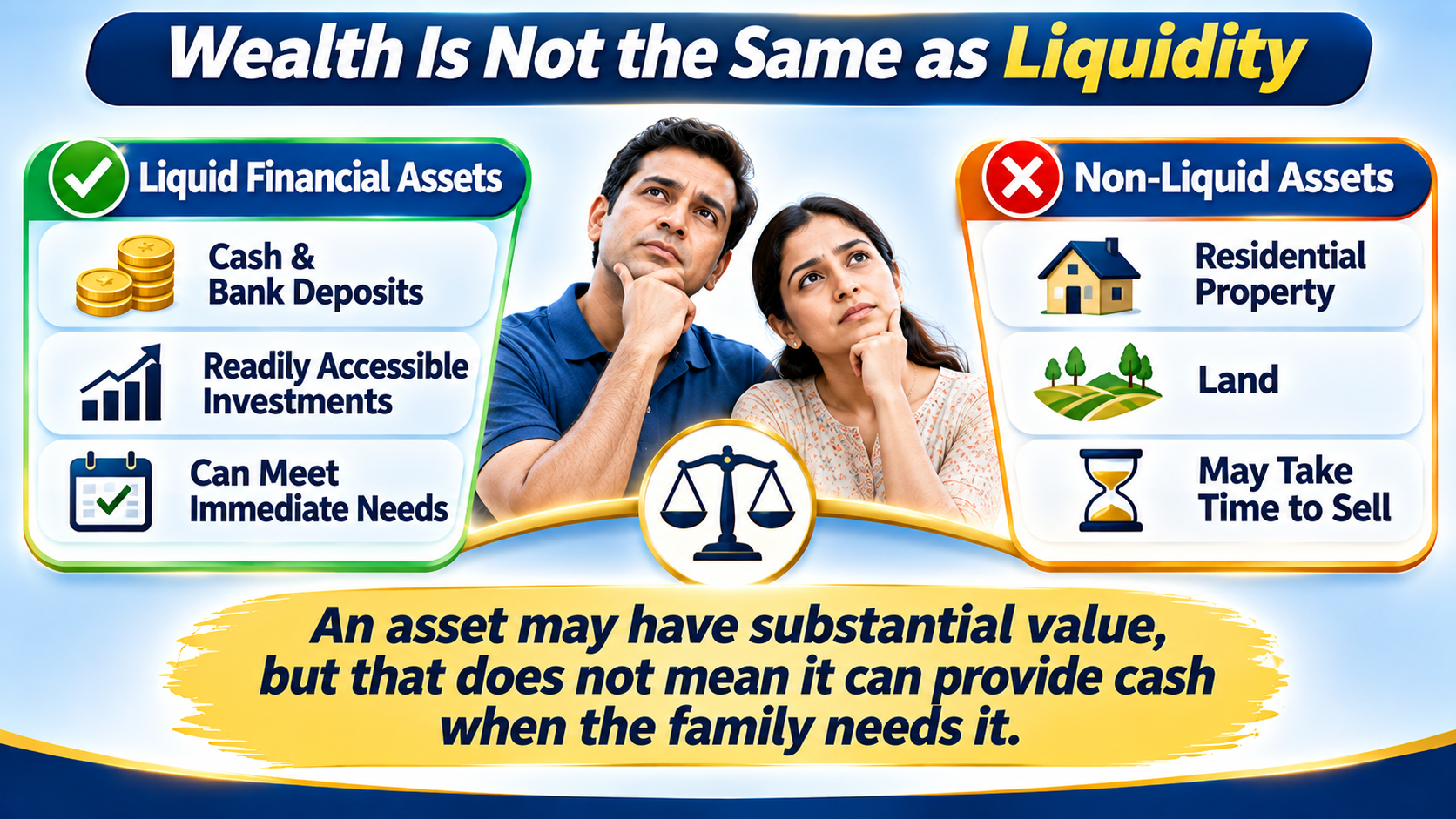
Why Liquidity Matters
Consider a family that has accumulated considerable wealth in property and long-term investments.
Suddenly, the primary earning member is unable to work. The family needs money immediately to meet household expenses and financial commitments.
But much of its wealth is locked in property or investments that may take time to liquidate.
What happens then?
The family may be forced to sell an asset at an unfavourable price, withdraw long-term investments prematurely or borrow money to meet immediate requirements.
This is why liquidity is an important part of financial planning.
Fixed-time Need Goals should be supported primarily through suitable liquid financial assets rather than depending entirely on property or other assets that may take time to sell.
A property may have substantial market value, but that does not mean it can be converted into cash whenever the family needs it.
The family should not be forced to sell a valuable asset at the wrong time simply because cash is needed immediately.
Liquidity provides the flexibility to meet financial commitments without disturbing wealth accumulated for other purposes.
Creating Wealth and Continuing Financial Life Are Different
Creating wealth is important, but wealth creation alone does not guarantee financial continuity.
A family may have a good investment portfolio, a valuable house and a promising financial future. Yet, if it has not adequately addressed the possibility of income interruption, its financial security may remain vulnerable.
The third C reminds us to look beyond the earning capacity of the primary income generator.
We must ask:
- If today’s income stops, how long can the family maintain its existing lifestyle?
- Are the essential Need Goals financially protected?
- Are sufficient liquid resources available?
- Will the family have to disturb its long-term investments to meet immediate requirements?
- Have we planned for the surviving spouse’s financial needs up to age 85?
These questions help identify whether the family’s financial journey can continue through unexpected circumstances.
The Third C: Protecting the Family’s Financial Journey
Let us look at the first three C’s together.
CREATE generates the income.
CONSUME determines how that income is used.
CONTINUE ensures that the family’s financial commitments and standard of living can be maintained even when the primary income stops.
This is why the three C’s must be understood together.
Financial planning is not merely about earning more, spending wisely or accumulating investments. It is about ensuring that the family’s financial life does not collapse when circumstances change.
The real test of financial planning is not just how well a family lives when income is flowing, but how well it can continue when that income stops.
Income may stop. Responsibilities do not. And financial planning must ensure that the family’s journey continues.
In our next article, we will explore the fourth C — CONSERVE — and understand how families can protect, preserve and propagate the wealth and income they have created for future generations.
The link to the next article is below. To read all blogs from the start, go below this link to get the link for Blog 1
If you’re reading this Blog series for the first time, please click the link below to go to the first article, then read each subsequent blog, with links provided below each one.