

THE MISSING LINK IN FINANCIAL PLANNING – PART 24
October 28, 2026
THE MISSING LINK IN FINANCIAL PLANNING – PART 26
November 10, 2026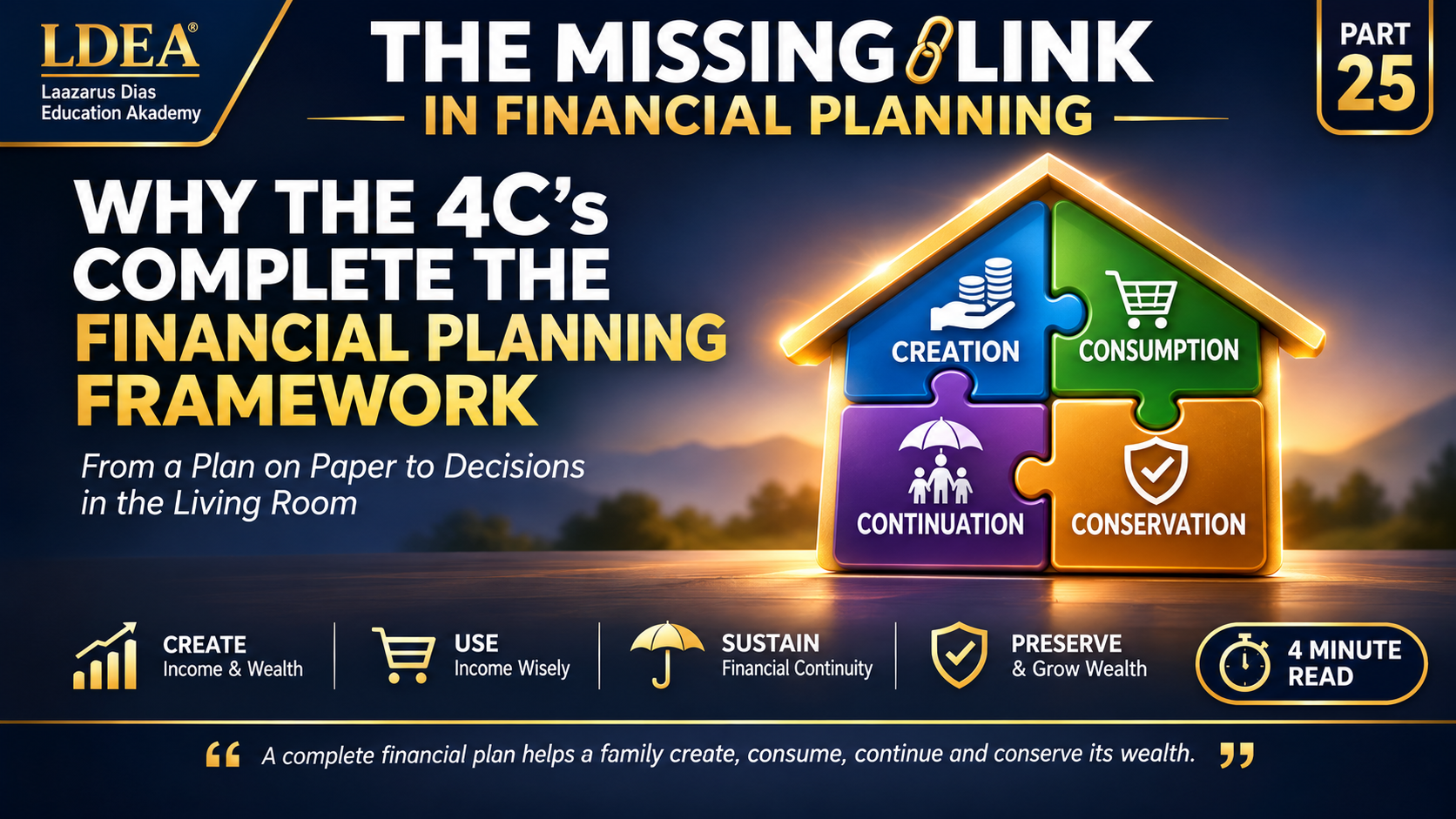
Why the 4C’s Complete the Financial Planning Framework
Over the past 24 articles, we have explored the two financial gaps every family needs to address: the Present Gap and the Future Gap. We then examined the two risks that can derail a financial plan—Investment Volatility Risk and Behavioural Discipline Risk—and introduced the three layers: Protection, Stability and Growth.
In this article, we introduce the 4C’s, which take financial planning beyond calculations and investments and bring it into the family’s living room, where financial decisions are actually made.
The Mind Element of Financial Planning
Financial planning is often viewed as a process of earning, saving and investing money to achieve future goals. But a family’s financial life is much broader.
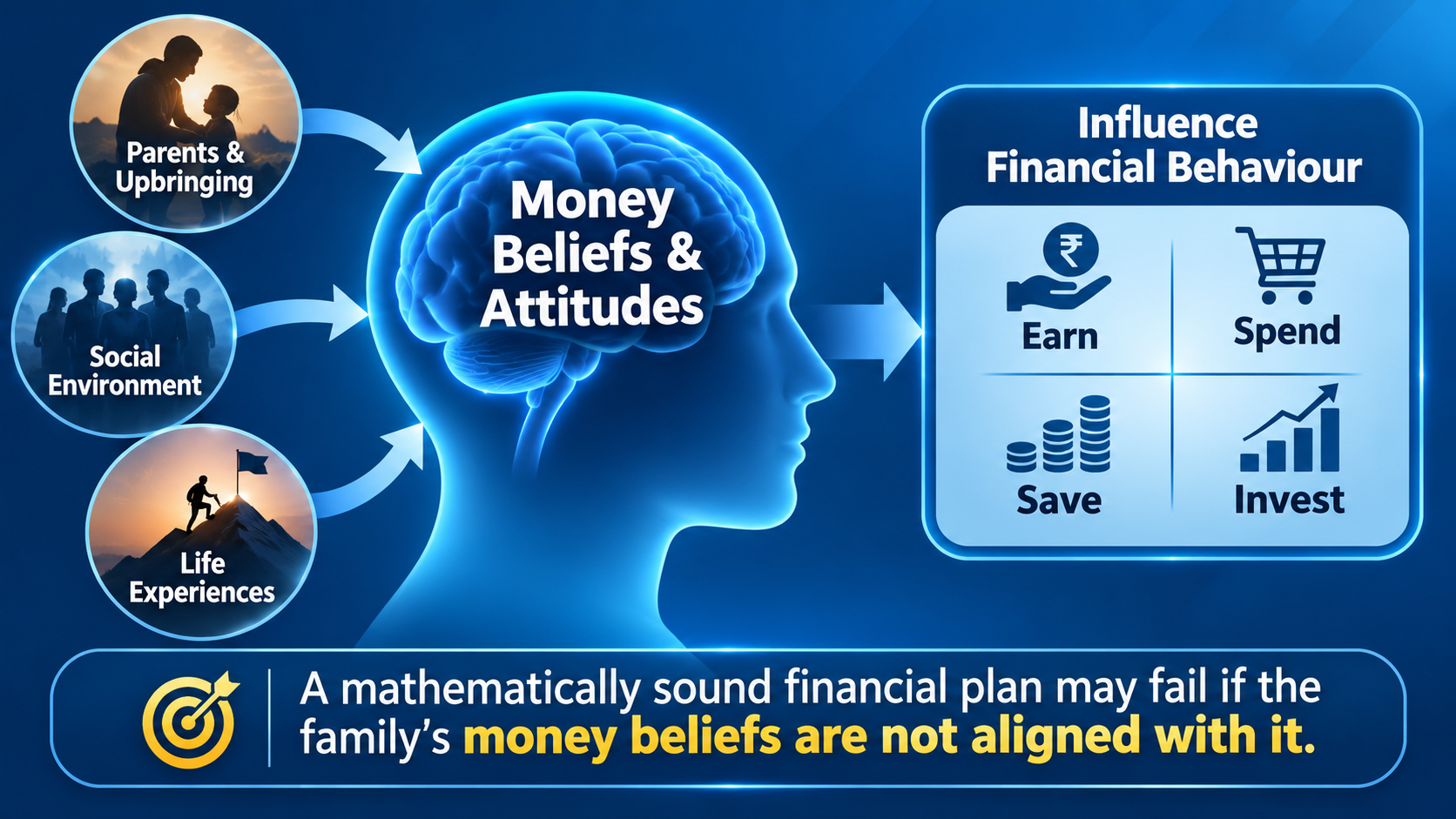
Our relationship with money is shaped by beliefs and attitudes learned from our parents, our upbringing and the environment around us. These beliefs become deeply ingrained and influence how we earn, spend, save and invest.
A financial plan may be mathematically sound, but if the family’s money beliefs are not aligned with the plan, implementation becomes difficult. The family may agree to the plan during a meeting but continue making decisions based on its existing beliefs and habits.
This is the missing mind element in financial planning. A financial plan must influence not just what a family does with money, but also how it thinks about money.
The 4C’s: Changing the Way Families Think About Money
We need to move beyond investment recommendations and help families understand the complete journey of money.
The 4C’s provide a simple way to introduce this thinking and challenge beliefs that may be working against the family’s financial well-being.
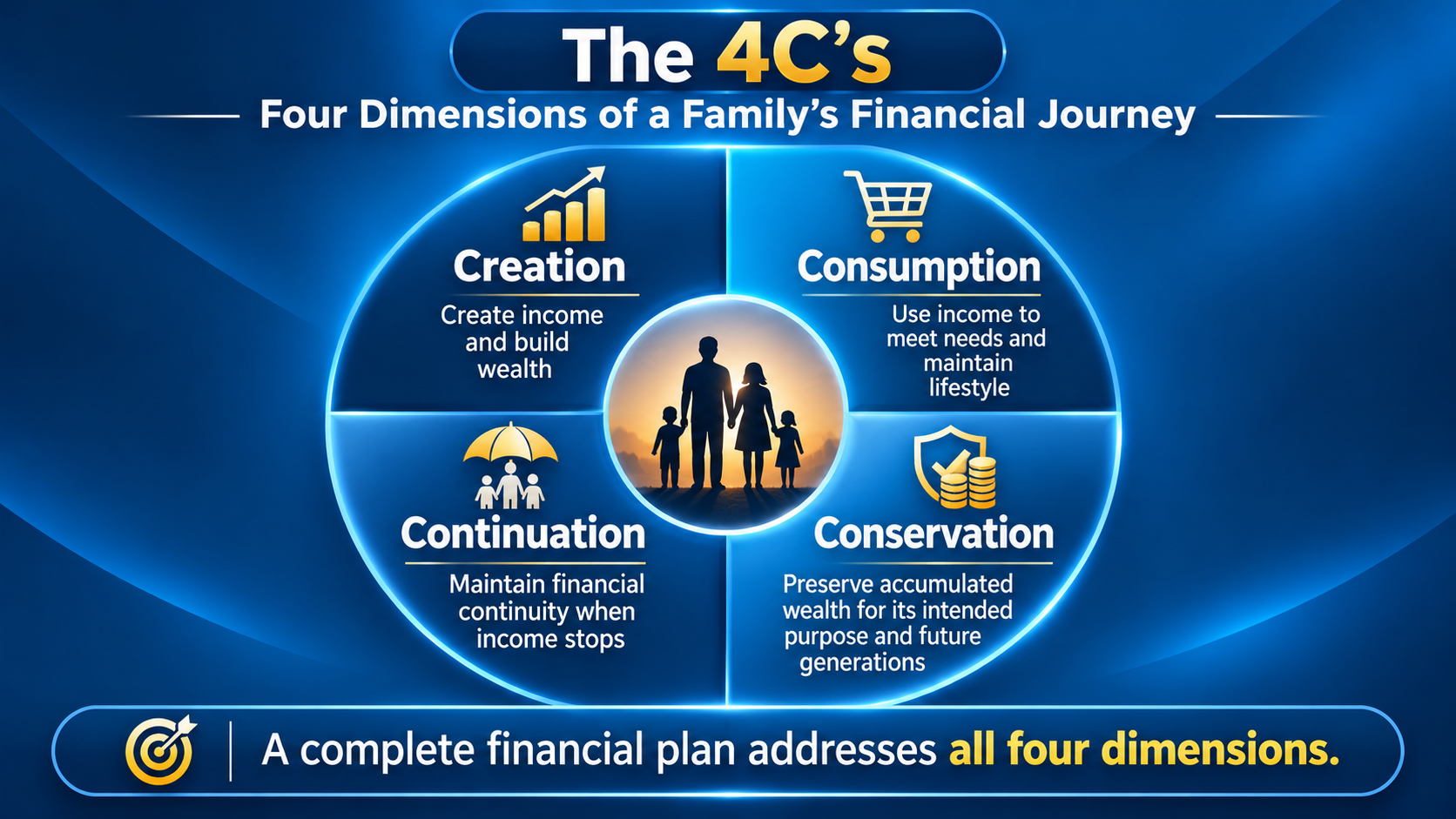
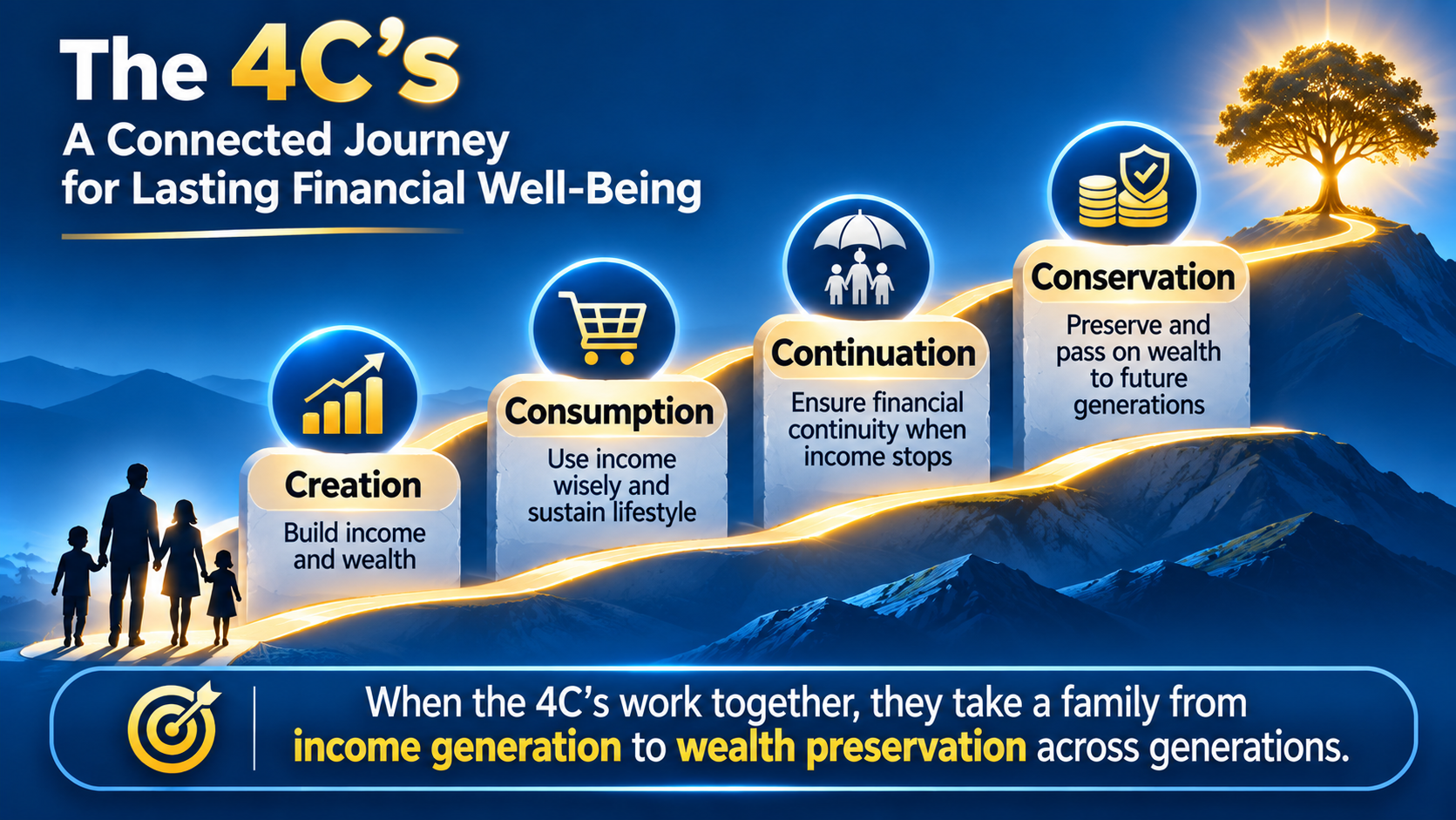
- Creation – How does the family create income and build wealth? Without creation, there is no financial foundation.
- Consumption – How does the family use its income to maintain its lifestyle and meet present and future needs? Uncontrolled consumption can undermine wealth creation.
- Continuation – How does the family maintain financial continuity when the primary income earner is no longer able to generate income? This is where protection becomes critical.
- Conservation – How does the family preserve the wealth it has accumulated and ensure that it remains available for its intended purposes and future generations?
The Four Dimensions Are Interconnected
The four dimensions cannot be viewed in isolation. Creating wealth without managing consumption can prevent accumulation. Accumulating wealth without ensuring continuation can leave the family vulnerable. And creating wealth without conserving it can put the family’s legacy at risk.
The 4C’s also help families answer practical questions:
- How much of our income should we consume?
- How much can we comfortably commit towards EMIs?
- How much should we invest?
- How much should remain liquid?
- Are we committing too much of our wealth to fixed assets?
These questions can be answered through financial ratios, which we will explore in a later article.
The objective is not simply to allocate money. It is to ensure that the family’s financial decisions support protection, financial stability and long-term wealth creation.
The 4C’s: From Philosophy to Practice
The 4C’s is a philosophy I developed in 1995 and later converted into a book titled Family Welfare Economic.
At the time, life insurance was largely sold through standalone products, often without a comprehensive needs analysis. The 4C’s, supported by a Gap Calculator, helped families understand the financial value of their goals and the importance of protecting them.
Over the years, thousands of agents have taken this philosophy into family discussions. It has helped LIC agents communicate the importance of financial planning, strengthen the case for adequate protection and build successful insurance businesses. Around 40 trainers across India have taught this concept.
Its strength lies in its simplicity. Financial planning and life insurance are intangible subjects. The 4C’s make them relatable and easier for families to understand. They transform a product conversation into a meaningful discussion about the family’s financial future.
The 4C’s Complete the Framework
The 2 Gaps identify what the family needs. The 2 Risks identify what can derail the plan. The 3 Layers provide the structure to address those gaps and risks.
The 4C’s bring the entire financial journey together.
A financial plan should not merely help a family accumulate money. It should help the family create, consume, continue and conserve its financial resources throughout life—and ultimately build wealth that can be passed on to future generations.
But among the four dimensions, one deserves special attention. What happens to a family’s financial journey when its primary income stops?
In our next article, we will explore why Continuation of Income is the Foundation of Financial Continuity.
The link to the next article is below. To read all blogs from the start, go below this link to get the link for Blog 1
If you’re reading this Blog series for the first time, please click the link below to go to the first article, then read each subsequent blog, with links provided below each one.