
THE MISSING LINK IN FINANCIAL PLANNING – Part 20
September 30, 2026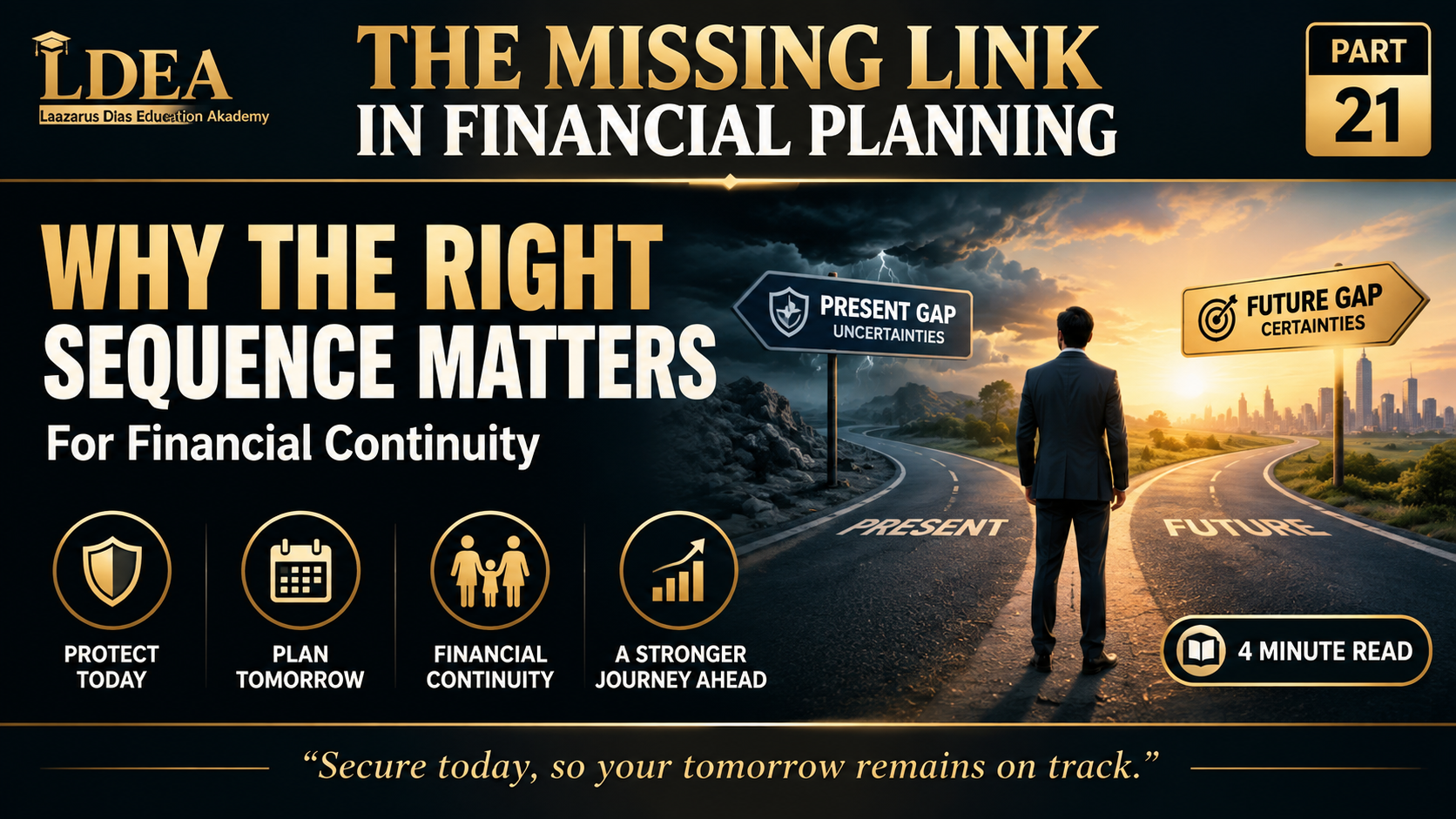
Why the Right Sequence in Present and Future Gaps Matters
Why Today’s Financial Continuity Must Come Before Tomorrow’s Goals
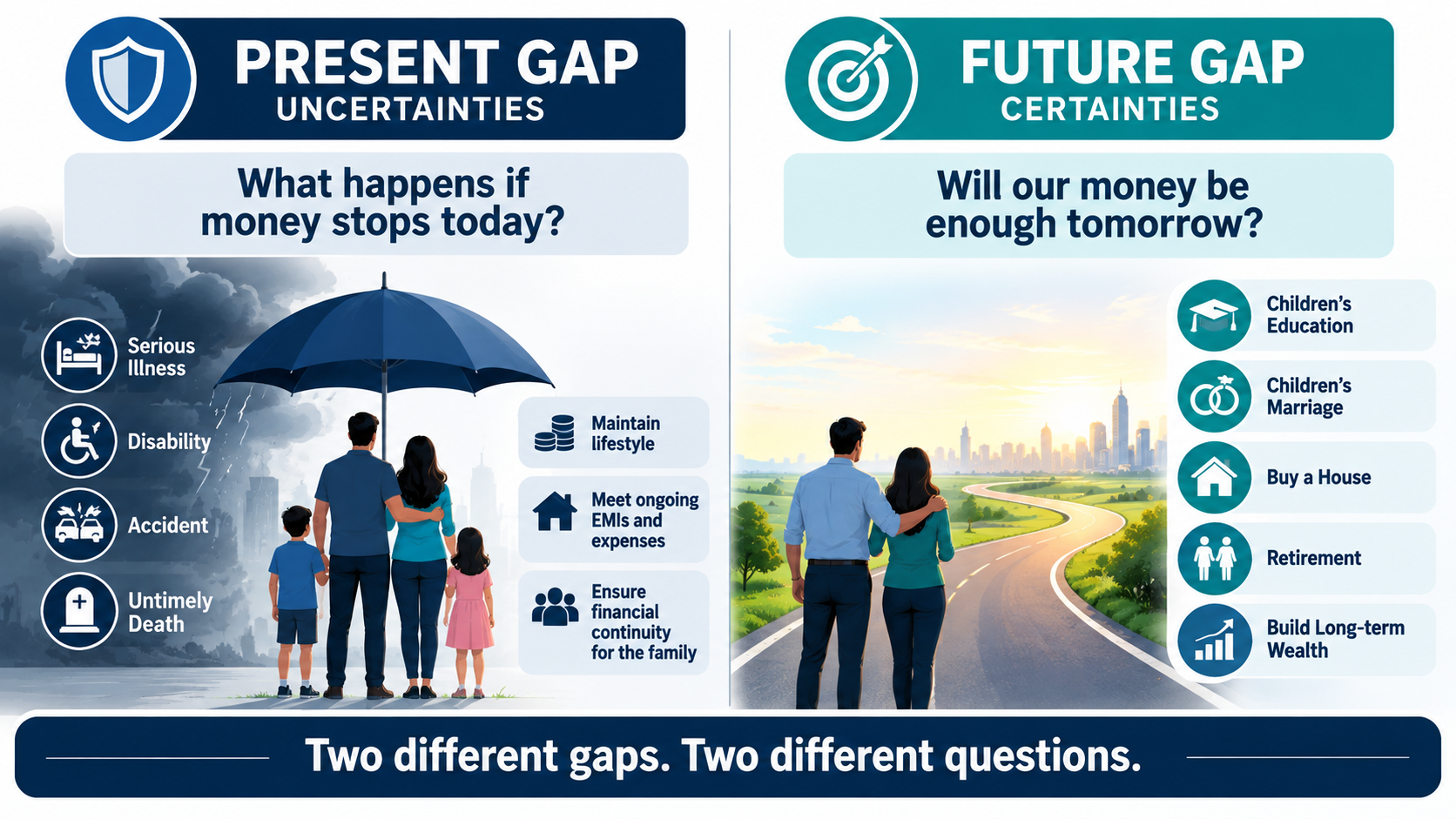
In the earlier articles, we explored the Present Gap and the Future Gap—the two financial gaps every family needs to address.
But identifying both gaps is not enough.
The sequence in which we address them matters.
Can we plan confidently for tomorrow if today’s financial security is not protected?
The Present Gap deals with uncertainties—events that may happen at any time.The Future Gap deals with known future responsibilities—retirement, children’s education, marriage and other Need Goals for which we know we will eventually need money. Both are important. But should the Present Gap always be addressed first? I believe it should
And I learnt this lesson from a client many years ago.
When the Future Was Planned but the Present Was Not
Mr. Aman was referred to me by one of my clients He was passionate about financial planning. When we sat down together, he was very clear about his goals. He wanted to plan properly for his retirement. He wanted to provide for his children’s education. He wanted to plan for their marriage. He was willing to invest regularly and was serious about building the required corpus for these future responsibilities. We diligently worked out his Future Gap. The plan was taking shape. But I then asked him to look at another question:
What happens if your income stops today?
This brought us to the Present Gap.
Aman had a substantial home loan, and the family’s lifestyle and financial commitments depended heavily on his continued income. I explained that before building the future corpus, we needed to ensure that the family would remain financially secure if something happened to him.
But Aman did not agree.
He felt that spending money on a contingency that might never happen was unnecessary. His argument was simple:
“These uncertainties affect only a small percentage of people. Why should I sacrifice my present lifestyle for something that may never happen?”
I tried repeatedly to explain why the Present Gap had to be addressed first. But eventually, he asked me to proceed with the future planning as he wanted.
Three years later, Aman met with a very serious accident.
He spent almost a month in hospital. The family incurred substantial expenses. Unfortunately, he did not survive. The future had been planned.
But time was taken away from Aman.
The family had a good retirement plan. His children’s education and marriage goals had been planned. But there was inadequate protection if his income stopped. The family eventually had to sell the house and move into a much smaller home. They somehow managed to repay the loan, but the family’s financial position changed dramatically. The goals for the future were still there. But the family now had to live month to month.
The Future Gap had been planned.
The Present Gap had not been adequately protected.
Why the Sequence Matters
This experience reinforced an important principle for me.
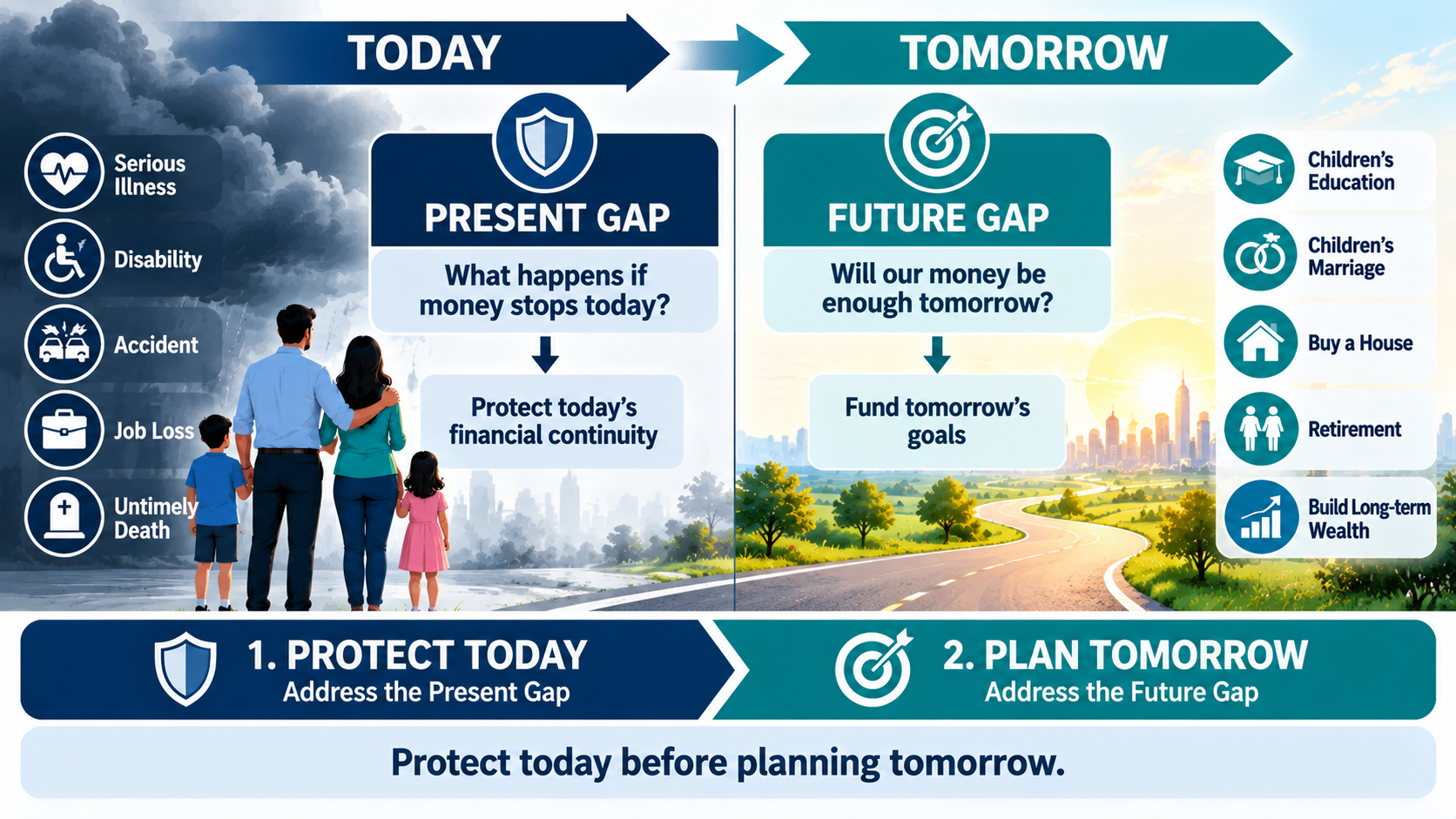
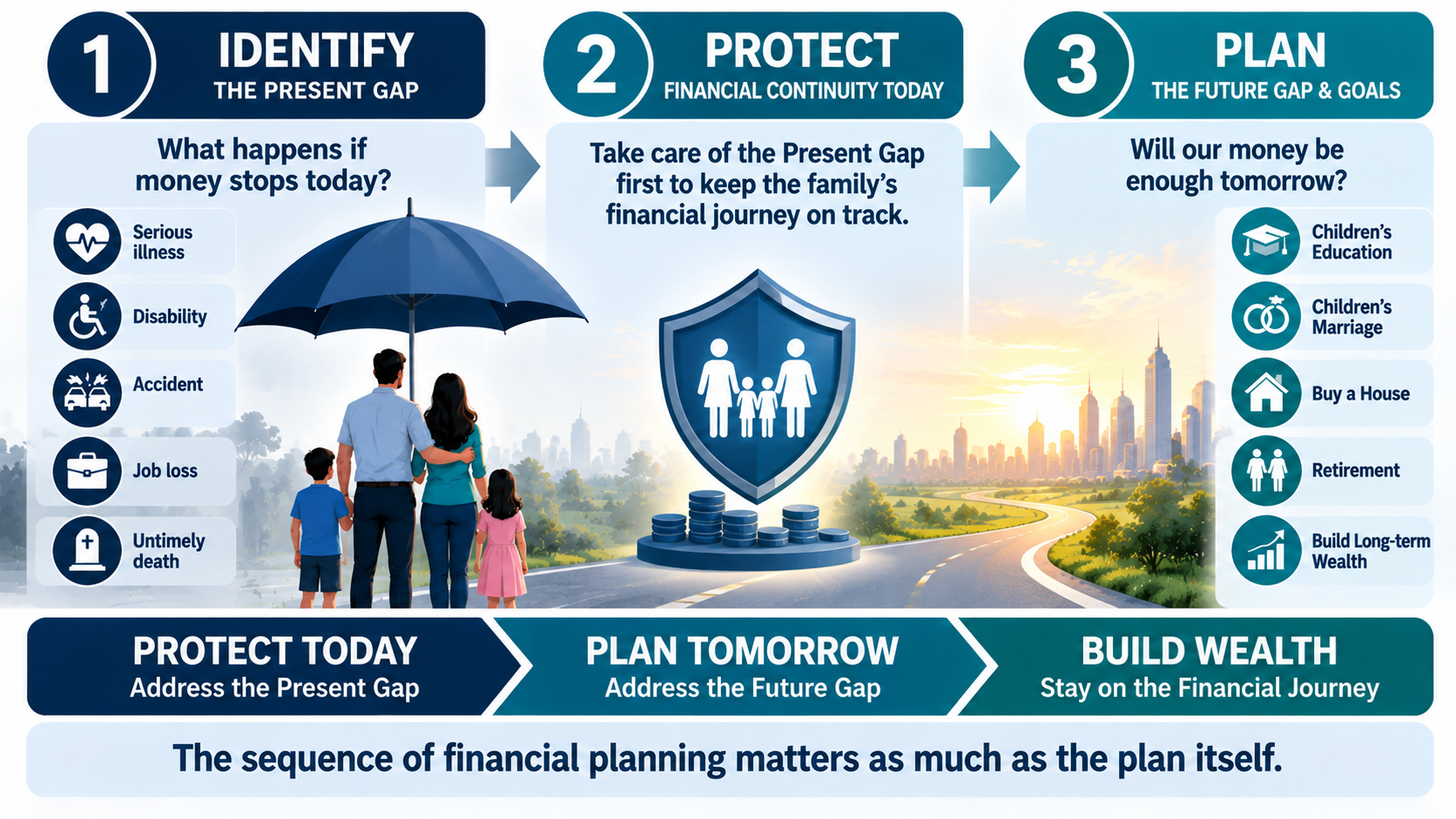
The Present Gap asks: “What happens if money stops today?”
The Future Gap asks: “Will our money be enough tomorrow?”
Both questions are essential. But they have different characteristics.
The Present Gap is about uncertainties. We do not know when death, disability, a serious illness or a sudden loss of income may occur. It could happen tomorrow. It could happen years from now. We simply do not know.
The Future Gap is different. We may not know exactly what the future will look like, but many of our major financial responsibilities are known. Retirement will arrive. Children will grow up. Education will have to be funded. Marriage may have to be funded.
And because these responsibilities lie in the future, we have time to prepare for them.
That difference in time is critical.
For the Present Gap, we cannot say: “I will take care of it after a few years.”
The uncertainty may arrive before we are ready. For the Future Gap, time is available to build the required corpus gradually. We can save. We can invest. We can allow compounding to work. We can adjust the plan as circumstances change.
Therefore, while both gaps are important and urgent, the sequence of implementation matters.
**First: Present Gap.
Second: Future Gap.**
Not because the Future Gap is less important. But because the Present Gap protects the family’s ability to continue the journey toward those future goals.
The Bigger Lesson
Financial planning is not simply about identifying how much money we need. It is also about deciding what must be secured first. Imagine building a beautiful house while ignoring the foundation. The house may look impressive. But if the foundation is weak, everything built above it remains vulnerable.
The same principle applies to financial planning.
Before building wealth for tomorrow, we must make sure the family can survive today.
That is why the sequence matters:
Protect Today → Plan for Tomorrow.
Once we know what needs to be addressed, the next question naturally arises:
How do we build the financial structure that can address these gaps effectively?
In the next article, we will explore why financial planning needs layers—and why simply having the right investments may not be enough to keep the entire financial journey on track.
If you’re reading this Blog series for the first time, please click the link below to go to the first article, then read each subsequent blog, with links provided below each one.